

In addition to the electric vehicle conversion roadmap, experts and managers say: Applying advanced exhaust treatment technology for diesel engines is an urgent and feasible solution today.
This message was emphasized at the workshop "Reducing pollution from diesel vehicle emissions: Current situation and solutions in the Southeast region" held on December 4. The event was organized by the Vietnam National Industry and Energy Group ( Petrovietnam ) in coordination with specialized units.
Ho Chi Minh City implements many solutions to reduce air pollution
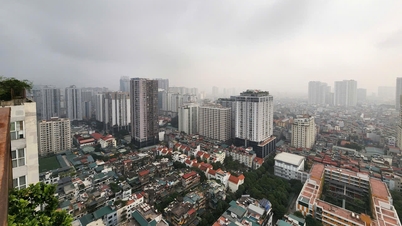
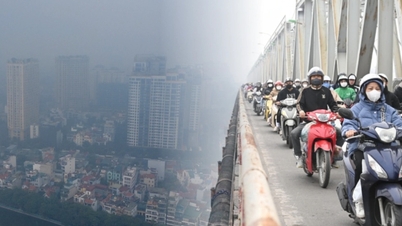
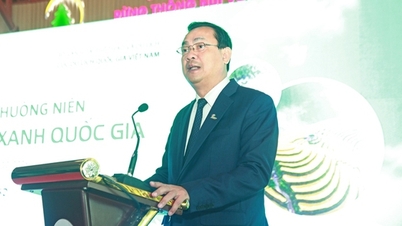
Speaking at the workshop, Mr. Bui Minh Thanh - Vice Chairman of the Ho Chi Minh City People's Committee - acknowledged the reality: Although the Southeast plays the role of an economic locomotive, it is also the place with the highest density of freight, inter-provincial and waterway transport vehicles in the country. The rapid development of the logistics system is putting this region under enormous pressure on traffic emissions.

Mr. Bui Minh Thanh - Vice Chairman of Ho Chi Minh City People's Committee - spoke at the workshop (Photo: DPM).
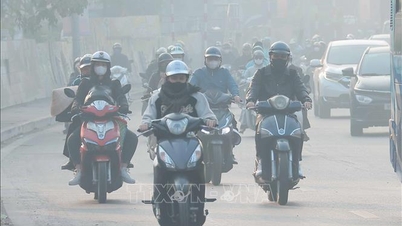
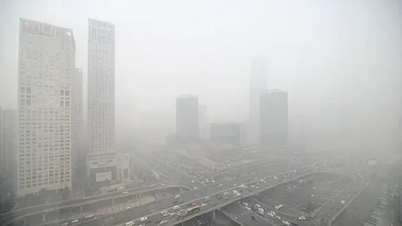
Statistics show that Ho Chi Minh City currently manages about 12.7 million vehicles, including 1.4 million cars and more than 11 million motorbikes. Scientific analysis at the workshop showed that, despite playing a vital role in transportation, diesel-powered vehicles are the main "culprits" emitting PM2.5 fine dust, NOx and SOx gases. These are direct factors that destroy people's respiratory health and degrade the quality of the urban environment.
In that context, Ho Chi Minh City leaders have announced four key groups of solutions to create a green transport system.
The first is about institutions and emission standards: Ho Chi Minh City will review current regulations, update appropriate standards and improve monitoring. The second group focuses on technology, encouraging businesses to innovate engines, equip exhaust treatment systems, use clean fuels and emission-reducing solutions according to international standards.
The third group aims at a green logistics ecosystem, reorganizing infrastructure, prioritizing low-emission vehicles and optimizing routes. Finally, mobilizing social resources and enhancing regional cooperation, implementing inter-provincial emission control programs and expanding the PPP model to attract investment in environmental technology.
Notably, in addition to institutional review and logistics re-planning, technology solutions are considered a breakthrough pillar. Accordingly, Ho Chi Minh City encourages businesses to innovate engines, equip modern exhaust treatment systems, use clean fuels and emission-reducing solutions according to international standards. This is a mandatory step towards a sustainable environment.
Solutions from technology
At the workshop, many experts said that in the context of a long-term transition to electric vehicles and large infrastructure costs, technical solutions to "clean up" existing vehicles are considered a smart move.
Dr. Pham Huu Tuyen (Hanoi University of Science and Technology) presented convincing data: The application of advanced exhaust gas treatment technologies such as oxidation catalysts (DOC), particulate filters (DPF) and especially selective catalytic reduction systems (SCR) can help reduce up to more than 90% of toxic emissions.
"With new generation cars, this technology is often already integrated. However, the bright spot is that even old cars can have equipment added and upgraded to meet pollution reduction standards without having to scrap the vehicle," Dr. Tuyen analyzed.
Sharing the same view, Mr. Nguyen Xuan Hoa, Chairman of the Board of Directors of PetroVietnam Fertilizer and Chemicals Corporation, said that combining the SCR system with exhaust gas treatment solution (DEF - urea solution) is a global trend for diesel vehicles to meet Euro 4 and Euro 5 standards. Currently, Phu My Fertilizer has produced this solution with international quality instead of importing it.
"Instead of spending billions of dong to replace vehicles, people and transport businesses can choose standard DEF products to extend vehicle life, thoroughly reduce emissions while still saving maximum operating costs," said Mr. Hoa.

Mr. Le Xuan Huyen, Deputy General Director of Petrovietnam, said that applying technology will help quickly reduce toxic emissions in diesel-powered vehicles (Photo: DPM).
Ready for "G hour" March 2026
Mr. Le Xuan Huyen, Deputy General Director of Petrovietnam, said that promoting the application of technology is not only encouraged but is becoming a mandatory requirement before "G hour". According to Decision No. 43/2025/QD-TTg recently issued by the Prime Minister on November 28, the roadmap for applying national technical regulations on automobile emissions will take effect from March 1, 2026.
Accordingly, emission standards will be tightened to 5 levels (from Euro 1 to Euro 5). Vehicles manufactured from 2022 onwards must meet Euro 4 and be upgraded to Euro 5 from 2032. Hanoi and Ho Chi Minh City will apply this roadmap earlier.
At the end of the workshop, experts agreed that there is no single "magic wand" for the pollution problem. The most effective strategy is a "multi-objective" model: both encouraging electric vehicles and prioritizing the application of exhaust treatment technology for millions of gasoline vehicles in circulation. Only when the emission problem of the existing vehicle fleet is solved with technology can the skies of large cities truly regain their green color.
Why do diesel vehicles need to convert to emission reduction technology?
Unlike gasoline vehicles, diesel engines compress air at extremely high temperatures to generate power. This mechanism creates great traction but produces many times more toxic NOx gas and fine dust (soot).
Especially in the logistics industry, diesel vehicles (trucks, containers) operate continuously at high intensity. An old truck emits the same amount of exhaust as hundreds of motorbikes combined. Therefore, the application of intensive exhaust treatment technology (such as SCR systems using Urea solution) is required to "neutralize" this huge source of pollution in many countries.
Source: https://dantri.com.vn/kinh-doanh/tphcm-tim-loi-giai-xu-ly-khi-thai-cho-hang-trieu-xe-diesel-20251205213023500.htm
![[Photo] National Assembly Chairman Tran Thanh Man attends the VinFuture 2025 Award Ceremony](/_next/image?url=https%3A%2F%2Fvphoto.vietnam.vn%2Fthumb%2F1200x675%2Fvietnam%2Fresource%2FIMAGE%2F2025%2F12%2F05%2F1764951162416_2628509768338816493-6995-jpg.webp&w=3840&q=75)

![[Photo] 60th Anniversary of the Founding of the Vietnam Association of Photographic Artists](/_next/image?url=https%3A%2F%2Fvphoto.vietnam.vn%2Fthumb%2F1200x675%2Fvietnam%2Fresource%2FIMAGE%2F2025%2F12%2F05%2F1764935864512_a1-bnd-0841-9740-jpg.webp&w=3840&q=75)









































































Comment (0)