

The pillars that create widespread impact.
In a context where the flows of capital, technology, human resources, and knowledge increasingly determine a nation's position, the presence of a city with international influence becomes a key element of development strategy. For Vietnam to enter a new phase of growth, such a center is indispensable. Ho Chi Minh City is the city that possesses the most aspirations and opportunities to fulfill this role.
A global city has core characteristics. First and foremost, it must be a high-end financial and service center, where international capital flows and major institutions make decisions with regional and global impact.
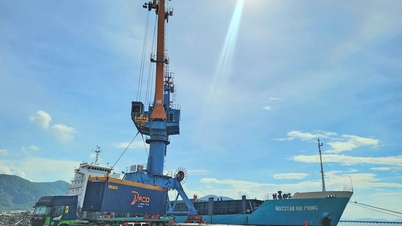
Furthermore, global cities also serve as international cargo hubs, connected to seaports, logistics, and transnational transportation networks, enabling deep participation in global supply chains.
Furthermore, it must be a space for innovation, a hub for universities, laboratories, technology companies, and international talent. Ultimately, it should be a city with strong cultural appeal and a high quality of life, a place people choose to study, work, and live long-term.
Ho Chi Minh City is currently possessing many conditions to rise to the level of a global metropolis, with the largest economy in the country, its role as a trade gateway for the South, a dynamic young workforce, and an open and integrated cultural foundation.
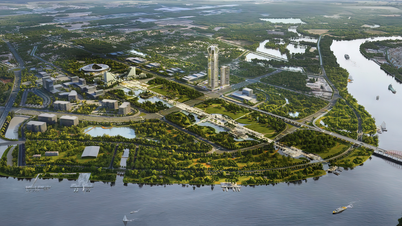
The formation of innovation spaces such as the High-Tech Park, the Saigon Riverfront Creative Urban Area, and the International Financial Center in Ho Chi Minh City further strengthens that position.
In particular, the biggest opportunity for Ho Chi Minh City comes from the restructuring of its spatial layout and the reorganization of the regional urban model after the merger of Binh Duong and Ba Ria - Vung Tau , which helps expand development space, form new growth poles, build a comprehensive logistics system, and enhance competitiveness to bring Ho Chi Minh City closer to the standards of global cities in the region.
However, Ho Chi Minh City is also facing clear limitations. The growth model based on expanding production, increasing capital and labor has reached the limits of a large urban area.
The structural constraints of the economy, including low domestic value added, high logistics costs, and weak total factor productivity, are narrowing access to international markets.
Transportation, healthcare, and education infrastructure do not yet meet the requirements of an international center. Institutions lack the flexibility to attract global financial institutions, while the capital market has not yet reached international standards, making it difficult for businesses to access long-term resources...
Overcoming limitations to achieve growth.
To overcome these limitations, Ho Chi Minh City needs a decisive direction, with innovation and increasing domestic added value as the central driving force. Looking towards the 2030-2045 period, the city aims to become a model of development with rapid growth, high quality, and superior quality of life, leading the country and playing a leading role in making Vietnam a developed nation.
The focus of this process is the restructuring of space according to the model of a regional megacity. The central core of Ho Chi Minh City needs to concentrate on finance, high-end services, innovation, and cultural industries; while heavy industry, logistics, warehousing, and seaports are distributed in the suburbs and satellite provinces. Creative spaces along the Saigon River, the High-Tech Park, and Thu Thiem must become hubs for elite human resources and high technology, testing grounds for new business models and technologies.
The Cai Mep - Thi Vai port needs to be developed into an international transshipment center, playing a key role in the global logistics chain. The industry chain must be organized in a regional linkage direction, connecting with Dong Nai to spread to the Central Highlands and Central Vietnam, and connecting with Tay Ninh to create synergy in the Mekong Delta.
Alongside spatial development, institutional frameworks are a decisive factor. The National Assembly's recent adoption of a resolution amending and supplementing several articles of Resolution 98/2023/QH15 on piloting specific mechanisms and policies for the development of Ho Chi Minh City has met the requirement of granting Ho Chi Minh City genuine autonomy. The city must become a testing ground for new models in finance, technology, transportation, public services, and urban governance, based on data and the ability to respond quickly to economic changes.
A key pillar for Ho Chi Minh City to enter the global urban orbit is the establishment of an international financial center. This center must operate according to international standards, with a flexible foreign exchange mechanism, diverse financial products, and strong connections to regional financial networks. More importantly, it must play a role in upgrading Vietnam's capital market, attracting long-term capital flows, and strengthening the confidence of strategic investors.
Ultimately, the global city cannot be separated from its people. Ho Chi Minh City must become a livable place for the elite through modern public transportation, green spaces, urban security, high-quality education, and a rich cultural environment. For Ho Chi Minh City, greening is no longer an option but a vital condition for maintaining competitiveness.
If these things are achieved, Ho Chi Minh City will not only become stronger for itself but will also create a new growth engine for Vietnam. A global metropolis will make a significant contribution to elevating the nation's status, attracting high-quality capital, spreading prosperity to the Southeast region, and opening the door for Vietnam to enter a more modern, confident, and deeply integrated stage of development in the new era.
Source: https://www.sggp.org.vn/tphcm-tren-con-duong-tro-thanh-do-thi-toan-cau-post828756.html



























































Comment (0)