

The production of solar panels from perovskite minerals is emerging as a potential alternative to traditional silicon technology. However, to date, there is still no complete solution to this problem.
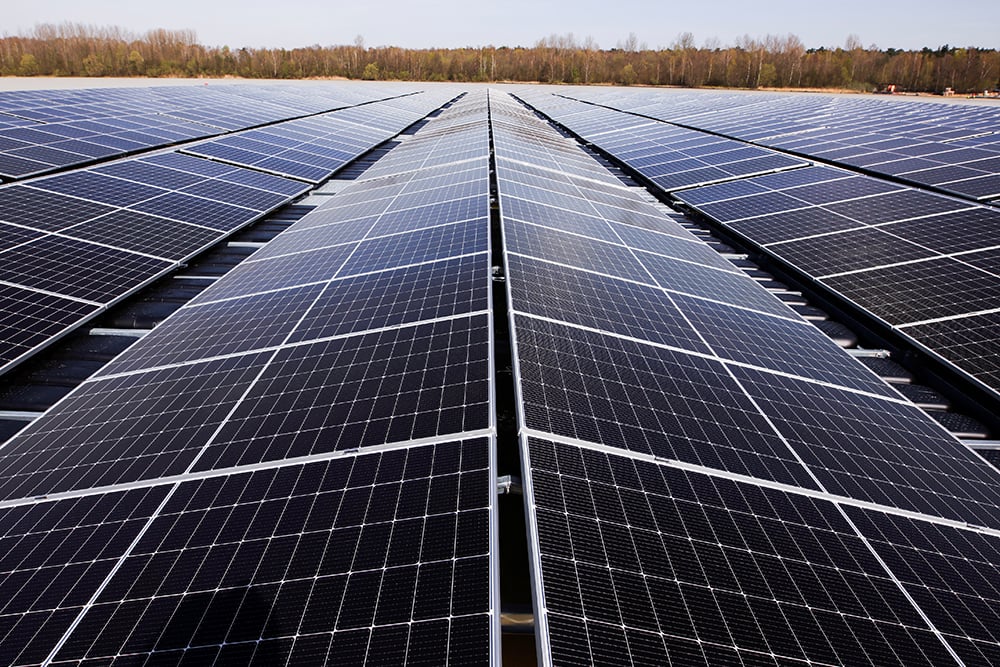
Improving the lifespan of solar cells is a goal that scientists are striving for.
Recently, an international research team made a significant breakthrough in identifying materials for the middle layer of a photovoltaic cell. This layer is responsible for transporting energy from the light-absorbing layer to the electricity-generating layer.
This component plays a crucial role in the performance of the entire photovoltaic cell. Previously, not many materials were certified as suitable for widespread use in the solar energy industry. However, with the help of machine learning technology, researchers have been able to find ideal options from millions of possibilities.
AI algorithms are accelerating the pace of solar cell innovation.
The algorithm was trained on experimental solar cells and then applied to a large dataset, which yielded 24 top-performing candidates. The research team tested these candidates and achieved an efficiency rate of 26.2%, nearly breaking the record for perovskite-based cells and 1.5% higher than the modern reference model.
These findings have been published in Science magazine. Notably, the research team is still testing the materials that AI helped them discover, believing they may be able to find even more energy-converting materials.
This research is not only a success in the laboratory but also benefits consumers. Improving the efficiency of solar energy technology will contribute to boosting the clean energy market, thereby reducing the cost of installing solar panels on rooftops and increasing access to clean energy, indirectly contributing to the goal of reducing greenhouse gas emissions that cause global warming.
Source: https://thanhnien.vn/tri-tue-nhan-tao-giup-cai-thien-hieu-qua-pin-mat-troi-185250212155840219.htm


![[Photo] Prime Minister Pham Minh Chinh holds a phone call with the CEO of Russia's Rosatom Corporation.](/_next/image?url=https%3A%2F%2Fvphoto.vietnam.vn%2Fthumb%2F1200x675%2Fvietnam%2Fresource%2FIMAGE%2F2025%2F12%2F11%2F1765464552365_dsc-5295-jpg.webp&w=3840&q=75)


![[Photo] Closing Ceremony of the 10th Session of the 15th National Assembly](/_next/image?url=https%3A%2F%2Fvphoto.vietnam.vn%2Fthumb%2F1200x675%2Fvietnam%2Fresource%2FIMAGE%2F2025%2F12%2F11%2F1765448959967_image-1437-jpg.webp&w=3840&q=75)











































![[OFFICIAL] MISA GROUP ANNOUNCES ITS PIONEERING BRAND POSITIONING IN BUILDING AGENTIC AI FOR BUSINESSES, HOUSEHOLDS, AND THE GOVERNMENT](https://vphoto.vietnam.vn/thumb/402x226/vietnam/resource/IMAGE/2025/12/11/1765444754256_agentic-ai_postfb-scaled.png)









































Comment (0)