

China's Ministry of Housing and Urban-Rural Development announced that the country will expand its "whitelist" of real estate projects and accelerate bank lending for unfinished projects to 4 trillion yuan (US$561.8 billion) by the end of this year.
China's Minister of Housing and Urban-Rural Development, Ni Hong, made this announcement at a recent press conference of the ministry, along with officials from the central bank, the Ministry of Finance , and the State Administration for Financial Services.
According to a senior official from the State Administration for Financial Services, a total of 2.23 trillion yuan has been approved for project developers on the “whitelist.” This figure is expected to nearly double to 4 trillion yuan by the end of 2024.
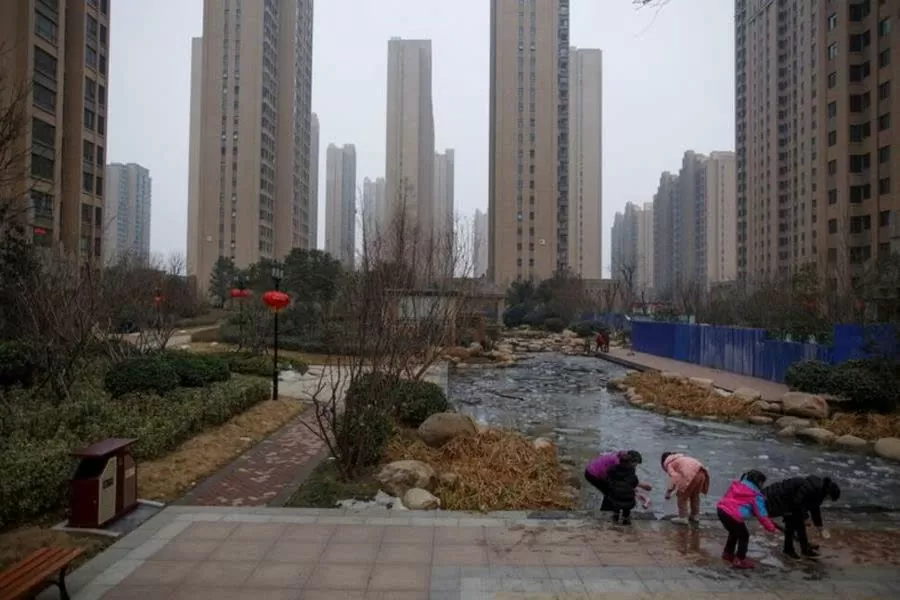 |
| Within the grounds of an apartment complex in Zhengzhou, Henan province, China. Photo: Reuters |
Launched in January of this year, China's "whitelist" initiative allows city governments to propose housing projects to banks in order to expedite the lending process. The aim is to ensure that housing projects are completed and handed over to buyers.
All commercial housing projects are now eligible to participate in the “whitelist” project, said Xiao Yuankai, Vice Minister of the Financial Conduct Authority, on October 17. This move is expected to expand the list. Xiao also emphasized that banks should disburse funds “as soon as possible,” potentially releasing the entire amount to project developers instead of splitting it into installments.
This press conference is one of the latest high-level policy announcements from the Chinese government aimed at strengthening the economy .
In late September, Pan Gong Sheng, Governor of the People's Bank of China, announced a 50-basis-point cut in the amount of cash banks are required to hold, known as the reserve requirement ratio (RRR). He also reduced the minimum down payment for second home loans nationwide from 25% to 15%.
A few days later, at a high-level meeting chaired by Chinese President Xi Jinping, officials pledged to “halt the decline in the real estate market and promote a stable recovery.”
Some investors viewed the recent activity as a sign that Beijing was finally ready to take strong measures to stimulate growth, and they had hoped for further stimulus measures from the press conference. While Mr. Xiao was speaking, China's CSI 300 real estate index fell more than 5%, a sharp reversal from gains of around 8.7% in the previous three trading sessions.
Over the weekend, Chinese Finance Ministry officials announced that they will allow local governments to issue more special bonds to purchase land and permit affordable housing subsidies to be used for existing housing inventory, rather than solely for new construction.
Chinese real estate stocks surged on October 14 following the news, with the Hang Seng land-based real estate index rising more than 2%. The real estate sector also led China's CSI 300 index, gaining nearly 5%.
From its peak in 2020, the HSMPI index has lost more than 80%. In May, Nie Hong told reporters at a press conference that those project developers who “need to go bankrupt should go bankrupt, or be restructured.”
More than 50 cities across China have implemented policies aimed at boosting the real estate market, according to state media.
Ahead of the Golden Week holiday, Guangzhou announced it would lift all restrictions on home purchases. Meanwhile, the governments of Beijing, Shanghai, and Shenzhen have eased restrictions on home purchases by non-residents and reduced minimum down payment requirements.
These measures were introduced after previous measures by China failed to bring about a significant recovery. According to data from the National Bureau of Statistics, new home prices in August fell at the fastest rate in more than nine years.
The value of new homes sold in the first eight months of this year fell 23.6% year-on-year, a slight improvement from the 24.3% decline in the first seven months. According to Goldman Sachs, the average home price fell 6.8% in August compared to the previous month on a seasonally adjusted basis.
The real estate sector, which once accounted for more than a quarter of China's economy, has been in a deep slump since 2021, when Beijing implemented a policy of tightening control over the sector's high debt levels, causing many developers to default and leaving numerous housing projects unfinished. This has severely eroded homebuyer confidence in the market.


![[Photo] Prime Minister Pham Minh Chinh holds a phone call with the CEO of Russia's Rosatom Corporation.](/_next/image?url=https%3A%2F%2Fvphoto.vietnam.vn%2Fthumb%2F1200x675%2Fvietnam%2Fresource%2FIMAGE%2F2025%2F12%2F11%2F1765464552365_dsc-5295-jpg.webp&w=3840&q=75)


































































Comment (0)