

DeepSeek's approach is like that of a "poor man's child," solving problems with limited capital. This could be an inspiration for Vietnam to do something similar.
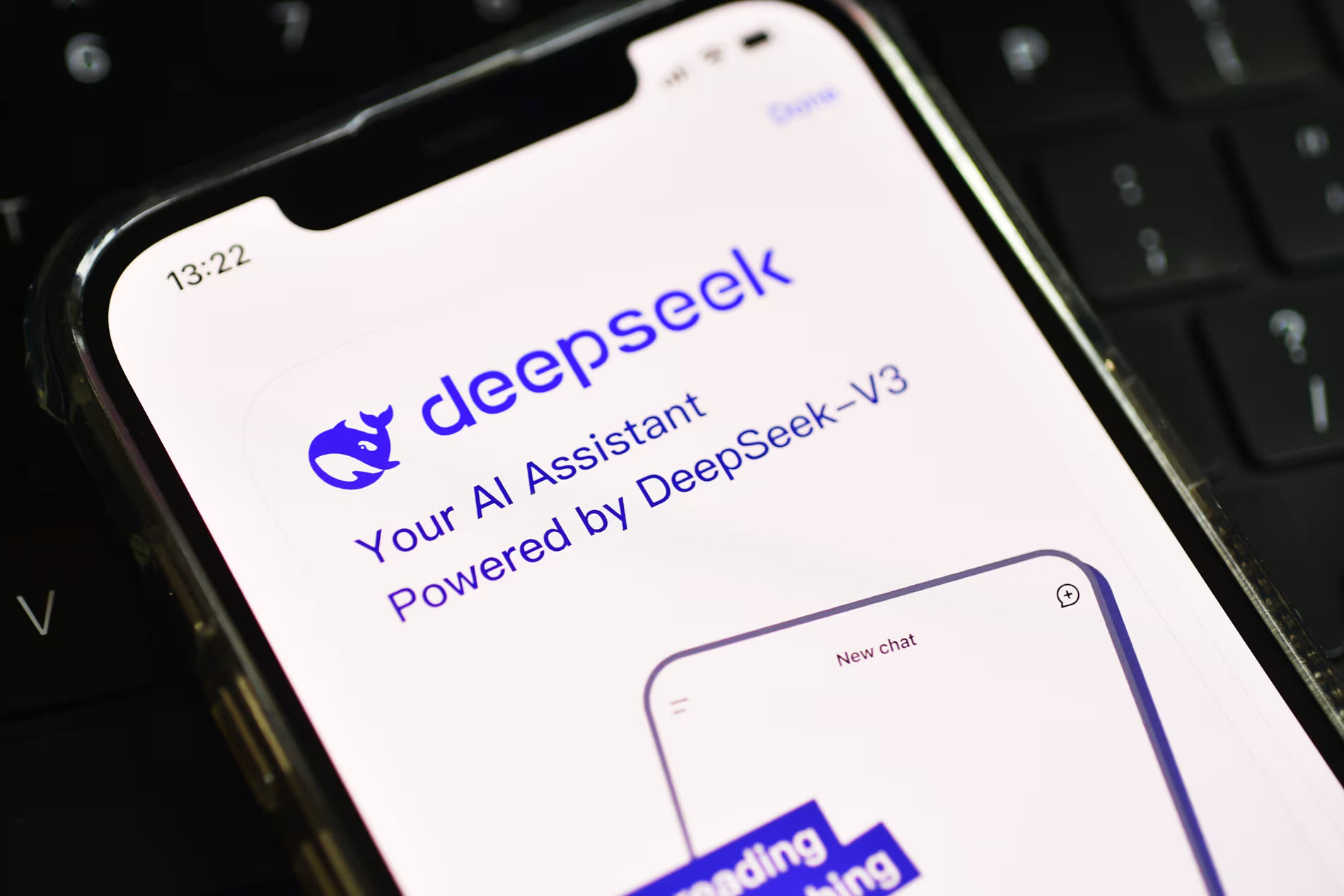
The launch of DeepSeek created a major seismic shift, not only in the artificial intelligence (AI) market but also significantly impacting the global technology industry. Within the first 20 days of its release, DeepSeek attracted over 20 million users, setting a record for growth rate.
The DeepSeek "storm" has raised many big questions: What has China done to close the AI gap with the US so quickly? And more importantly, what can Vietnam learn from this strategy?
DeepSeek is the result of a multi-year plan by China.
According to Associate Professor Dr. Nguyen Xuan Hoai, Director of the Vietnam Institute of Artificial Intelligence, before DeepSeek appeared, many believed that China had been left far behind by the US in the field of AI, especially after OpenAI launched ChatGPT. The 2023 AI Index report assessed that China had fallen behind the US by about 3-5 years in the Generative AI race.
However, with the advent of DeepSeek, this "picture" has changed. In just one year, China not only caught up but also demonstrated incredible acceleration in the field of generative AI.
Associate Professor Dr. Nguyen Xuan Hoai believes that this success is not a random result, but rather a testament to a well-planned national strategy and close coordination between the government , businesses, and the research community.
In fact, China aims to become an AI superpower by 2035, with its domestic AI economy estimated to reach $300 billion. In 2023, the percentage of businesses applying AI in China reached 62%, double that of the US. This shows that China is not only focusing on research but also strongly promoting the practical deployment of AI.
According to Associate Professor Dr. Nguyen Xuan Hoai, DeepSeek is not just the result of a simple AI strategy, but must be part of a comprehensive science and technology strategy of China.
Sharing his personal perspective, Associate Professor Dr. Nguyen Ai Viet, former Director of the Institute of Information Technology (Vietnam National University, Hanoi), said that after many years of researching the Chinese approach to science and technology, he was not surprised by the emergence of DeepSeek. “ People are surprised, but I am not. When ChatGPT was released two years ago, I expected China to come up with something special, something different from ChatGPT .”
Commenting on DeepSeek, Associate Professor Dr. Nguyen Ai Viet stated that China chose a very opportune time for the launch of this AI tool. “ It’s no coincidence that when US President Donald Trump was elected, China released DeepSeek just hours before the Trump administration announced the Stargate project. DeepSeek was launched at a very opportune time, to target the US stock market ,” he said.
Associate Professor Dr. Nguyen Ai Viet predicts that China may have many other "cards" yet to be revealed, but what is certain is that the country has a very clear and persistent roadmap for scientific and technological development.
Sharing the same view, Associate Professor Dr. Nguyen Xuan Hoai also believes that China has been very successful in choosing the timing for the launch of DeepSeek. “ American companies are excessively hyping the story of the big language model. DeepSeek appeared like a timely slap in the face. This shows they must have a strategy, not the strategy of a business, but a Chinese strategy to compete with the US, ” the Director of the Vietnam Institute of Artificial Intelligence stated.
What can Vietnam learn from China about AI development?
According to Associate Professor Dr. Nguyen Ai Viet: " If we only look at the ambition for AI in the context of DeepSeek, we haven't seen the depth of Chinese thinking. It's a comprehensive and unified whole ."
Explaining further, Associate Professor Dr. Nguyen Ai Viet said that science is an ecosystem where the components are interconnected. China's scientific and technological research activities are part of a tightly linked, immovable ecosystem, which is why they have been able to achieve success.
In fact, the "Strategy for Science and Technology Development to 2050," published by the Chinese Academy of Sciences in 2009, outlined a detailed direction and mobilized the participation of 3,000 scientists. After a period of implementation, the program was assessed as successful, exceeding the set targets in many aspects.
Associate Professor Dr. Nguyen Xuan Hoai stated that the success story of DeepSeek is merely a result we can see in a larger issue. To achieve a product like DeepSeek, a whole support system is needed, from businesses and scientific institutions to a national-level initiative, in which the role of the government is indispensable.
According to the Director of the Vietnam Institute of Artificial Intelligence, DeepSeek's approach is like that of a "poor man's child," solving problems with limited capital. This could be an inspiration for Vietnam to do something similar.
Adding to this perspective, Professor Tran Thanh Long (University of Warwick, UK) stated that DeepSsek clearly reveals China's strategy.
From a technological standpoint, it's a success of innovation, especially considering that in recent years the country has been banned from importing high-end hardware for AI development. Therefore, when developing DeepSeek, they were forced to use a smaller model with a more intelligent algorithm, which allowed them to outperform ChatGPT and Open AI.
“ Before DeepSeek was created, the world thought that we had to invest a lot of money in machines, in AI centers, and data. That trend wasn't necessarily going to succeed; only an approach like DeepSeek has a long-term chance, using smaller algorithms, smaller models, but more sophisticated ones, ” Professor Tran Thanh Long shared.
DeepSeek's success also lies in demonstrating to the world the capabilities of open source. This opens up opportunities for everyone to use and create AI.
In Vietnam, since 2021, the Prime Minister has issued the National Strategy on Artificial Intelligence Development. More recently, Resolution 57 of the Politburo on breakthroughs in science and technology, innovation, and digital transformation has also been issued, bringing a fresh impetus and igniting the aspiration to advance through the development of science and technology.
Resolution 57 also clearly outlines the importance and specific goals for AI development in Vietnam. According to experts, in the context of a rapidly changing world, the global AI competition (between the US, China, Europe, and the rest), as exemplified by the DeepSeek story, prompts us to reflect on what Vietnam needs to do to avoid missing out and secure a place on the global technology map.
Source: https://vietnamnet.vn/tu-cau-chuyen-deepseek-viet-nam-nen-hoc-trung-quoc-dieu-gi-ve-phat-trien-ai-2371711.html

















































































Comment (0)