

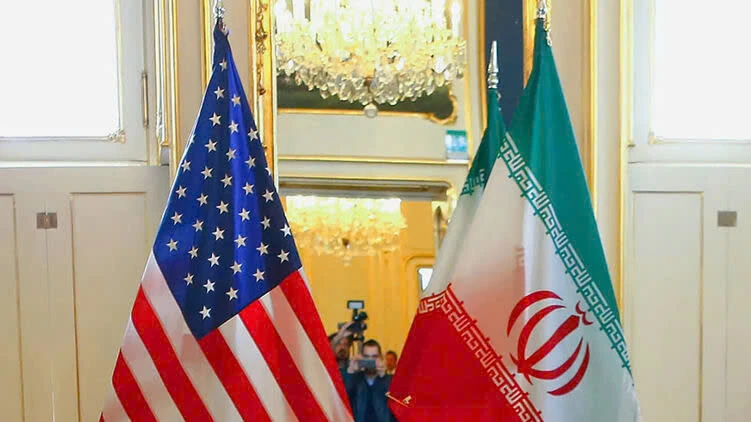
As Iran's nuclear program fades into the shadows
Recently, the Middle East has once again become a global "hotbed" of conflict. From the perspective that diplomacy with Iran had failed, the Trump administration shifted to military action, attacking key nuclear facilities. While this hasn't yet led to a serious escalation of conflict, the long-term effectiveness of this strategy remains questionable.
Assessing the immediate technical consequences of attacks on Iran's nuclear program remains a difficult task, even for the United States. There is no clear evidence that the U.S. and Israeli missile attacks inflicted significant damage on Iran's nuclear infrastructure, and detailed assessments remain controversial. In particular, the fate of the enriched uranium stockpiles – a key target of the operation – is currently uncertain.
Reports indicate that even US intelligence acknowledges it cannot accurately determine the location or extent of damage to Iran's radioactive stockpiles. The IAEA Director General estimates that Iran could resume uranium enrichment within two months, but this is only a preliminary figure due to a lack of precise data on the status of its nuclear program.
Although Washington's military campaign partially destroyed Iran's nuclear infrastructure, it diminished access to transparent information, complicating the resolution of the crisis through diplomatic means. This information gap could persist, especially as Tehran tends to operate its nuclear program clandestinely to avoid attack—a practice it has demonstrated to some extent in the past.
Observers believe that Iran's move to operate "in the shadows" not only reduces the effectiveness of the US coercive strategy but also negatively impacts the prospects for negotiations. While previously the parties could discuss specifics such as the number of centrifuges or the level of uranium enrichment, the current instability and lack of transparency make building a new agreement more difficult.
From deterrence to confrontation: A never-ending cycle.
The Trump administration no longer seems to consider reaching a new nuclear deal a prerequisite for resolving the Iran crisis. At the recent NATO summit, President Trump declared that a new agreement was unnecessary, suggesting Washington believes that missile attacks, while not completely destroying Iran's nuclear program, are sufficient to deter the threat in the long term. And if Iran restarts its program, the U.S. could repeat military action.
However, many have expressed doubts about this US strategy. First, US intelligence agencies disagree with President Trump's claims; they believe Iran's nuclear program has not been completely eradicated. Second, repeating attacks is not only technically ineffective due to the increasing lack of transparency in the program, but also carries the risk of escalating conflict. Each US military intervention increases the risk of a regional war. The fact that no escalation has occurred yet does not guarantee that it will continue in the future.
In reality, the attacks could make Iran even more determined to pursue its nuclear program—overtly or covertly—as a means of ensuring its security. This would force the U.S. to revert to repeated military coercion, while lacking a clear strategy to completely eliminate Iran's potential nuclear capabilities. At the same time, the increasing lack of transparency would hinder any future negotiation efforts.
Furthermore, uncertainty surrounding Iran's nuclear program continues to be a destabilizing factor in the region. The less transparency there is, the greater the risk that Gulf states will seek to develop their own nuclear capabilities, however potential, as a precautionary measure. This may not immediately lead to the emergence of a new nuclear power, but it is sufficient to fuel the proliferation of nuclear capabilities in the region, increasing strategic instability.
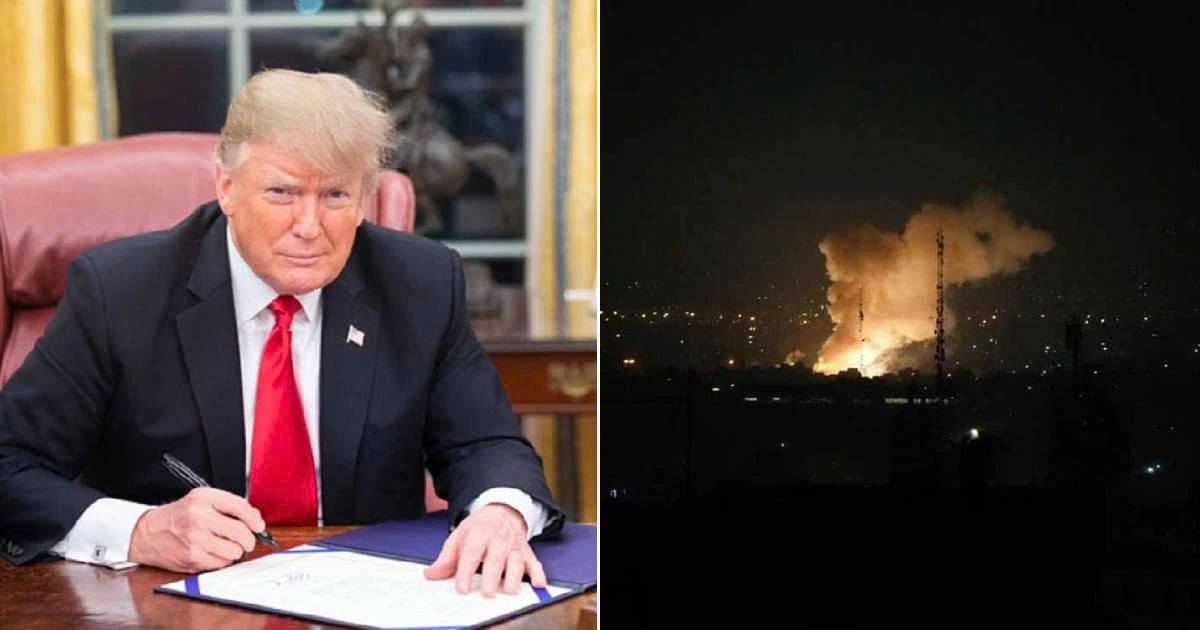
Washington, unable to remain aloof from major crises in the Middle East, will have to continuously invest military, diplomatic, and political resources to control the situation – something President Trump once sought to avoid. One option being considered is regime change in Tehran. If a pro-Western government were to come to power, they could end the nuclear program and cease supporting proxy forces in the region. However, the prospect of regime change through violence is clearly not feasible. Instead of weakening it, the attacks have united the Iranian people against the external threat. While the Iranian political system is not entirely stable, especially if Supreme Leader Khamenei dies, no one can accurately predict who will succeed him, or whether their policies will change. Furthermore, attacks on the US and Israel have weakened the influence of forces that support cooperation with the West, making a policy shift fragile.
The prospects for resolving the Iranian nuclear crisis through diplomatic means in the near future remain very dim. Despite military confrontations between the US and Iran, the positions of both sides have remained largely unchanged: Washington continues to demand that Iran relinquish its uranium enrichment rights, while Tehran views this as an uncrossable red line.
Even after the U.S. missile attacks, the potential for uranium enrichment became even more important to Iran, as an alternative deterrent to conventional military capabilities – which have proven insufficient to prevent external intervention. Even if Tehran had no intention of developing nuclear weapons, a robust uranium enrichment infrastructure was seen as the only way to deter repeated military action from the U.S.
Giving up the right to independently enrich uranium would not only be seen by Iran as a concession to pressure from the US and Israel, but also as an acceptance of a subordinate position in the international order – something Tehran's leaders have always tried to avoid, both before and after the US withdrawal from the JCPOA. Signing such an agreement, especially after the recent attacks, would be seen as a major political defeat domestically.
On the US side, the Trump administration also appears unwilling to compromise or restart negotiations. Trump believes that military action has severely weakened Iran's nuclear program, and therefore, Tehran should make concessions. Clearly, President Trump's current policy focuses more on pressure and coercion than diplomacy. Washington is no longer actively seeking negotiations, and is even less willing to make any significant concessions – making the prospect of a diplomatic solution even more remote.
Hung Anh (Contributor)
Source: https://baothanhhoa.vn/van-de-hat-nhan-iran-khi-suc-manh-khong-khuat-phuc-duoc-y-chi-254704.htm



![[Image] Vietnam's colorful journey of innovation](/_next/image?url=https%3A%2F%2Fvphoto.vietnam.vn%2Fthumb%2F1200x675%2Fvietnam%2Fresource%2FIMAGE%2F2025%2F12%2F14%2F1765703036409_image-1.jpeg&w=3840&q=75)




































































![[Image] Vietnam's colorful journey of innovation](https://vphoto.vietnam.vn/thumb/402x226/vietnam/resource/IMAGE/2025/12/14/1765703036409_image-1.jpeg)

























Comment (0)