

Family and Society - When you get old, no matter how much you love your children, remember that they also need to learn how to live independently.
1. Money
As parents, they always love their children and are ready to do what's best for them.
Even in their twilight years, they still want to leave behind a lot of money and possessions so that future generations will have an easier life. However, there's a saying: teach your children how to fish, don't give them fish.
In this matter, parents should only provide support and not take over their children's financial responsibilities, as this could lead to many unnecessary negative consequences.
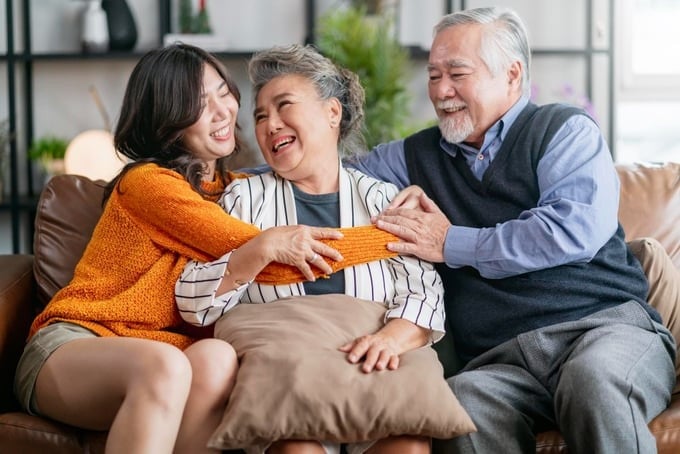
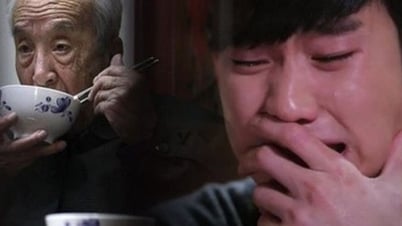
In their old age, instead of leaving all their money to their children, parents should "save" for themselves, preparing a solid financial foundation. (Illustrative image)
Consequently, children who live in affluent circumstances sometimes fail to appreciate their parents' hard work and develop extravagant and materialistic lifestyles.
Their inability to control their spending can easily lead to many problems. Therefore, while parents love their children, they shouldn't give them money for impractical things, as this can easily spoil them.
Moreover, being financially supported by their parents can make children unwilling to work, leading to laziness and a loss of ambition.
Gradually, they will come to see their parents giving them money as a matter of course and demand it if their request is not met.
This habit of dependence will make it difficult for these children to become independent when they face difficulties without their parents' help, and they will experience many failures when confronted with the harsh realities of society.
This shows that parents who spoil and overprotect their children are not good, especially when it comes to money.
Conversely, parents who instill independence in their children from a young age will help them mature early, understand the value of money, and appreciate the value of hard work.
From there, the children will learn to cherish and save the money they earn, and will also have more motivation and confidence to earn money and prolong the family's prosperity.
In addition, when they get old, instead of leaving all their money to their children, parents should also "save" for themselves, preparing a solid financial foundation.
When children grow up, they won't always be there to take care of you. At that point, if you happen to fall ill or face an emergency, you can still manage on your own without needing your children's help.
Only then will you have less worry and anxiety in your later years.
2. Houses
Mr. Wang's former neighbor (from China) sold his house and wanted to move in with his son as soon as his son got married.
Many people around them advised them not to act impulsively but to hold on, so that if they were unhappy living together later, they would still have a way out.
But the old neighbor confidently believed that the child, being filial from a young age, would be fine.
Sure enough, after living together for less than a year, the former neighbors had to pack their bags and return to their hometown to find a new home.
Unfortunately, local housing prices have risen sharply, and most of their money has been given to their children. The elderly couple no longer have enough to buy a house and can only rent a temporary dwelling.
Many older people confidently believe that the more people in the household, the happier the family, but in reality, this is not a good choice.
First of all, there are huge differences between generations; young people like to stay up late, while older people prefer to go to bed early; young people like noise, while older people prefer quiet... even small things can easily lead to conflict.
Elderly people should change their old ways of thinking, not tie themselves down to their children. When children grow up, they should have their own space and their own lives. If they miss their children, they should still gather together and enjoy holidays.
3. Bias
Favoritism within families has been quietly occurring in many families in various ways and to varying degrees.
Perhaps the most typical example is when parents show favoritism towards one child or create the impression that their parents are showing favoritism among siblings, even though sometimes the parents don't actually favor or intentionally show more love to one child than the other.
However, this has inadvertently caused conflicts and rifts between generations, with many people even shunning each other and never speaking again.
Therefore, in all circumstances, even in old age, parents should not show favoritism in words or actions towards any of their children.
Equal love and care from parents to their children is the "healing medicine" that helps children develop healthily.
Only when each child believes they are loved can they love others, and only then will the family be harmonious and close-knit.

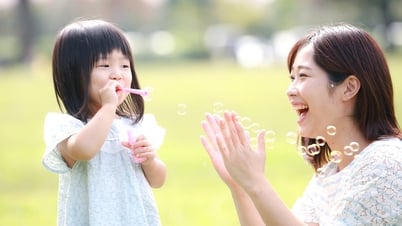
Even in old age, parents should not show favoritism in words or actions towards any of their children. (Illustrative image)
4. Time
As people get older, they don't have much time left.
Many parents spend that time taking care of their grandchildren and doing housework for their children instead of enjoying and resting after working hard for more than half their lives.
This not only wastes valuable remaining time but also negatively impacts health due to overwork.
Good health is not only a blessing for the elderly but also the greatest support for their children.
Take time to exercise, join clubs to socialize and make friends, maintain a relaxed state of mind, and you will be healthy.
Many parents are highly self-sacrificing, devoting their entire lives to their children, and giving as much as they can without complaint.
However, we must understand that before becoming parents, we were also ordinary people with our own lives and needs.
Parents should learn to enjoy their own lives. "Selfless devotion" is no longer appropriate for contemporary family relationships.
As an older adult, learn to take care of yourself and enjoy life. As for children, they must learn to be independent and respect their parents' decisions.
Source: https://giadinh.suckhoedoisong.vn/ve-gia-nguoi-khon-ngoan-se-keo-kiet-voi-con-cai-4-thu-172250207170009804.htm





















![[Photo] Prime Minister Pham Minh Chinh attends the Conference summarizing and implementing tasks of the judicial sector.](/_next/image?url=https%3A%2F%2Fvphoto.vietnam.vn%2Fthumb%2F1200x675%2Fvietnam%2Fresource%2FIMAGE%2F2025%2F12%2F13%2F1765616082148_dsc-5565-jpg.webp&w=3840&q=75)




















































Comment (0)