

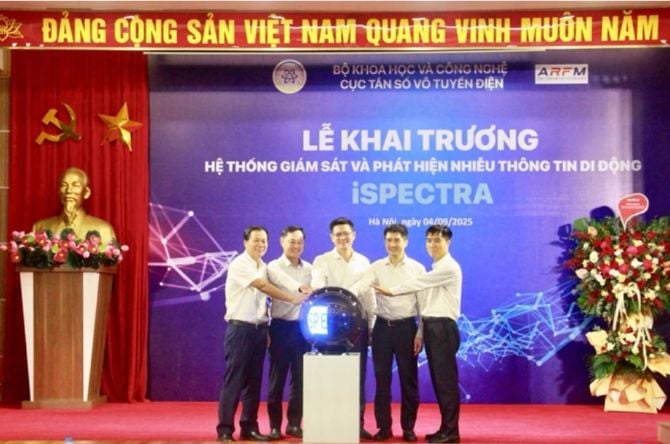
Addressing the challenges posed by the mobile network boom.
In recent years, the rapid development of 4G and 5G networks, the fast pace of urbanization, and the increase in wireless devices have led to a significant increase in interference at base stations (BTS). This has directly affected the quality of telecommunications networks, causing difficulties for users. Previously, identifying the causes and resolving interference often required considerable time, effort, and resources from both network operators and regulatory agencies.
To address this issue, the Radio Frequency Department has collaborated with telecommunications companies to deploy the iSpectra system during the 2023-2025 period.
The iSpectra system was developed based on a completely new principle: transforming hundreds of thousands of BTS stations nationwide into "sensors" that monitor and collect data in real time, detecting, warning, isolating, and quickly processing interference sources. This approach has realized the Ministry of Science and Technology 's policy of shifting from manual, paper-based management to digital, data-driven management.
Mr. Le Van Tuan, Director of the Radio Frequency Department, said that he had shared information about iSpectra with many countries and telecommunications equipment manufacturers, but none had yet come up with a similar solution based on the coordinated efforts between regulatory agencies and network operators.
Recognition from network operators
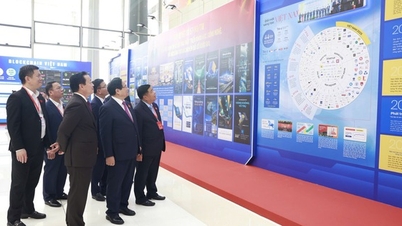
At the launch ceremony, representatives from major network operators such as Viettel, VNPT, and MobiFone all affirmed that iSpectra has proven its effectiveness in practice.
According to statistics, since its trial operation began in April 2025, iSpectra has helped detect 70 sources of interference, a 65% increase compared to the same period in 2024. Accuracy reached 76% (higher than the previous 65%), while interference processing time was halved, equivalent to saving approximately 1,080 working hours per year.
Mr. Nguyen Dat, Deputy General Director of Viettel , stated that with its extensive network infrastructure (51,000 mobile stations with approximately 300,000 4G cells) and plans for 5G expansion, manually addressing interference would require significant resources. He noted that iSpectra not only ensures service quality for over 100 million people but also serves as the first building block in the digital transformation of national frequency management.
Representatives from VNPT also highly appreciated iSpectra, considering it a powerful tool that helps businesses handle incidents faster, thereby improving user experience and ensuring network stability.
Future development: Integrating AI and comprehensive digital management.
In the next phase, the iSpectra system will be further developed with more intelligent features, particularly the integration of artificial intelligence (AI) and machine learning to automatically analyze, classify, predict, and pinpoint the location of interference sources. The system will also be expanded to monitor 5G networks.
Viettel has proposed the early completion of iSpectra Phase 2 for deployment in 2026, while also researching the expansion of the system to other functions such as frequency monitoring in border areas, serving new services such as telecommunications infrastructure for low-level economic development, and frequency planning for dedicated networks. The long-term goal is to build a comprehensive, digitized frequency management platform, automating all processes from registration and licensing to monitoring and performance evaluation.
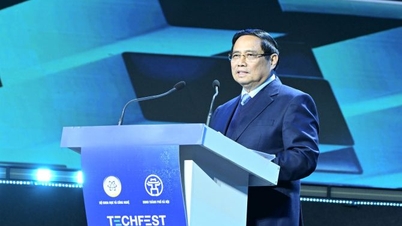
Speaking at the event, Director Le Van Tuan said that the launch of the iSpectra system affirms the determination to innovate management methods based on modern technology and stated that they will continue to cooperate with businesses to improve the system, serving the goal of developing the national digital infrastructure.
Source: https://doanhnghiepvn.vn/cong-nghe/viet-nam-khai-truong-he-thong-giam-sat-va-phat-hien-nhieu-song/20250818081330803

























































































Comment (0)