

Vietnam emphasizes compliance with regulations on banning chemical weapons
Within the framework of the 30th Conference of the States Parties to the Convention on the Prohibition of Chemical Weapons (CSP30) at the headquarters of the Organization for the Prohibition of Chemical Weapons (OPCW), The Hague (Netherlands), the Vietnamese delegation chaired by the Ministry of Industry and Trade, with the Department of Chemicals as the focal point, actively participated and contributed many important contents. Thereby, continuing to affirm Vietnam's steadfast commitment to the goal of completely eliminating chemical weapons on a global scale.
Vietnam was one of the early member states to sign the Chemical Weapons Convention (CWC) in 1993 and ratify the Convention in 1998. Since then, together with other member states, Vietnam has always demonstrated its strong commitment to the implementation of the Convention.
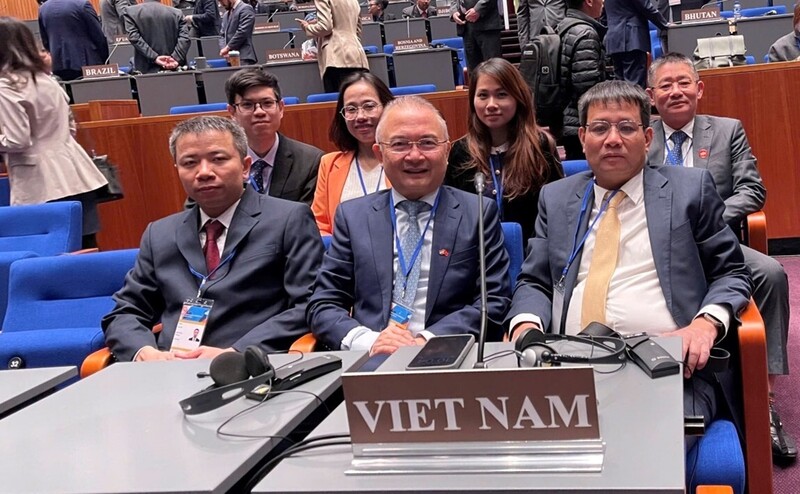
Mr. Phung Manh Ngoc, Director of the Department of Chemicals (Ministry of Industry and Trade) led the Vietnamese delegation to attend the 30th Conference of States Parties to the Convention on the Prohibition of Chemical Weapons (CSP30) in The Hague, the Netherlands.
The Government has assigned the Ministry of Industry and Trade as the presiding agency. The Department of Chemicals (Ministry of Industry and Trade) takes on the role of technical focal point, coordinating activities between ministries, branches, localities and the business community related to chemicals under the scope of CWC.
At the CSP30 Conference, the Vietnamese delegation led by the leader of the Department of Chemicals (Ministry of Industry and Trade) delivered a speech emphasizing Vietnam's consistent stance on the complete and irreversible disarmament of weapons of mass destruction, supporting the central role of the OPCW and promoting strict and full compliance with the provisions of the Convention. At the same time, Vietnam also shared its experience in linking the international obligations of the CWC with the process of perfecting the domestic legal framework, especially in the context of the recently promulgated Law on Chemicals 2025.
Efforts to internalize obligations related to CWC
The year 2025 marks an important step forward as Vietnam has fully internalized its relevant obligations under the CWC through the 2025 Chemicals Law. The new law classifies chemicals controlled under the Convention into two groups: “chemicals requiring special control” and “prohibited chemicals”.
At the same time, a strict management mechanism must be applied to the entire life cycle of these chemicals, from production, trading, import and export, transportation, use to treatment and destruction. This is an important legal basis for the Ministry of Industry and Trade (with the Chemical Department as the focal point) to effectively implement the obligations of declaration, inspection, examination and coordination to support international inspections as required by the OPCW.
Another important highlight of the 2025 Chemical Law is the clear affirmation of the obligation to comply with international treaties to which Vietnam is a member (including the CWC). The Law establishes a specialized database on chemicals, allowing for unified and synchronous management, effectively serving the licensing, declaration and monitoring of controlled chemical activities.
On that basis, the Ministry of Industry and Trade (directly the Department of Chemicals) has the conditions to increase the application of information technology, gradually digitize management processes, ensure information transparency, improve reporting quality and data retrieval when working with OPCW as well as with relevant domestic agencies.
In addition to regulations on chemical classification and control under CWC, the Chemical Law 2025 also emphasizes the requirements to ensure chemical safety, security and environmental protection.
New regulations on risk assessment, planning for prevention and response to chemical incidents; responsibilities of organizations and individuals in the management and use of hazardous chemicals; inspection, examination and handling of violations mechanisms... create a synchronous legal framework for the Ministry of Industry and Trade (through the Department of Chemicals) to closely coordinate with ministries and branches in monitoring, detecting and preventing the risk of exploiting chemicals for military , terrorist or other illegal purposes.
As the national focal point in implementing the CWC, the Ministry of Industry and Trade (Chemical Department) not only focuses on institutional improvement, but also accompanies and supports the business community.
Through training programs, technical guidance, and legal dissemination, the management agency helps businesses better understand their declaration obligations, reporting regimes, licensing regulations, as well as legal risks if they violate regulations related to controlled chemicals. The “support – guidance – supervision” approach is implemented to ensure both security and safety requirements and create favorable conditions for legal and healthy production and business activities.
At CSP30, Vietnam's emphasis on the progress in building and perfecting the 2025 Chemical Law also shows its proactive and positive efforts in "keeping pace" with international standards on chemical weapons disarmament and non-proliferation. These results are evidence of the effective coordination of the entire political system, in which the Department of Chemicals plays a core role in terms of expertise, contributing to enhancing Vietnam's reputation and position in the international community.
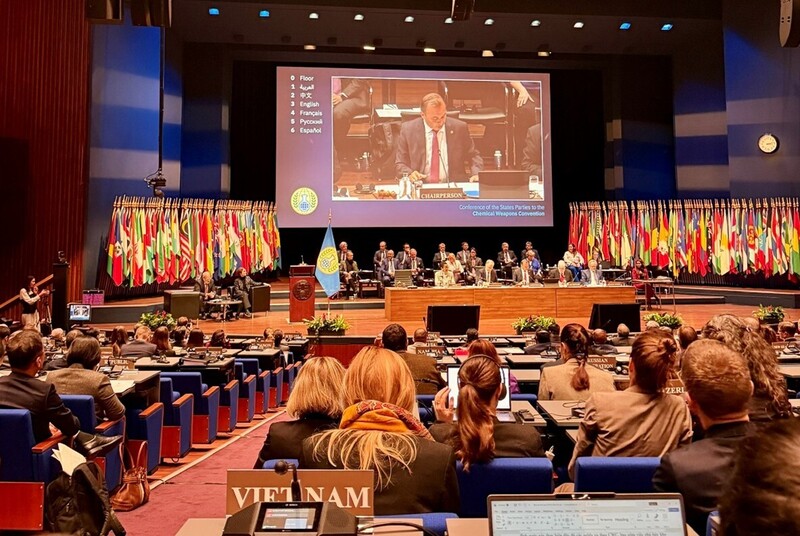
The Vietnamese delegation made positive contributions at CSP 30, affirming its determination to join countries around the world in fighting against chemical weapons.
Through its participation and active contribution to CSP30, along with the promulgation and implementation of the Chemical Law 2025, Vietnam continues to affirm its steadfast commitment to the complete elimination of chemical weapons, and zero tolerance for any use, threat to use or proliferation of these weapons in any form. At the same time, Vietnam also affirms its desire to strengthen cooperation with the OPCW and member states in training, capacity building, information sharing, technical assistance and development of the use of chemicals for peaceful purposes.
In the coming time, the Ministry of Industry and Trade (Chemical Department) will continue to review and develop detailed regulations and guidelines for the implementation of the 2025 Chemical Law; promote communication and dissemination of laws; strengthen specialized inspections; and expand international cooperation in the field of chemical security and safety. These efforts aim to ensure that the implementation of the CWC Convention is carried out synchronously and effectively, in line with the goal of sustainable development of the chemical industry and protecting the safety of people's lives.
With all the above actions and efforts, the central role of the Ministry of Industry and Trade (Chemical Department) in implementing the Chemical Weapons Convention, implementing the Chemical Law 2025 and promoting the use of chemicals for peaceful purposes continues to be affirmed, making practical contributions to peace, security and stability at both regional and global levels.
Source: https://congthuong.vn/viet-nam-khang-dinh-lap-truong-tuan-thu-cong-uoc-cam-vu-khi-hoa-hoc-433606.html

![[Photo] National Assembly Chairman Tran Thanh Man attends the VinFuture 2025 Award Ceremony](/_next/image?url=https%3A%2F%2Fvphoto.vietnam.vn%2Fthumb%2F1200x675%2Fvietnam%2Fresource%2FIMAGE%2F2025%2F12%2F05%2F1764951162416_2628509768338816493-6995-jpg.webp&w=3840&q=75)


![[Photo] 60th Anniversary of the Founding of the Vietnam Association of Photographic Artists](/_next/image?url=https%3A%2F%2Fvphoto.vietnam.vn%2Fthumb%2F1200x675%2Fvietnam%2Fresource%2FIMAGE%2F2025%2F12%2F05%2F1764935864512_a1-bnd-0841-9740-jpg.webp&w=3840&q=75)











































































Comment (0)