

The overall objective of the Strategy is to develop Vietnam's logistics services to be sustainable, efficient, high-quality, and high value-added, with strong competitiveness, leveraging Vietnam's advantages in global supply and value chains.
The goal is to achieve an average annual growth rate of 12% - 15% for the logistics service industry.
The strategy for the period 2025-2035 aims for the value added of logistics services in the gross domestic product to reach 5%-7%. The average annual growth rate of the logistics service sector is targeted at 12%-15%. The percentage of businesses outsourcing logistics services is targeted at 70%-80%. Logistics costs relative to the gross domestic product are targeted to decrease to approximately 12%-15%; ranking among the top 40 countries and territories according to the Logistics Performance Index (LPI - published by the World Bank). The number of logistics service businesses using digital transformation solutions is targeted to reach 80% of all logistics businesses in Vietnam.
Logistics services are developing efficiently towards reducing emissions and transitioning to green energy sources. 70% of workers in the logistics service industry have received technical and professional training, with 30% holding a university degree or higher. During this period, at least five modern, internationally-standard logistics service centers will be established, serving as hubs for connecting and developing supply chains in the region and internationally.
 |
| The strategy for developing Vietnam's logistics services aims to establish at least 50 world-class logistics service centers by 2050. |
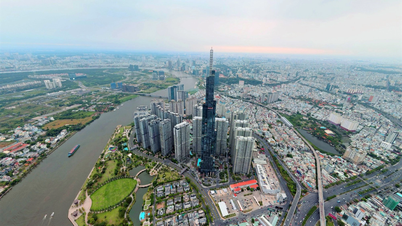
By 2050, at least 10 modern, world-class logistics service centers will be built.
By 2050, the value-added share of logistics services in the gross domestic product (GDP) is projected to reach 7% - 9%. The average annual growth rate of the logistics industry is expected to be 10% - 12%. The proportion of businesses outsourcing logistics services will reach 80% - 90%. Logistics costs relative to GDP will decrease by approximately 10% - 12%. The country is expected to rank among the top 30 countries and territories according to the Logistics Performance Index (LPI - published by the World Bank).
The number of logistics service businesses using digital transformation solutions has reached 100% of all logistics businesses in Vietnam. Logistics services continue to develop efficiently in the direction of reducing emissions, contributing to bringing the nation's net emissions to zero. 90% of workers in the logistics service industry have received technical and professional training, with 50% holding a university degree or higher. At least 10 modern, internationally-standard logistics service centers have been established, playing a key role in connecting and developing supply chains in the region and internationally.
Forming and developing a synchronized and modern logistics infrastructure.
The strategy outlines a breakthrough in building and perfecting legal institutions to improve the investment and business environment, encourage economic sectors to participate in the development of logistics services, promote international integration, strengthen state management, and enhance the effectiveness and efficiency of law enforcement regarding logistics services under a market mechanism, appropriate to the country's economic development level and consistent with international practices and laws.
Promote investment in the construction, formation, and development of a synchronous and modern logistics infrastructure, focusing on transportation infrastructure, commercial infrastructure, and digital infrastructure, while protecting the environment, preventing natural disasters, and adapting to climate change.
Promoting linkages between industries, sectors, territories, regions, and internationally, in accordance with the socio-economic development requirements of each locality, within a region, inter-regional, and the entire country at each stage of development, will serve as the basis for developing logistics services.
Simultaneously, we must build supply sources, develop the logistics market, and ensure sustainable growth in the logistics service industry; enhance the competitiveness of logistics service businesses, while improving the quality and greening of logistics service activities based on digital platforms. We must promote research and application of scientific and technological advancements, innovation, digital transformation, and green transformation in the logistics service sector, improving the efficiency of logistics operations linked to production, import and export, and domestic and international distribution.
This also involves developing high-quality logistics human resources to improve the efficiency and quality of logistics services. Enhancing the role of associations and pioneering enterprises in the logistics service sector, promoting the formation of modern supply chains, and developing diverse value-added logistics services to meet domestic and international needs will help Vietnam become a global hub for goods transit and distribution.
Key solutions and tasks of the Strategy
The solutions and tasks set forth in the Strategy include:
1. Improve the legal framework, strengthen state management, and enhance the effectiveness and efficiency of law enforcement regarding logistics services;
2. Promote investment in the construction, formation, and development of a comprehensive and modern logistics infrastructure;
3. Promote regional linkages in the development of logistics services;
4. Building supply sources and developing logistics markets;
5. Enhance the competitiveness of logistics service businesses and the quality of logistics services;
6. Promote research, innovation, digital transformation, and green transformation in the logistics services sector;
7. Developing high-quality human resources in logistics;
8. Enhance the role of associations and pioneering enterprises in the logistics services sector;
9. Other tasks.
Develop new, convenient, and cost-effective modes of transportation.
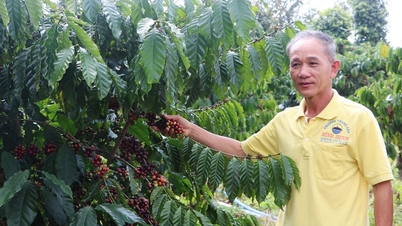
Specifically, the strategy involves investing in the construction, renovation, and upgrading of a complete transportation system and logistics centers to support the development of agricultural supply chains via road, waterway, rail, and air; developing new, convenient, and cost-effective domestic transportation and logistics options; and forming production-consumption linkages for agricultural products in key raw material areas to ensure the supply of high-quality, safe, and sustainable agricultural products through a system of agricultural logistics centers.
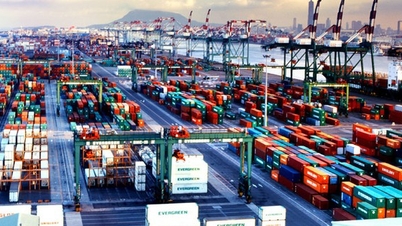
Promote investment in the construction and development of free trade zones linked to seaports, airports, border gates, and key commodity production areas; focus on improving infrastructure and the business environment to facilitate logistics serving e-commerce, including cross-border e-commerce. Establish central hubs for sorting and distributing e-commerce goods and processing orders based on modern technology, ensuring the fast, smooth, and safe handling of large volumes of goods.
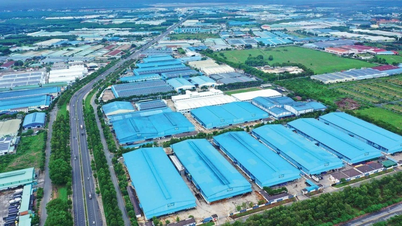
Invest in the construction and upgrading of logistics parks, distribution centers, smart warehouses, and specialized warehouses serving agricultural products, chemicals, industrial goods, processed and manufactured goods, and e-commerce.
Promote research, development, and implementation of suitable urban logistics models in major cities to meet the needs of optimal, cost-effective, and environmentally friendly goods transportation.
To enhance the competitiveness of logistics service businesses and the quality of logistics services, the Strategy aims to support the development of internationally competitive logistics service businesses, diversify logistics services, improve the ability to fulfill orders and contracts in terms of time, scale, quality, and price, and provide integrated 4PL and 5PL logistics services. Simultaneously, it supports logistics service businesses in establishing agency systems and gradually transitioning to establishing representative offices and branches abroad.
Formation and development of the logistics technology and service market.
Forming and developing a market for logistics service technology, developing a network of intermediary organizations in the science and technology market, and establishing a technology database system to support logistics service businesses.
Promoting the modernization of the customs system and increasing transparency in customs procedures based on digital technology aims to facilitate import and export activities and logistics services.
Promoting the development of logistics services within the restructuring plan for industrial, agricultural, commercial, transportation, and customs sectors, linked to the implementation of digital transformation, green transformation, and the development of a green, clean, and sustainable domestic and international production and distribution system.
Source: https://baodautu.vn/viet-nam-xay-dung-10-trung-tam-dich-vu-logistics-hien-dai-ngang-tam-quoc-te-d408395.html
![[Photo] The captivating scenery of the fragrant maple forest in Quang Tri](/_next/image?url=https%3A%2F%2Fvphoto.vietnam.vn%2Fthumb%2F1200x675%2Fvietnam%2Fresource%2FIMAGE%2F2025%2F12%2F10%2F1765353233198_lan09046-jpg.webp&w=3840&q=75)

![[Photo] Explore the US Navy's USS Robert Smalls warship](/_next/image?url=https%3A%2F%2Fvphoto.vietnam.vn%2Fthumb%2F1200x675%2Fvietnam%2Fresource%2FIMAGE%2F2025%2F12%2F10%2F1765341533272_11212121-8303-jpg.webp&w=3840&q=75)

























![[Video] The craft of making Dong Ho folk paintings has been inscribed by UNESCO on the List of Crafts in Need of Urgent Safeguarding.](https://vphoto.vietnam.vn/thumb/402x226/vietnam/resource/IMAGE/2025/12/10/1765350246533_tranh-dong-ho-734-jpg.webp)























































Comment (0)