

Technological solutions for hundreds of pounds of hazardous waste every day
At Thanh Hoa General Hospital, the pressure from medical waste is a daily phenomenon. According to statistics, on average, this unit generates about 190-200 kg of hazardous medical waste each day. This is a potential source of infection if not strictly controlled from the classification to the treatment stage.
Previously, the treatment process was often expensive and complicated to solve this problem, the hospital has put into operation the STERILWAVE 440 microwave technology medical waste treatment system with integrated crushing and cutting. This is a modern device with an impressive processing capacity of 30 - 50 kg/hour, well solving the need to treat hazardous waste arising at a busy provincial hospital. The advantage of this technology lies in the operating principle of microwaves. Instead of burning, causing smoke and dust, the machine uses microwaves to completely sterilize and sterilize waste before crushing it.
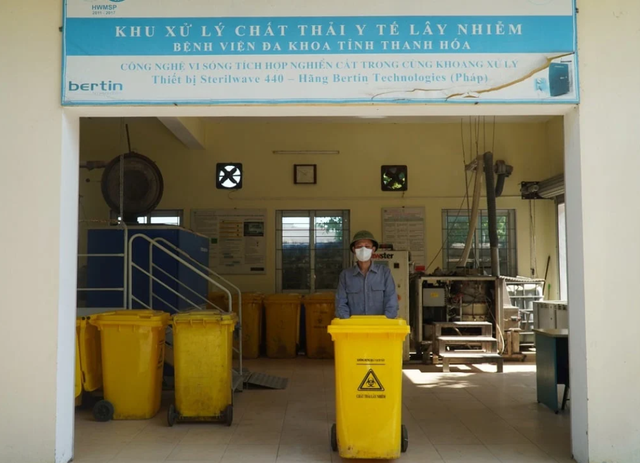
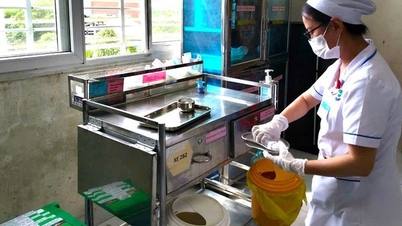
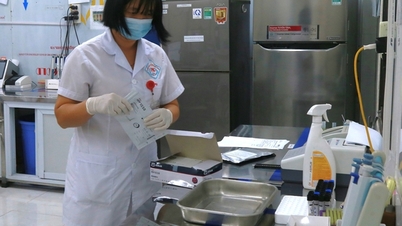
Applying advanced medical waste treatment technology contributes to reducing plastic waste at Thanh Hoa Provincial General Hospital. Photo: Thu Thuy.
As a result, potentially infectious medical materials such as cotton swabs, needles, gloves or blood-stained materials... after passing through this system have become normal waste, safe to be disposed of like household waste. Hospital leaders assess that this technology not only significantly reduces the risk of spreading pathogens into the environment but also takes place in a closed process, does not generate toxic emissions, ensuring strict current environmental standards.
In addition to hazardous waste treatment technology, the fight to reduce plastic waste is also being vigorously implemented by Thanh Hoa General Hospital. Entering the examination area, waiting room or hallway, people can easily see billboards and posters calling for the reduction of single-use plastic bags and bottles. The hospital encourages relatives and patients to use thermos bottles, glass bottles or cloth bags instead.
In particular, the spirit of "saying no to plastic waste" is deeply instilled in every doctor and nurse. Hospital leaders emphasize the point of view: Modern technology is necessary, but the awareness of medical staff and patients plays a key role. Because disposable medical plastics such as IV tubes and pharmaceutical packaging, if not managed well, will leave serious environmental consequences.
Tighten classification at source
Meanwhile, at Thanh Hoa Provincial Lung Hospital – a specialized unit specializing in treating dangerous infectious diseases such as tuberculosis and chronic obstructive pulmonary disease – the waste treatment process has its own strict requirements regarding biosafety.
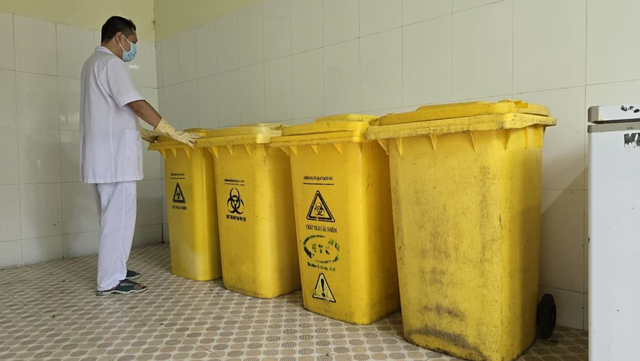
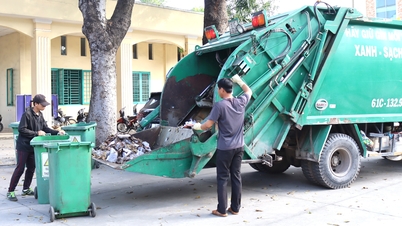
All infectious waste at Thanh Hoa Lung Hospital is treated in accordance with environmental and medical laws. Photo by Thu Thuy.
With the amount of waste generated in the tens of kilograms every day, the hospital has set up a safety fence right from the classification stage. The trash bin system is clearly color-coded in each area: yellow for infectious waste, red for non-infectious hazardous waste, black for household waste and white for recyclable waste.
Collection and storage procedures are also carried out systematically. Infectious waste is transported daily to a centralized incinerator through licensed units, ensuring that there is no backlog that could cause the risk of spreading disease. The temporary storage area is designed to be covered, airy and has a closely monitored logbook.
The most notable thing at these medical facilities is the change in community awareness. At Thanh Hoa Provincial Lung Hospital, the infographic system and visual signage have helped patients easily dispose of trash in the right place.
Medical staff not only work professionally but also act as communicators, regularly reminding patients not to throw masks and bandages into household trash to avoid cross-infection. Thanks to these persistent efforts, the awareness of maintaining general hygiene in the hospital has changed significantly.
From investing in modern machinery such as STERILWAVE 440 to small actions such as classifying masks and limiting plastic bottles, Thanh Hoa's health sector is gradually realizing the "green - clean - beautiful" hospital model. This is clear evidence that professionalism in health management lies not only in the quality of medical examination and treatment but also in the responsibility to protect the living environment for the community.
See more articles of interest:
Source: https://suckhoedoisong.vn/xu-ly-rac-thai-y-te-trong-benh-vien-tu-cong-nghe-vi-song-den-thay-doi-thoi-quen-nho-nhat-169251202155929124.htm


![[Photo] Cat Ba - Green island paradise](/_next/image?url=https%3A%2F%2Fvphoto.vietnam.vn%2Fthumb%2F1200x675%2Fvietnam%2Fresource%2FIMAGE%2F2025%2F12%2F04%2F1764821844074_ndo_br_1-dcbthienduongxanh638-jpg.webp&w=3840&q=75)
































![[VIMC 40 days of lightning speed] Da Nang Port: Unity - Lightning speed - Breakthrough to the finish line](https://vphoto.vietnam.vn/thumb/402x226/vietnam/resource/IMAGE/2025/12/04/1764833540882_cdn_4-12-25.jpeg)





































Comment (0)