

Phu Luong Medical Center was established in 1991. After more than 30 years of development, from a simple medical facility with only 18 employees, today, the Center has become a trusted address in public health care. This is one of the important "blocks" of the HIV/AIDS prevention system in Thai Nguyen province.
Having been with the Center since 2007 and officially on the payroll since 2009, Dr. Ha Thi Kim Dung, Deputy Head of the Department of Laboratory Testing - Diagnostic Imaging, is the one who has spent her "whole youth" with test tubes, machines and techniques.
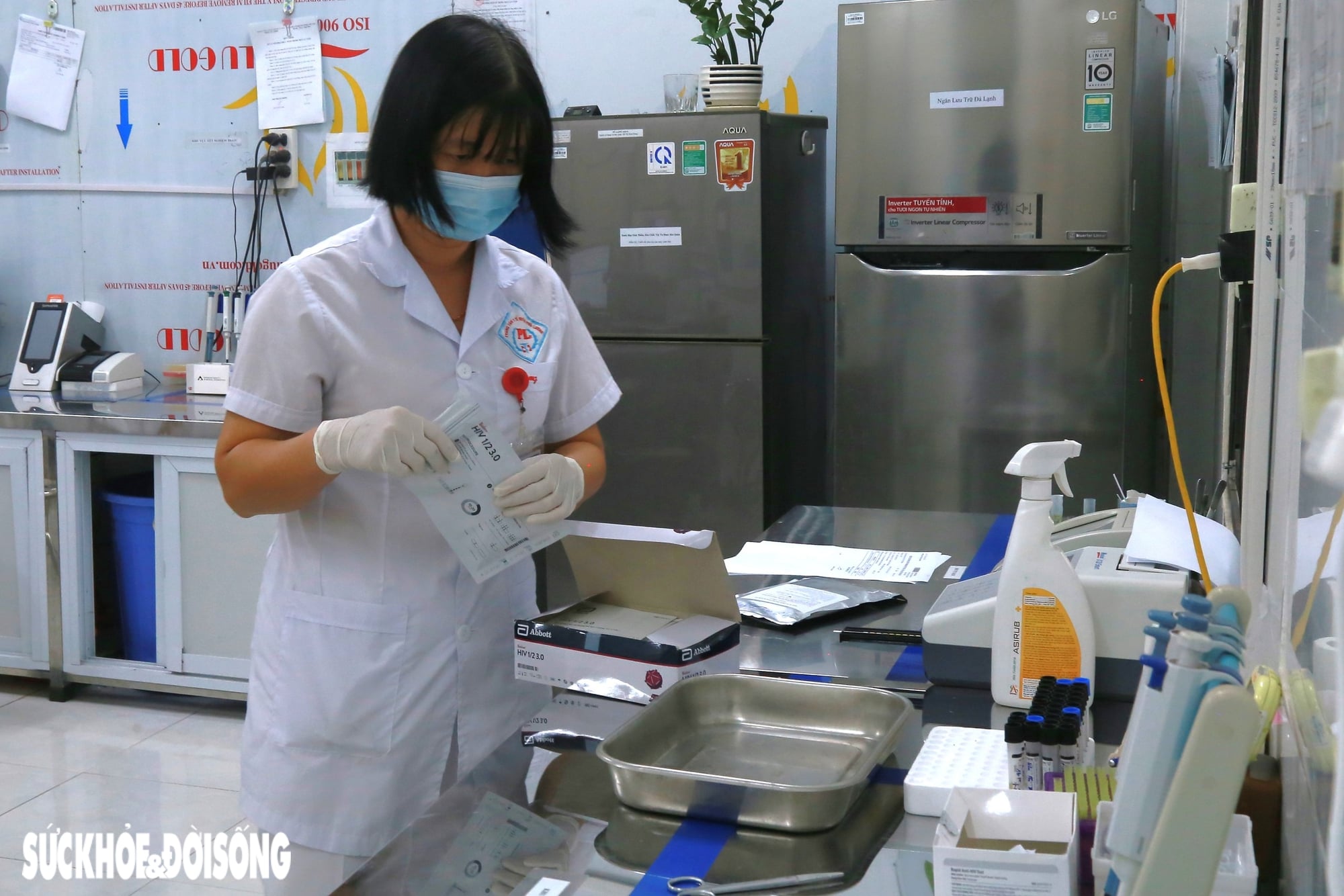
Doctor Ha Thi Kim Dung, Deputy Head of Laboratory - Diagnostic Imaging Department, Phu Luong Medical Center.
Sharing with Health and Life, Dr. Dung said that on average, the Laboratory - Diagnostic Imaging Department of Phu Luong Medical Center performs about 200 HIV/AIDS screening tests per month. In previous years, the number of positive cases could be up to 10 cases per year, but a "good sign" is that in recent years, especially from 2024 to now, the number of new positive cases detected in the laboratory has almost disappeared. This partly reflects the effectiveness of treatment and prevention work in the locality.
Dr. Dung's job is not to provide psychological counseling or complex treatment plans, her mission is to find the "truth". A "positive" or "negative" result from her hands will decide the next direction of a person's life.
"If we discover that a patient has tested positive for HIV/AIDS, we will counsel and ask them a few questions to reassure them and then refer them to a doctor for treatment. I usually don't go into much detail about psychology, but mainly focus on technical expertise," Dung honestly confided.
Looking at Dr. Dung calmly working today, few people know that she once experienced moments of extreme fear due to an occupational accident. That was in 2011, when she had just started her career a few years ago.
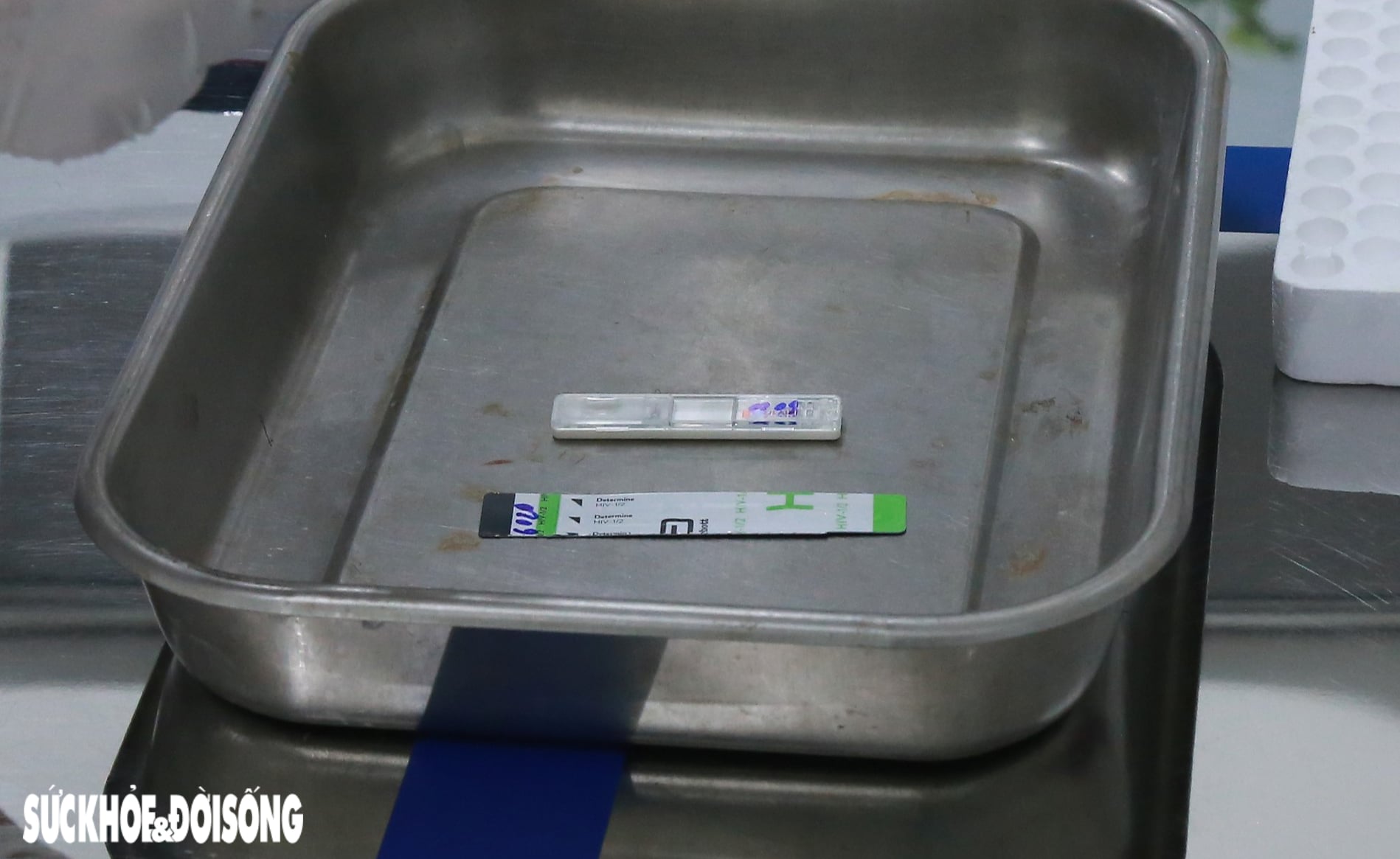
On average, the Laboratory - Diagnostic Imaging Department of Phu Luong Medical Center performs about 200 HIV/AIDS screening tests per month.
"That day when I first started working, while I was handling medical waste, I suddenly got stabbed in the leg by a needle in a safety box. The scariest thing was not the wound, but the uncertainty, because the needle was mixed in with a safety box containing countless used syringes, including needles from patients undergoing HIV treatment. No one knew whether the needle that stabbed my leg carried the disease or not. In general, I was very worried and scared at that time," said Ms. Dung.
Immediately, the exposure treatment process was activated. She cleaned the wound, disinfected it, and was given post-exposure prophylaxis (PEP) to take in the room. The agency also created conditions for her to take a period of time off work to stabilize her health and psychology due to the side effects of the medication.
"I stayed home for 3 months, that was the time I lived in anxiety waiting for the test results again. My husband knew about it and was very sympathetic, always encouraging and caring. My parents were also by my side. Thanks to that, I felt somewhat secure," Dr. Dung recalled.
After 3 months, holding the negative test result in her hand, she finally breathed a sigh of relief. The accident that year did not make her falter, but on the contrary, it became a painful lesson, a stern reminder of caution that she carried with her throughout her career.
Sharing about her commitment to this quiet job, she said: "For me, this is not just a job but a part of life. When I decided to pursue a career in medicine, especially HIV testing, I was mentally prepared to face all the pressures. Over time, I became accustomed to it, and fear gave way to calmness and responsibility."
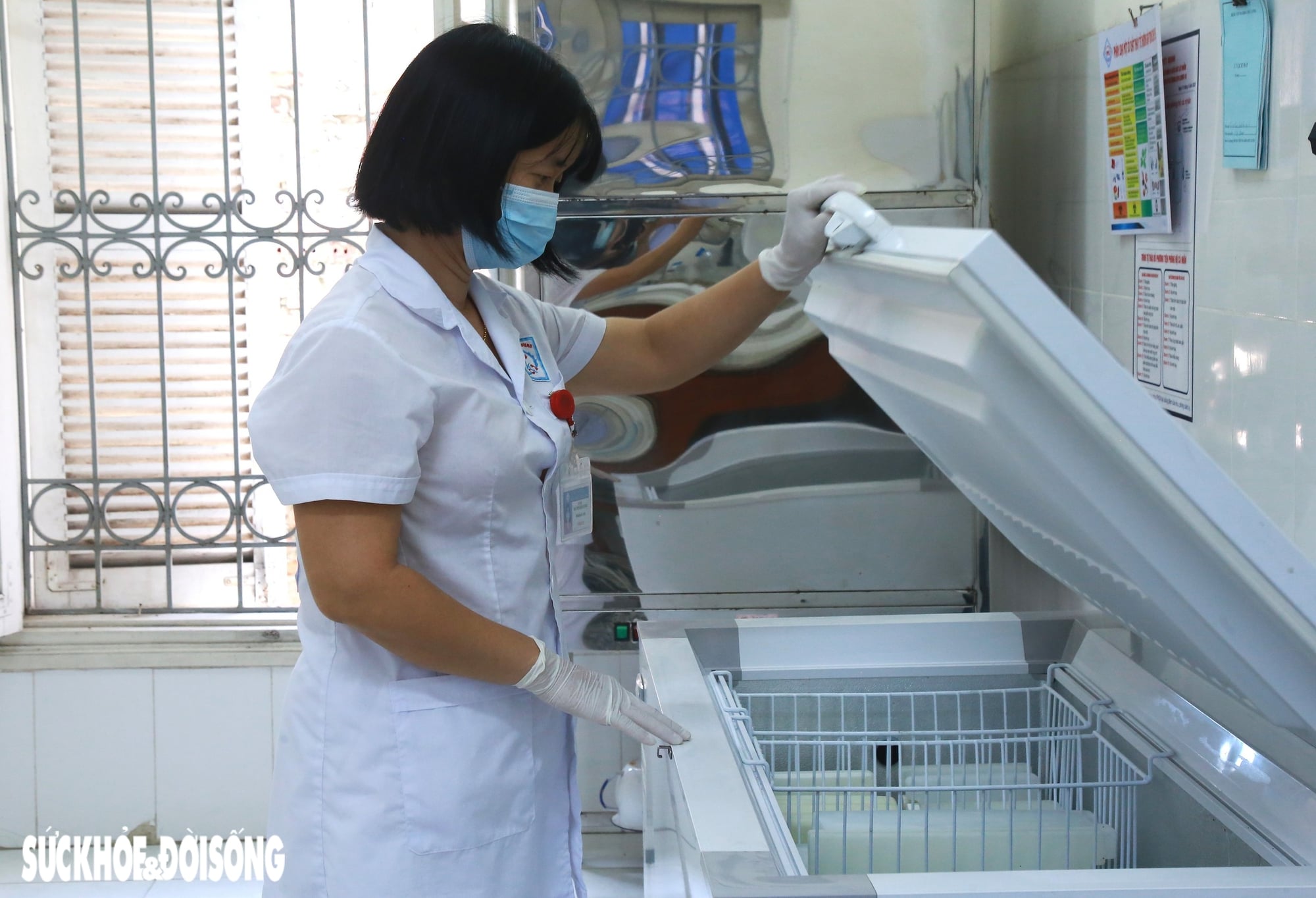
Since 2024, the number of new HIV/AIDS positive cases detected in laboratories has almost disappeared.
For her, the laboratory door is where all boundaries are erased. There is no distinction between HIV patients and normal patients. "I work with the heart of a doctor. In my eyes, all patients are equal. Discrimination or alienation is never allowed to exist in our thinking," she affirmed.
The female doctor's professional perspective is very clear and resolute, like a silent Hippocratic oath: "Once you put on a white coat, you have to be responsible. Patients come to you to entrust their trust and life. You cannot refuse or be afraid just because you know they are HIV-positive. That is not only a professional rule, but also a command from your conscience."
It is the calmness and responsibility of Dr. Dung and her colleagues that helps to erase the distance at the medical facility, helping patients feel more respected and secure when coming for examination.
As a senior who has experienced life-threatening moments due to occupational accidents, Dr. Dung is always concerned about training and guiding her young colleagues. The first lesson she teaches is not about advanced techniques, but the word "safety".
"The first lesson I always remind students is to put safety first. Every pair of gloves, every smallest action when coming into contact with specimens must be done properly, because that is the shield to protect yourself and the community," she emphasized.
Dr. Dung meticulously instructed his juniors step by step, from how to draw blood for HIV patients – who often have difficulty getting veins due to diving or fibrosis – to how to calmly handle secretions or blood accidentally spilled on the table and strict biosafety procedures.
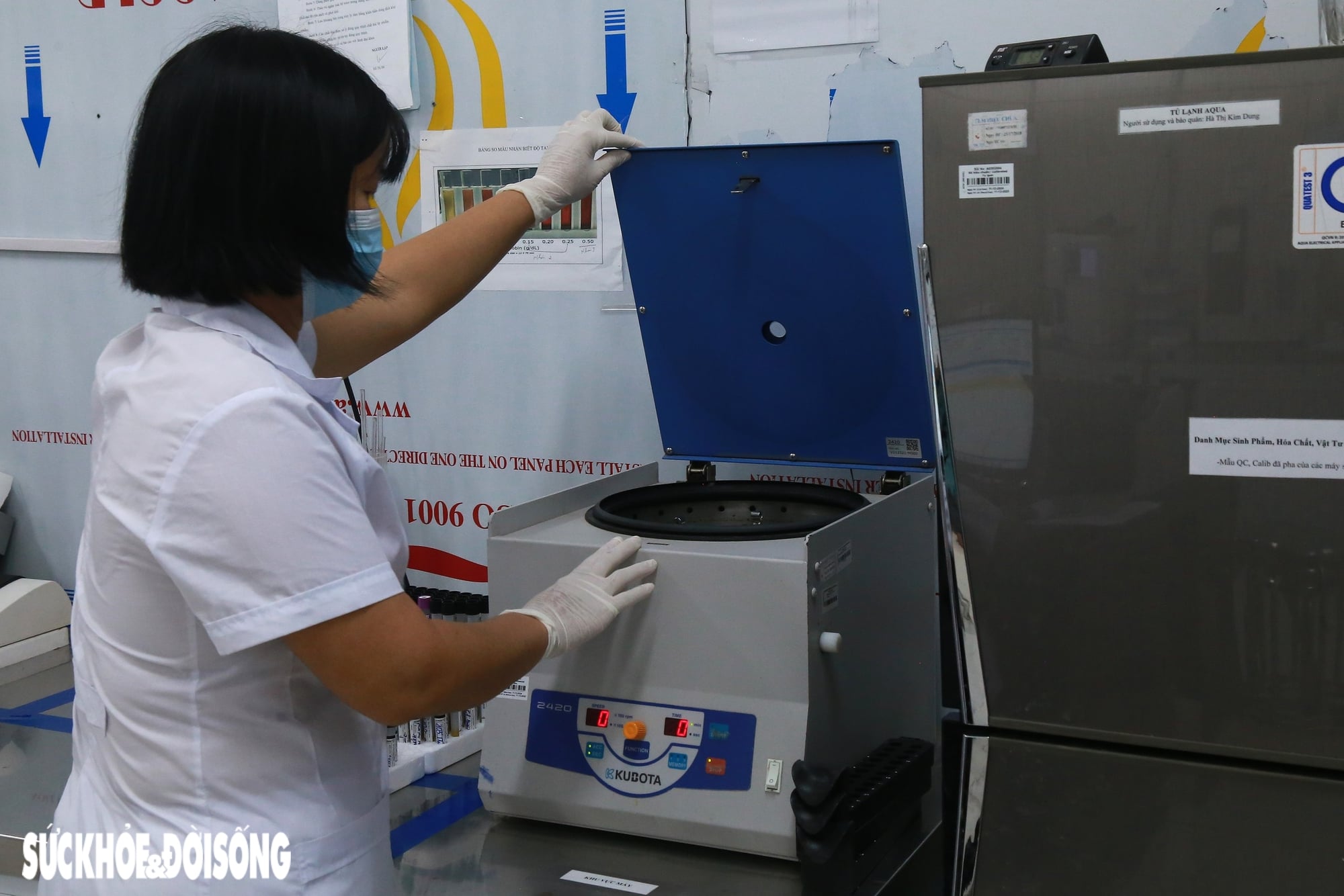
Behind the miraculous recovery of patients are the silent contributions of paraclinical workers like Dr. Dung.
"In the medical field, especially in the laboratory, understanding the transmission route is the best way to eliminate fear. I always try to impart good self-protection skills to the young generation. Only when they are truly assured and safe can they wholeheartedly care for the sick," she shared.
At Phu Luong Medical Center, behind the dry statistics, behind the miraculous recovery of patients, are the silent contributions of paraclinical workers like Dr. Dung.
They do not directly prescribe drugs, but they are the ones who guide the way to find diseases. They face the "needles of fate" to keep the community safe. And above all, they use professionalism and responsibility to overcome fear, maintaining the "stronghold" of HIV/AIDS prevention in Thai Nguyen .
Health and Life Newspaper in collaboration with the Department of Disease Prevention ( Ministry of Health ) launched the 'National Press Award on HIV/AIDS prevention and control'.
The National Press Award on HIV/AIDS Prevention and Control is an award organized by the Health & Life Newspaper in collaboration with the Department of Disease Prevention (Ministry of Health), to honor outstanding press works that truly reflect typical individuals and groups in all regions of the country in the fight against HIV/AIDS.
RULES OF THE "NATIONAL PRESS AWARD ON HIV/AIDS PREVENTION AND CONTROL" ARE AS FOLLOWS:
Article 1. Name of the Award
"National Press Award on HIV/AIDS Prevention and Control"
Article 2. Topics
Outstanding individuals and groups from all over the country in the fight against HIV/AIDS; vividly reflecting the efforts and contributions of groups and individuals in propaganda, prevention, care, treatment and support for people infected with HIV/AIDS and vulnerable groups; contributing to eliminating stigma and discrimination, spreading the spirit of humanity and community responsibility.
Article 3. Contestants
All Vietnamese citizens aged 18 and over, living in and outside the country. Members of the Organizing Committee, Jury, and Secretariat are not allowed to participate.
Article 4. Regulations on contest entries
1. Genre:
- Reportage, memoir, notes, portrait
- Photo: Reportage with at least 10 photos, telling a story through images on a topic related to HIV/AIDS.
- Television, multimedia: Television programs, documentaries on traditional platforms (TV) or electronic platforms, social networks.
2. Form of expression:
Entries can be in many different forms:
- In traditional form (article, video) In new form: Infographic, emagazine, megastory, longform... or combine many forms in one work to best convey the content, message and meaning of the work.
Note:
We do not accept works in the genre of news or regular events related to HIV/AIDS. All works must have a specific topic, be in-depth, have clear ideas and characters.
Do not use fictional characters; do not use special effects to change content or images; do not use artificial intelligence to create works.
3. Contest conditions of the work
- Eligible works must be published and broadcast from July 10, 2024 to November 20, 2025.
- For cases that have not been published or broadcast: The Organizing Committee will select to publish on the Health and Life Newspaper and the Newspaper's ecosystem.
- The Organizing Committee has the right to disqualify incomplete or non-compliant applications.
- The Organizing Committee will not return unqualified works.
4. Application documents
- Author/group information: Full name, pen name (if any), date of birth, gender.
- Contact information: Permanent address, phone number, email.
- Work unit (if any).
- Data to be submitted when participating in the contest:
+ Electronic newspaper: electronic newspaper link.
+ Television: Audio and video with script/narration.
+ Press photos: high resolution original image files, full captions.
- How to submit entries: submit your entry online via the website: https://giaibaochi2025.skds.vn
Article 5. Rights and responsibilities
1. Author
- Responsible for copyright, accuracy and legality of the work.
- Agree to let the Organizing Committee use the work for propaganda, exhibition, and publication (with the author's name clearly stated) in the media and press.
2. Organizing Committee
- Information security, public and transparent scoring and selection.
- Have the right to use the contest entry for communication purposes, not for commercial purposes.
Article 6. Time and address for receiving works
- Time of receipt: From the launch date to November 20, 2025 (calculated from the time of online submission).
- Receiving address: Send online via https://giaibaochi2025.skds.vn.
Article 7. Prize structure
- Award-winning works are divided into 3 groups, each group includes 4 award levels.
+ Written works
+ Group of photographic works
+ Television and multimedia group
- Total of 12 prizes, including:
+ 03 First Prizes: each prize is worth 20,000,000 VND
+ 03 Second Prizes: each prize is worth 12,000,000 VND
+ 03 Third Prizes: each prize worth 8,000,000 VND
+ 03 Consolation Prizes: each prize worth 5,000,000 VND
Source: https://suckhoedoisong.vn/thai-nguyen-chuyen-nguoi-gac-cong-tham-lang-o-trung-tam-y-te-phu-luong-169251121103047911.htm


![[Photo] Cat Ba - Green island paradise](/_next/image?url=https%3A%2F%2Fvphoto.vietnam.vn%2Fthumb%2F1200x675%2Fvietnam%2Fresource%2FIMAGE%2F2025%2F12%2F04%2F1764821844074_ndo_br_1-dcbthienduongxanh638-jpg.webp&w=3840&q=75)



























![[VIMC 40 days of lightning speed] Da Nang Port: Unity - Lightning speed - Breakthrough to the finish line](https://vphoto.vietnam.vn/thumb/402x226/vietnam/resource/IMAGE/2025/12/04/1764833540882_cdn_4-12-25.jpeg)

































Comment (0)