

Vietnamese mangoes found to have pesticide residue.
Recently, in January 2024, the Korean Ministry of Food and Drug Safety (MFDS) conducted random checks on imported mango products being sold in the Korean market. Among these, mango products originating from Vietnam and the Philippines were found to have pesticide residue levels of 0.08mg/g and 0.05mg/g, respectively, exceeding the PLS system's limit of 0.01mg/g.
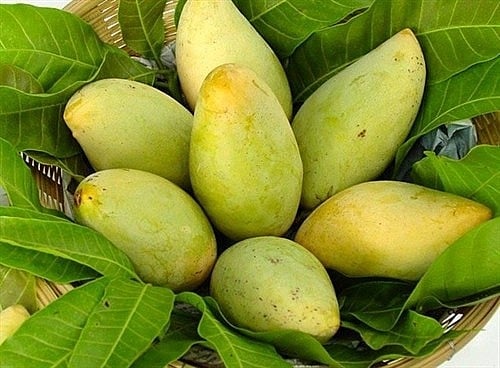 |
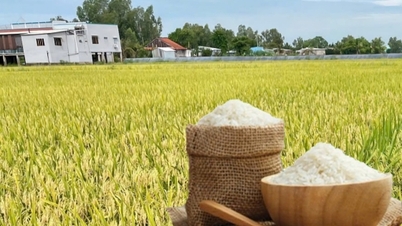
| Exporting agricultural products to South Korea requires attention to new regulations (illustrative image). |
Vietnamese mangoes packaged in 5kg bags were found to contain residues of Permethrin – an active ingredient commonly used to control stink bugs, leaf-eating caterpillars, flower-boring insects, and fruit-boring insects.
The MFDS (Ministry of Food and Drug Safety) has initiated a recall of Vietnamese-origin mangoes exported to the Korean market by CT Agricultural Products Processing Co., Ltd. and advised consumers who purchased these Vietnamese-origin mangoes to return them to the point of sale. Following the recall announcement on January 22nd, no further batches of Vietnamese-origin mangoes exceeding the permitted standards have been detected.
According to statistics from Korean Customs, South Korea imports approximately 25,000 tons of mangoes annually, worth about $110 million, with the majority of imports coming from Peru and Thailand.
Mangoes are a popular tropical fruit in the Korean market, alongside bananas and pineapples, so the demand is very high. Vietnamese tropical fruit products still have significant potential in the Korean market.
Although Vietnam's mango exports to South Korea increased from US$7.9 million (2022) to US$9.9 million (2023), Vietnamese mango products still do not pay attention to pesticide residue, leading to regrettable violations of technical standards for products imported into the South Korean market.
“The high likelihood that Vietnamese mangoes exceed permitted levels is due to them being grown in areas where pesticides have not been properly cleaned and because they are planted in scattered locations, making it difficult to control the entire process of planting, harvesting, and handling of water vapor. Therefore, Vietnamese authorities need to further strengthen the dissemination of information and provide early warnings to Vietnamese mango exporting businesses ,” experts assessed.
Previously, in 2023, frozen chili peppers from Vietnam being sold in the South Korean market were also recalled by the MFDS due to the detection of PLS residue exceeding the permissible limit during random testing of frozen chili peppers imported from Vietnam.
The recalled quantity consists of 24 tons of frozen red chili peppers produced in 2022, packaged in 20kg, 1kg, and 500g bags, imported by a South Korean trading company from a Vietnamese company.
For chili peppers packaged in 20kg and 500g containers, the tricyclazole residue was 0.04mg/kg, and for chili peppers packaged in 1kg containers, the residue was 0.02mg/kg, which is higher than the permitted level of less than 0.01mg/kg. Tricyclazole is a familiar active ingredient in the treatment of fungal diseases, especially in rice plants.
According to the MFDS' inspection plan for agricultural products imported into South Korea, frozen chili peppers from Vietnam are subject to inspection from March 31, 2023 to March 30, 2024 for seven types of pesticide residues: Diniconazole, Tolfenpyrad, Tricyclazole, Permethrin, Dimethoate, Isoprothiolein, and Methominostrobin.
If incidents like the above are not prevented in time, they will negatively affect the image of Vietnamese agricultural products. Therefore, the Vietnam Trade Office in South Korea requests that agricultural processing and exporting businesses in general strictly comply with South Korean regulations on pesticide residue levels when exporting agricultural products to this market.
The market faces new barriers.
Also in January 2024, the MFDS issued a notice regarding guidance on sanitary and phytosanitary assessment of imported animal products.
According to the “Special Act on Import Food Safety Control” and the “Implementation Decree on the Special Act on Import Food Safety Control,” as amended on December 12, 2023, animal products under MFDS management, as defined by the Korean Food Code, will be subject to the MFDS Import Sanitation Assessment (ISA) starting June 14, 2024. This includes: Processed meat products: products manufactured/processed using meat as the primary ingredient, excluding livestock products; Processed egg products: products manufactured/processed using eggs as the primary ingredient, excluding livestock products; Other meat and egg products: will be defined in the Act Implementation Notice.
According to an announcement by the MFDS in September 2023, all countries prohibited from importing raw meat and eggs into South Korea will have to apply for an ISA before June 14, 2025.
For Vietnam, although edible chicken meat and eggs (chicken, duck, quail) are not allowed to be imported, processed meat products using chicken as an ingredient and processed egg products from Vietnam were allowed to be imported into South Korea from 2016-2023, after the "Special Act on Imported Food Safety Control" was enacted.
To maintain the export of processed meat products using chicken as the raw material and processed egg products from Vietnam to South Korea, the Import Sanitary Assessment (ISA) for these animal products must be completed before June 14, 2025, in order to be included in the list of countries permitted to import animal products.
Things to note for Vietnamese businesses
Trade cooperation between Vietnam and South Korea has many opportunities for further development as both countries participate in and benefit from numerous bilateral and multilateral Free Trade Agreements (FTAs). Furthermore, the import and export structures of the two countries are clearly complementary and have little direct competition.
The South Korean market is currently experiencing a trend towards simpler, ready-to-eat meals as replacements for family meals, with the growing popularity of ready-to-cook, easy-to-eat products, especially in the last five years. Alongside this is the rise of health-boosting products that increase immunity, such as organic products and foods for the elderly.
In addition, there are trends towards consuming meat substitutes, protecting the environment with packaging that limits the use of plastic materials, and adopting ESG (environmental, social, and corporate governance) management models. There are also regulations on food safety and hygiene, and quarantine procedures.
For export products to sell well in South Korea, in addition to quality and flavor, they also need supporting factors such as stable production, safe processing and distribution, and credibility in commitments. With these factors, businesses will have an advantage in negotiations and maintain long-term partnerships.
Therefore, the Vietnam Trade Office in Korea recommends that localities, associations, and businesses should dedicate time to researching and analyzing the Korean market to clearly identify which consumer segment their products target, which technical standards their products need to meet, and especially the pesticide residue (PLS) system requirements in the Korean market.
In 2023, Vietnam's total import and export turnover with South Korea reached US$76 billion, a decrease of 12.2% compared to the same period in 2022. Of this, Vietnam's exports to South Korea reached US$23.5 billion; and Vietnam's imports from South Korea reached US$52.5 billion. Vietnam's exports to South Korea are as follows: Processing and manufacturing group (US$19.4 billion, down nearly 2%); agricultural and aquatic products group (US$1.3 billion, down 8.3%); fuel and mineral group (US$249.3 million, up 28.5%); construction materials group (over US$1 billion, down nearly 5%). Conversely, Vietnam's imports from South Korea included: processed and manufactured goods (US$45.4 billion, down 16.2%); agricultural and aquatic products (US$414.6 million, down 14.3%); fuels and minerals (US$3.5 billion, down 6.5%); and construction materials (US$2.1 billion, down 11.3%). |
Source















































































Comment (0)