

Seafood exports in 2024 reached a record high of $10 billion, maintaining its position as the world's third largest seafood exporter after China and Norway, with a market covering all five continents.
According to Ms. Nguyen Thi Thu Sac, President of the Vietnam Association of Seafood Processing and Export, the country's seafood exports are expected to reach approximately US$10 billion in 2024, an increase of about 12.7% compared to 2023. Some products with high export values include: shrimp (estimated at US$4.0 billion, up 16.7%); pangasius (estimated at US$2.0 billion, up nearly 9.6%); tuna (estimated at US$1.0 billion, up 17%); and squid and octopus (estimated at over US$600 million)...
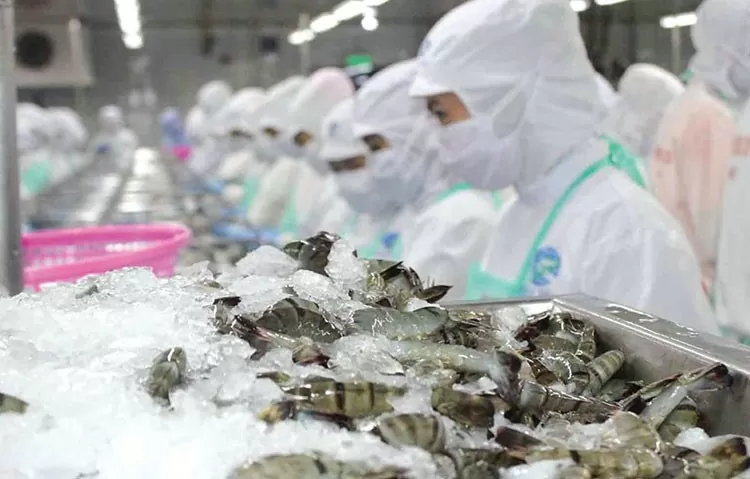 |
| In 2024, shrimp exports are estimated to reach US$4.0 billion (an increase of 16.7%). (Photo: MH) |
The figures above demonstrate that the fisheries sector is on the right track in sustainable development and increasing the added value of its products. Vietnamese fisheries businesses are gradually promoting the application of science and technology in farming and processing, not only improving productivity and product quality but also contributing to expanding export markets. These advancements have affirmed and are affirming the position of the Vietnamese fisheries sector, enhancing its competitiveness in the international arena.
At the event celebrating the achievement of $10 billion in seafood exports in 2024, held on the evening of December 23rd, Deputy Minister of Foreign Affairs Nguyen Minh Hang assessed that seafood is one of Vietnam's key agricultural export sectors, possessing high competitiveness and leading the way in green transformation and sustainable development. However, there is still enormous potential for growth, as the World Food Organization (FAO) estimates the global seafood market at nearly $180 billion and maintaining a very positive growth rate. Therefore, we have every reason to set a more ambitious goal, not just $10 billion.
The most pressing issue now is to transform aspirations and visions into concrete plans and actions; to turn ideas and initiatives into resources; and to translate cooperation commitments into tangible results and products. Because, in the face of a global trend towards green and sustainable aquaculture development, Vietnam also needs to quickly adapt and transform to seize the opportunity.
The requirements are to develop modern aquaculture technologies, reduce environmental impact, protect marine ecosystems, apply biotechnology to improve aquatic species; diversify aquatic products, especially clean and organic products, to penetrate high-end markets; and strongly promote digital transformation and e-commerce for agricultural products in general and aquatic products in particular.
Mr. Phung Duc Tien, Deputy Minister of Agriculture and Rural Development, stated that 2025 will continue to present new challenges for the fisheries sector. Addressing the IUU yellow card, adapting to climate change, environmental pollution, and market barriers will be key objectives. However, with the continuous efforts of businesses, the support of VASEP and the Ministry of Agriculture and Rural Development, and the determination and creativity of the Vietnamese fisheries sector, Vietnam will surpass the $10 billion mark in 2025 and move towards the $11 billion target, in the context of improved raw material sources and expanded export markets.
In particular, improving product quality and enhancing the reputation of businesses will help us increase market share and affirm the position of Vietnamese seafood on the international stage.
To achieve the above objectives, Deputy Minister Phung Duc Tien also suggested strengthening cooperation and solidarity among businesses in accessing, maintaining, expanding, and diversifying markets, while complying with Vietnamese regulations and those of importing markets. To further expand seafood export markets, in addition to China, the US, Japan, and the EU, focus should be placed on developing exports of seafood products to Halal markets, the Middle East, and other markets.
Promote linkages among units involved in the production chain to improve quality, ensure traceability, and further increase the proportion of high-value-added export items. Promptly inform relevant ministries and agencies of any obstacles encountered during the export process to facilitate timely resolution; continue to proactively propose amendments and improvements to policies to maximize favorable conditions for production and export activities while ensuring effective management and sustainable growth.
Source: https://congthuong.vn/xuat-khau-thuy-san-tiep-tuc-giu-vung-vi-tri-thu-3-the-gioi-365862.html


![[Photo] Prime Minister Pham Minh Chinh holds a phone call with the CEO of Russia's Rosatom Corporation.](/_next/image?url=https%3A%2F%2Fvphoto.vietnam.vn%2Fthumb%2F1200x675%2Fvietnam%2Fresource%2FIMAGE%2F2025%2F12%2F11%2F1765464552365_dsc-5295-jpg.webp&w=3840&q=75)






























































Comment (0)