

According to the latest report from Swiss bank UBS, 2025 will not only be a year of record numbers, but also mark a qualitative change in the asset structure of the world's super-rich.
The story is not just about who is getting richer, but how money is being created and moved in a volatile economic landscape.
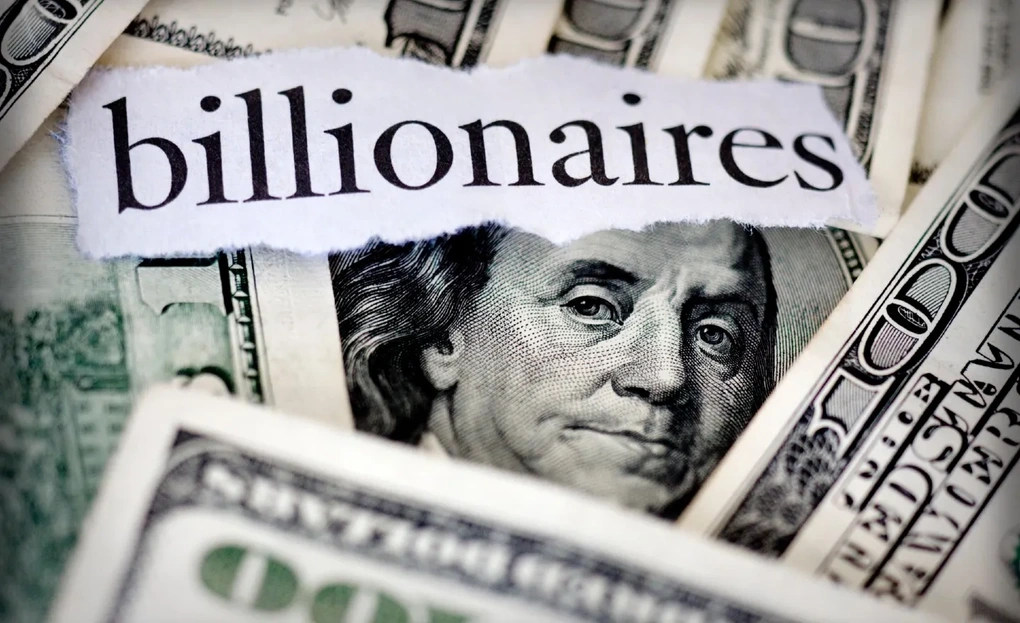
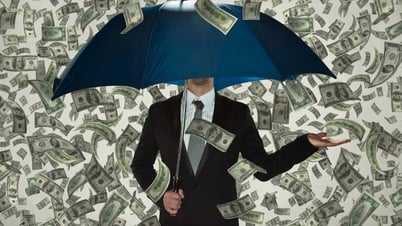
The number of billionaires in the world is growing rapidly and they are richer than ever (Photo: iStock).
AI "craze" and billionaires coming out of real life
The data shows that there are now about 2,900 billionaires in the world, holding a total of $15.8 trillion in assets. Compared to $14 trillion a year earlier, the wealth of this elite class has increased by 13%. The main driver of this increase is nothing other than the boom in valuations of technology companies and the euphoria of global stock markets.
There is no denying the role of artificial intelligence (AI) in "inflating" asset prices. The "Magnificent Seven" - 7 American technology giants - have seen their stocks increase by 25% this year alone. Familiar names such as Larry Ellison (Oracle) or Jensen Huang (Nvidia) continue to get rich quickly thanks to this wave. The top 6 American technology billionaires alone have pocketed an additional 171 billion USD.
But the billionaire landscape of 2025 is much more diverse and “realistic” than the image of tech giants sitting in ivory towers. UBS recorded the emergence of 287 new billionaires - the second highest number in the history of the data tracking (after 2021, when cheap money flooded the market). Notably, about 70% of them are “self-made”.
Where do they come from? They come from all corners of the real economy. There’s Ben Lamm, who is aspiring to “resurrect extinct species” with his biotech company Colossal Biosciences. There’s Michael Dorrell, the infrastructure investment tycoon of Stonepeak Partners. Or closer to Asian readers, there are the Zhang brothers (Zhang Hongsiao and Zhang Hongfu) who turned cheap milk tea and ice cream Mixue into a billion-dollar empire. The list even includes Justin Sun, a big name in the cryptocurrency world.
"You can clearly see the acceleration in the increase in the number of billionaires, and this is really coming from all directions, both business startups and inheritance," said Mr. John Mathews, head of private asset management at UBS in the US.
The $5.9 trillion transfer
If the AI boom is the surface, the wealth transfer is the strongest undercurrent. We’ve been hearing experts talk about it for a decade, but according to UBS, 2025 is when it will really become evident.
In the past 12 months (as of April 2025), the world recorded 91 new billionaires thanks to inheritance, with a total assets received of 298 billion USD. Among them, 15 members of two famous pharmaceutical families in Germany.
John Mathews compared the current situation with a very interesting image: "I think we are in the second inning of a nine-inning baseball game."
This implies that the great transfer of wealth is just beginning. UBS predicts that over the next 15 years, some $5.9 trillion will be transferred from one generation to the next. The usual process is for wealth to be passed to the spouse (usually the wife) before it is passed to the children.
However, along with the huge fortune comes the pressure of expectations. An interesting survey shows that 82% of billionaires with children want their children to be independent and successful through their own abilities instead of relying on a "golden spoon". This is a signal that the super-rich's way of managing their wealth is gradually changing: Giving a fishing rod is more important than giving a fish, even if that fish is worth billions of dollars.

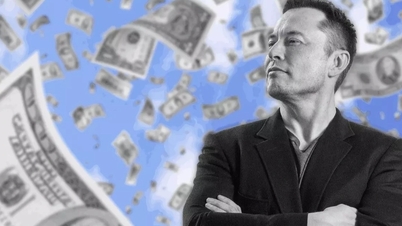
Elon Musk leads the list of the world's richest billionaires (Photo: Getty).
The cash flow map is being redrawn.
As money increases, the question is: Where are the super rich taking their money?
UBS's 11th annual Billionaire Ambition Report, based on interviews with 87 billionaires, revealed significant changes in investment tastes. The appeal of North America, considered a safe haven, is declining. The proportion of billionaires who consider it the best investment destination in the short term has dropped from 81% to 63%.
Instead, capital flows are shifting to Western Europe and the Asia- Pacific region.
The financial elite’s concerns also vary geographically. While Asian billionaires are worried about tariffs, their American counterparts are losing sleep over inflation and geopolitical uncertainty.
The shift is not only happening in investment flows, but also in the places where billionaires settle. Switzerland, the UAE, the US and Singapore are the most popular "destinations". The reasons are very practical: the search for a better quality of life, avoiding geopolitical risks and optimizing taxes.
A prime example of how policy can affect the cash flow of the super-rich is what happened in Switzerland. In a recent vote, 78% of voters rejected a proposal to impose a 50% inheritance tax on assets over $62 million. This result was immediately welcomed by the financial community.
Mr. Benjamin Cavalli, senior leader of UBS, said that the above decision has partly “restored the attractiveness of Switzerland” - where it is expected to receive 206 billion USD of inherited assets in the next 15 years.
Looking ahead, he notes: Billionaires, especially the younger generation, are increasingly mobile, willing to change their place of residence and investment to find a more favorable environment. This flexible trend could reshape the global asset allocation map in the coming years.
Source: https://dantri.com.vn/kinh-doanh/2900-ty-phu-nam-giu-15800-ty-usd-va-cuoc-dai-chuyen-giao-chua-tung-co-20251206095419882.htm
![[Photo] 60th Anniversary of the Founding of the Vietnam Association of Photographic Artists](/_next/image?url=https%3A%2F%2Fvphoto.vietnam.vn%2Fthumb%2F1200x675%2Fvietnam%2Fresource%2FIMAGE%2F2025%2F12%2F05%2F1764935864512_a1-bnd-0841-9740-jpg.webp&w=3840&q=75)


![[Photo] National Assembly Chairman Tran Thanh Man attends the VinFuture 2025 Award Ceremony](/_next/image?url=https%3A%2F%2Fvphoto.vietnam.vn%2Fthumb%2F1200x675%2Fvietnam%2Fresource%2FIMAGE%2F2025%2F12%2F05%2F1764951162416_2628509768338816493-6995-jpg.webp&w=3840&q=75)


































































Comment (0)