

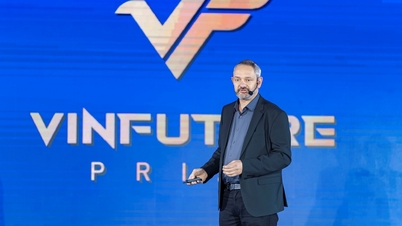
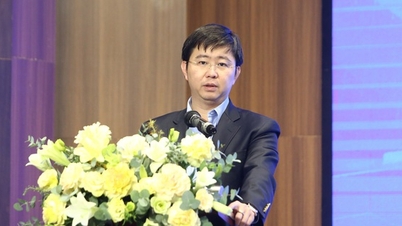
The seminar with the theme " Innovation in agriculture and food " within the framework of VinFuture 2025 Science and Technology Week had the participation of leading experts in the field of agriculture around the world, updating advanced technology trends in smart, efficient and sustainable agricultural production.
With global food demand expected to increase by up to 100% by 2050, while yields of major crops are likely to decline and up to 50% of crop production is not used for food, the issue of food security becomes urgent.
In addition, agriculture is having a major impact on the environment: greenhouse gases, water pollution, land degradation, biodiversity loss, soil erosion and destruction of natural habitats. The question is how to increase food production sustainably while also improving resilience to climate change.
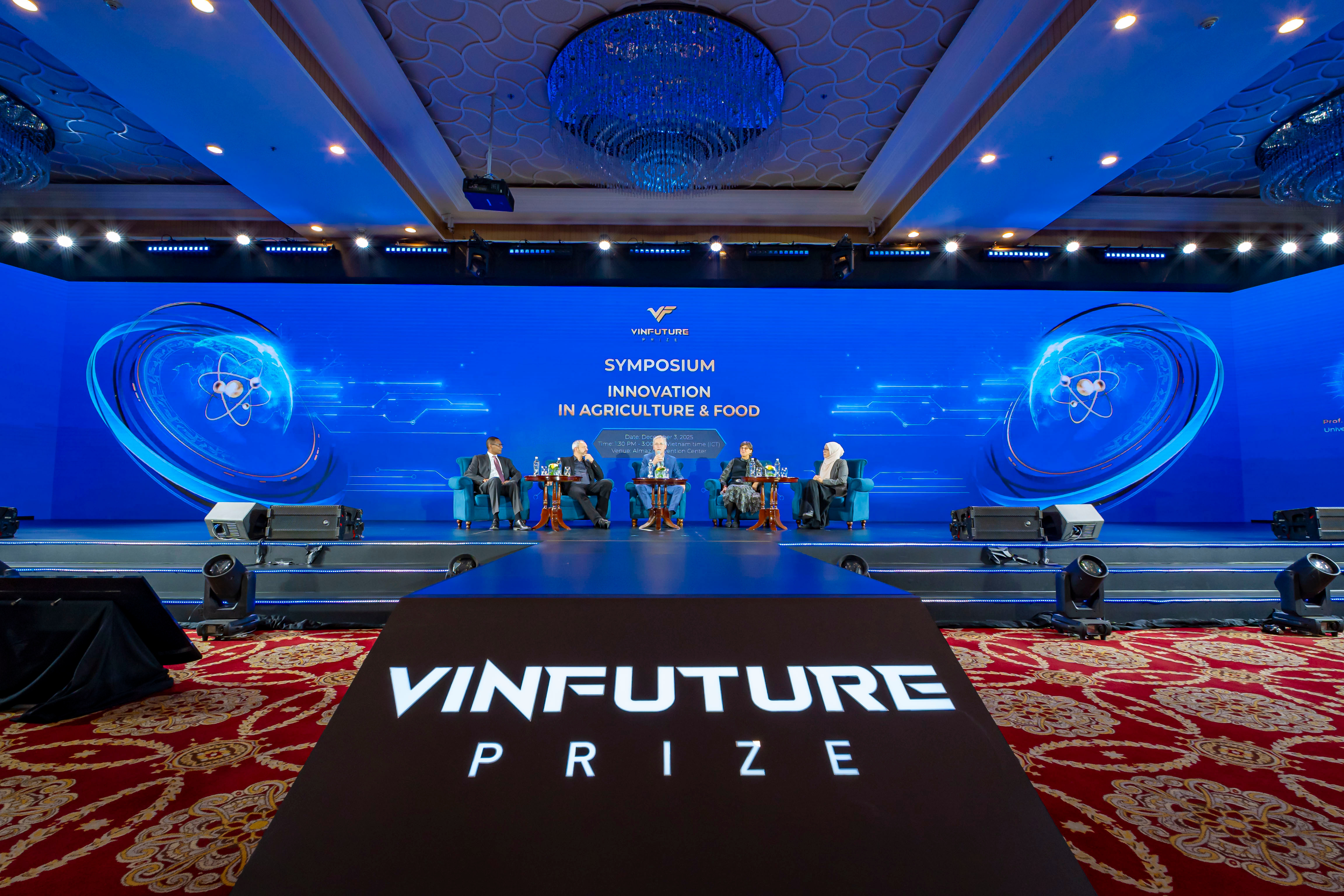
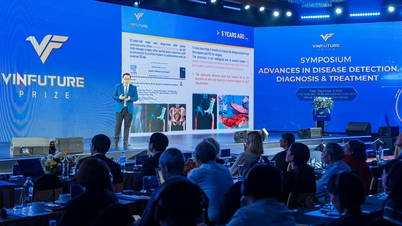
Seminar "Innovation in Agriculture and Food".
Sharing about research on reducing emissions from rice plants, Professor Pamela Christine Ronald - University of California, Davis (USA), emphasized the role of plant genetics in developing rice varieties capable of reducing emissions and adapting to climate change.
“ One of the big problems in agriculture is methane gas produced by rice plants – which accounts for about 12% of total global methane emissions. In wetland environments, rice roots lack oxygen, creating conditions for anaerobic microorganisms to produce methane ,” said Mr. Ronald.
Research in Professor Ronald’s lab has shown that rice plants carrying the PSY1 gene have faster root growth and, when tested under favorable conditions, have reduced methane emissions by 40% compared to conventional varieties. Research is focused on analyzing soil microbial communities, identifying rice genes that control root secretions and interactions with microorganisms, thereby creating crops that are beneficial to the environment and reduce emissions.
Additionally, identifying bacteria that incorporate carbon into soil organic carbon pools and developing tools to measure long-term carbon changes are important steps to assess soil regeneration at field scale.
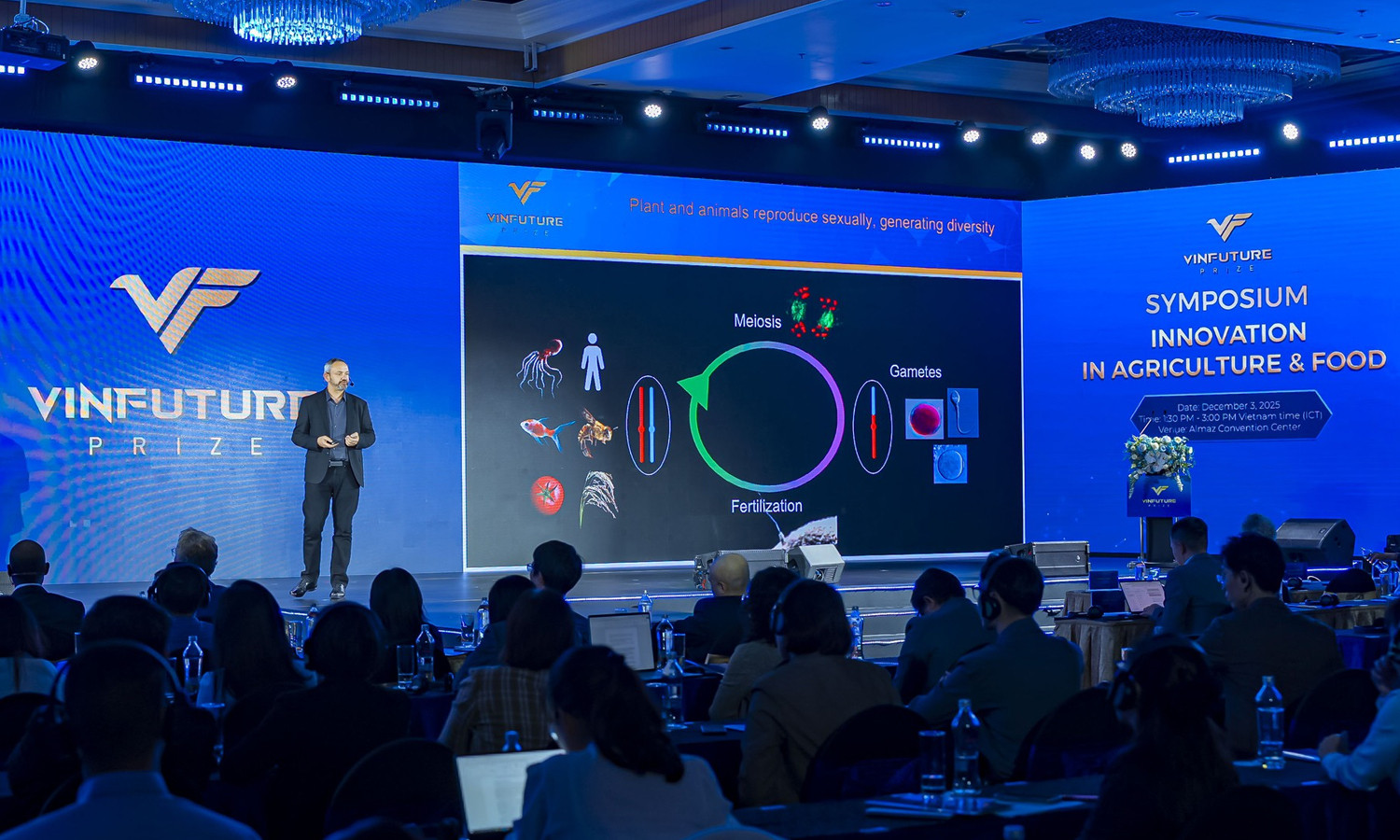
Professor Raphaël Mercier introduces a solution for creating asexual seeds to improve crop yields.
Professor Raphaël Mercier - Max Planck Institute for Plant Genetics (Germany) - shared about the molecular mechanism of meiosis, especially the regulation of the formation and distribution of crossing-over, as well as how these processes shape genetic diversity in plants.
He identified key genes such as FANCM, RECQ4, and FIGL1, which act as anti-crossing factors, thereby providing new strategies to regulate recombination and promote crop improvement.
Professor Mercier was also a pioneer in developing the MiMe system (Mitosis instead of Meiosis), which turns meiosis into a mitosis-like cell division, allowing the production of asexual seeds – a breakthrough that has major implications for maintaining hybrid vigor in crops such as rice.
His contributions have connected basic chromosome biology with applied plant science , advancing molecular tools to improve yield stability and tolerance in global agriculture.
" This technology can be used for many hybrid varieties and many crops so that the next generation of varieties still retains the superior characteristics of the F1 variety. This technology will help farmers to apply it themselves to maintain high-quality crop varieties through the seasons ," said Professor Raphaël Mercier.
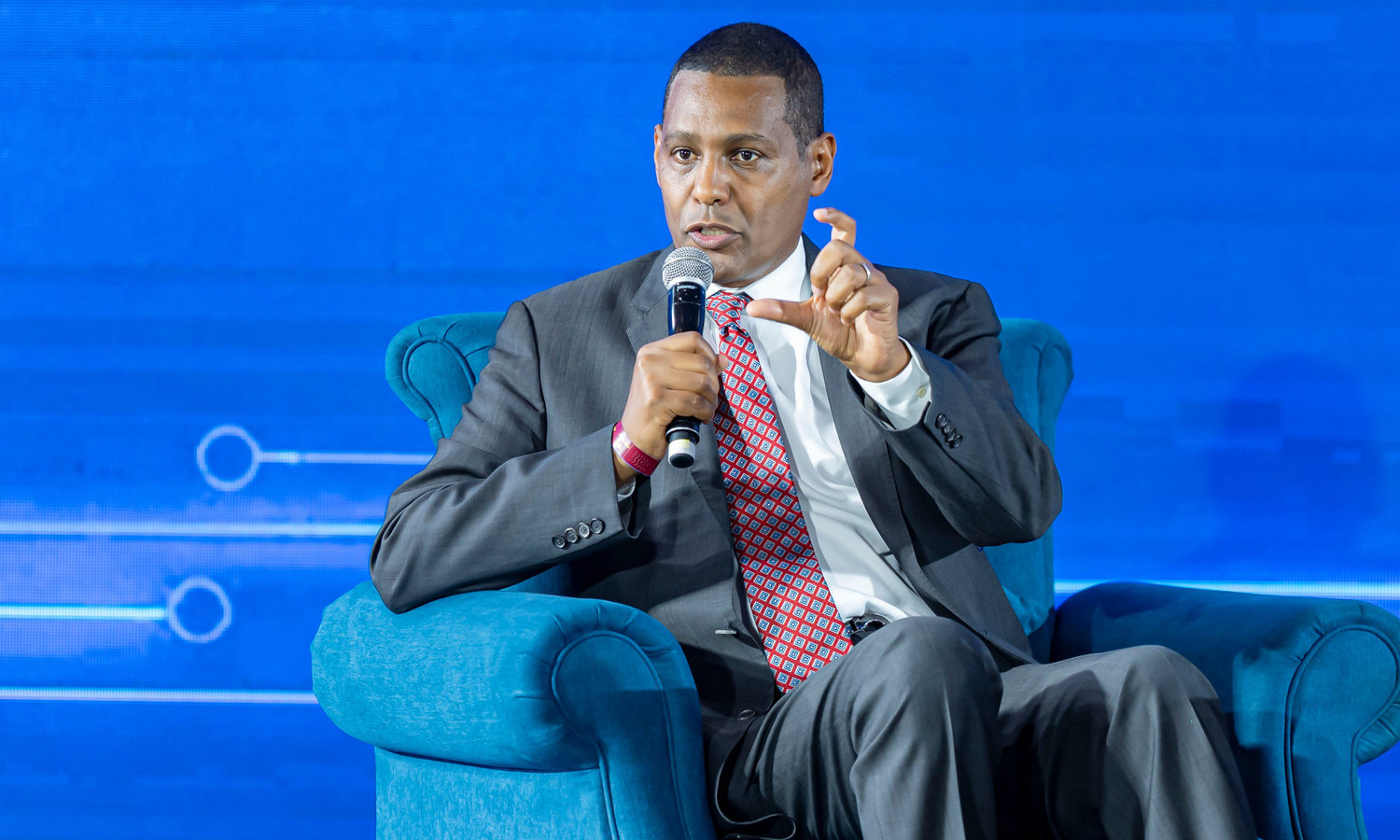
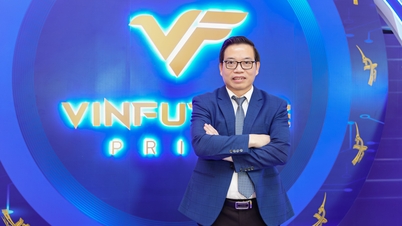
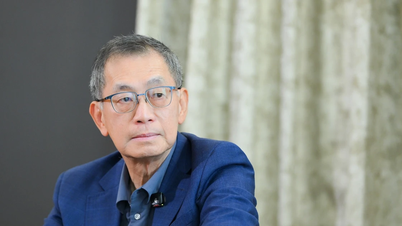
Professor Ermias Kebreab - University of California, Davis.
An impressive sharing at the seminar was about the story of smart livestock farming by Professor Ermias Kebreab - University of California, Davis.
He shared about a project he is doing in Vietnam and using products such as tea leaves, seaweed, and cassava leaves to reduce the use of antibiotics in animals. The professor is collaborating with VinUni University to research and develop some monitoring technologies to improve the productivity of the livestock industry.
At the same time, in the project in collaboration with Vietnamese scientists in Can Tho, we also researched the use of cassava leaves, cassava residue, and seaweed as animal feed to improve the circulation of the entire system.
" The results showed that adding seaweed to the cattle diet dramatically reduced methane emissions by up to 30%, and in some animals it was as high as 90%. The more the animals ate, the greater the reduction in emissions. Precise feeding and nutritional analysis are key to achieving optimal results ," said Professor Kebreab.
At the seminar, experts updated advanced technology trends, discussed technical, economic and social challenges, as well as explored opportunities for cooperation and practical applications towards a smart, efficient and sustainable agriculture.
Source: https://vtcnews.vn/ai-cong-nghe-gene-ho-tro-nganh-nong-nghiep-nang-cao-nang-suat-giam-phat-thai-ar990940.html


![[Photo] Cat Ba - Green island paradise](/_next/image?url=https%3A%2F%2Fvphoto.vietnam.vn%2Fthumb%2F1200x675%2Fvietnam%2Fresource%2FIMAGE%2F2025%2F12%2F04%2F1764821844074_ndo_br_1-dcbthienduongxanh638-jpg.webp&w=3840&q=75)









![[INFOGRAPHIC] Kiwi Ears Belle headphones with eye-catching design](https://vphoto.vietnam.vn/thumb/402x226/vietnam/resource/IMAGE/2025/12/04/1764833240932_info-tainghethietke-03-jpg.webp)


























![[VIMC 40 days of lightning speed] Da Nang Port: Unity - Lightning speed - Breakthrough to the finish line](https://vphoto.vietnam.vn/thumb/402x226/vietnam/resource/IMAGE/2025/12/04/1764833540882_cdn_4-12-25.jpeg)





































Comment (0)