

As the world witnesses the explosion of automation, robotics and artificial intelligence (AI), sensor technologies and smart interactive systems are becoming the pillars of industry, services and healthcare . These innovations not only improve productivity and optimize costs but also open up new approaches to improve quality of life and move towards sustainable development.
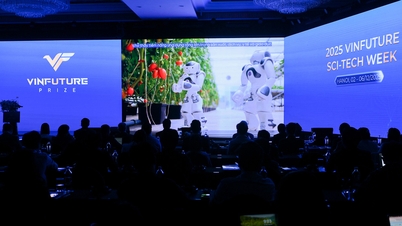
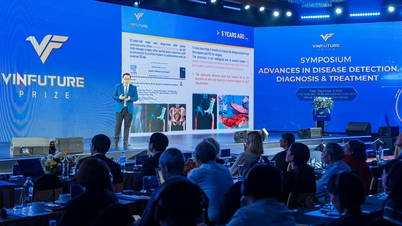
This is the content presented at the "Robots and Intelligent Automation" seminar organized by VinFuture Foundation on the morning of December 4 in Hanoi .
The discussion focused on many prominent aspects of the field of robotics: Humanoid robots with social interaction capabilities, collaborative robots in service and medicine, rehabilitation robotic systems, and hot issues related to AI safety and technology ethics. These contents reflect the trend of developing robots towards humanism, safety and sustainability.
Soft Materials: The Basis for Flexible Robots
At the seminar, Professor Kurt Kremer - Honorary Director of the Max Planck Institute for Polymer Research (Germany) emphasized that soft materials are opening a new direction for robots thanks to their flexibility, ease of fabrication and environmental friendliness. Polymers, which are widely used because they are cheap, abundant and can adjust their hardness, are being developed in the direction of better load-bearing capacity and more effective biodegradation.
The key, he says, is that these are “smart” materials that can expand or change shape when exposed to stimuli such as temperature, pH, pressure or environmental changes. With their sensitive and fast response, they can operate valves, create mechanical forces or become highly sophisticated robotic components.
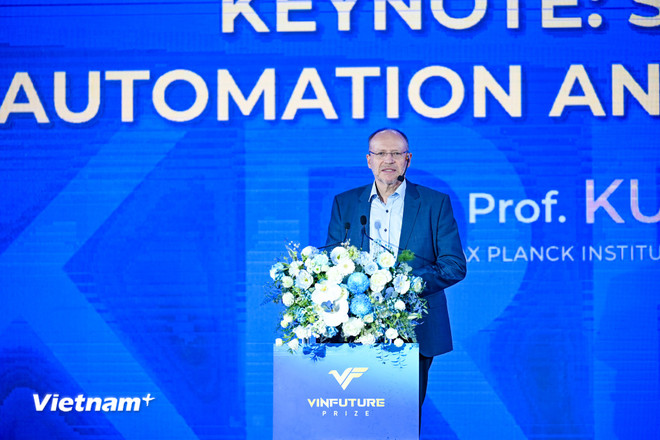
When polymers are combined into complex structures like gels or "brushes," the materials can take on difficult mechanical tasks, helping to produce soft actuators for robots to grip more gently and precisely.
Many polymers are also highly conductive or dielectric, opening up opportunities for organic electronics. While they can’t compete with silicon on speed, they are cheaper, easier to manufacture, don’t rely on rare earths, and have found applications in OLEDs, foldable phones, and organic solar panels.
Professor Kremer believes that by combining all three elements: softness, responsiveness and electronic properties, organic materials can progress to a "neuromorphic" form that mimics the adaptation of the nervous system. This is considered the foundation for future generations of robots that are flexible, safe and cost-optimized.
From an application perspective, Professor Ho Young Kim (Seoul National University, Korea) pointed out that robots are facing great challenges when manipulating soft materials - a group of materials that appear everywhere from clothes, food, plastic bags, electrical wires to medical supplies.
Traditional robots are optimized for rigid, shape-stable objects. But soft materials are completely different, he said, for example, when a robot holds a T-shirt, just by changing the gripping point, the shape of a shirt changes, the surface of the shirt can fold, wrinkle, creating countless complex parameters.
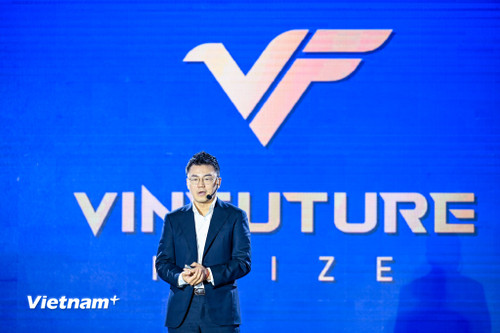
What humans can do in seconds, like rolling up sleeves or folding laundry, is a huge challenge for robots. This, he said, is also the paradox of modern AI: it can solve equations and memorize huge amounts of data, but it has difficulty handling basic household tasks.
In their research, his team developed a gripper system using elastic membranes that allows for stable lifting of individual fabrics, even picking up soft biological objects like orange peels.
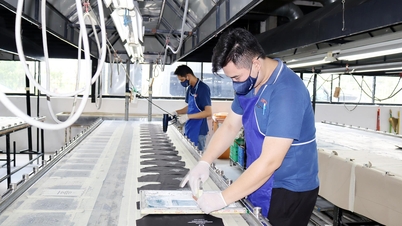
Based on this technology, the research team created a machine that performs the numbering step - an important step that previously only humans could do. The machine can repeat the operation many times without making any mistakes.
To solve the problem of soft materials, according to him, robots need to overcome four challenges: the ability to accurately perceive the state of materials; a sufficiently delicate mechanical hand; a flexible control system in the face of continuous changes; and the ability to expand for mass production. Soft material processing, he concluded, is the "door" for robots to truly enter life and production.
Humanoid robots and physical intelligence requirements
Professor Tan Yap Peng - President of VinUni said that humanoid robots are becoming a trend because they can operate easily in human environments. It is predicted that by 2050, the world may have at least one billion robots living and working with humans.
The big challenge is that today's robots are mostly programmed for a single task. To move towards multitasking robots, the technology must learn from large language models: Robots trained on large amounts of video data to build the ability to understand the physical world.
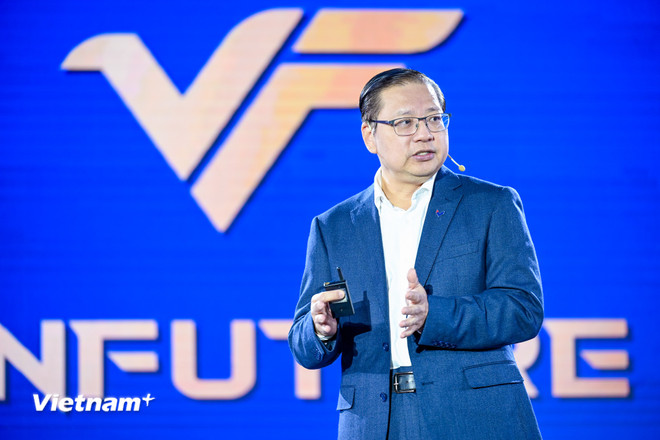
But moving from language to vision to action is a long journey. Robots need to observe, reason, and receive instructions – skills that remain open.
Professor Tan Yap Peng also gave examples of models such as "Physical Intelligence Type Zero" that allow robots to receive image, video, and speech data and perform various robot control actions. However, with complex tasks such as folding clothes or doing laundry, robots still need fine-tuning and illustrative data from experts.
The biggest limitation, according to Professor Tan, is that robots do not have the same memory as humans. Therefore, his team proposed storing "memory fragments" from expert demonstrations, allowing robots to search for and use similar experiences when faced with new tasks. This approach reduces errors and increases the ability to complete long tasks.
At the same time, robots must also solve problems related to energy, manual dexterity, self-diagnosis, safe operation and compliance with ethical standards. According to the Professor, these are all big problems that need to be solved in the next 30-50 years.
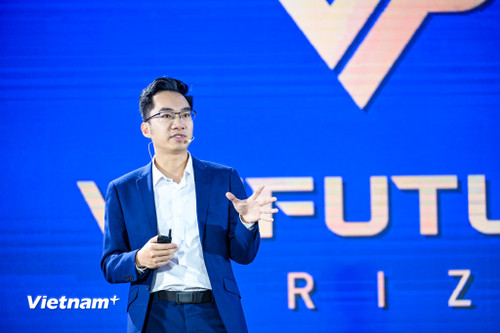
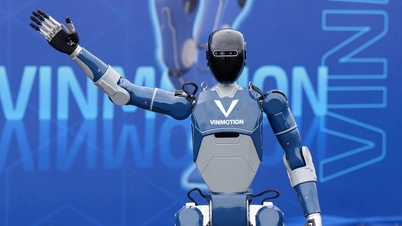
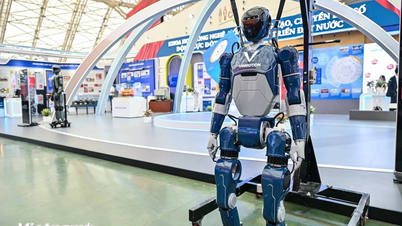
From an industrial perspective, Dr. Nguyen Trung Quan, Assistant Professor of Aeronautical and Aerospace Engineering at the University of Southern California (USC) and Chief Scientific Officer (CSO) of VinMotion, said that when moving from digital AI to physical intelligence, data becomes the scarcest factor. The world is shifting strongly to general-purpose robots because they bring the ability to act - something that purely digital AI cannot do.
Many forecasts show that the market for humanoid robots and physical intelligence could reach 10,000 billion USD in the next 10 years, in the context of many countries' labor shortages.
But according to Dr. Quan, physical intelligence faces a "chicken-egg vicious cycle," good AI requires real data; real data requires robots to operate; and robots that operate effectively need strong AI.
"VinMotion approaches the 'human-in-the-loop' model by bringing robots into real environments, allowing humans to monitor, support, and respond when robots encounter difficult situations. This model ensures safety and helps AI learn faster, creating a platform for scaling," said Mr. Quan.
According to him, humanoid robots require three factors: good hardware, good software/AI and a safe deployment system. Vietnam is one of the countries capable of meeting all three of these factors at the same time./.
Source: https://www.vietnamplus.vn/ky-nguyen-robot-va-thach-thuc-lon-tren-hanh-trinh-buoc-vao-doi-song-con-nguoi-post1080970.vnp


![[Photo] Cat Ba - Green island paradise](/_next/image?url=https%3A%2F%2Fvphoto.vietnam.vn%2Fthumb%2F1200x675%2Fvietnam%2Fresource%2FIMAGE%2F2025%2F12%2F04%2F1764821844074_ndo_br_1-dcbthienduongxanh638-jpg.webp&w=3840&q=75)














































![[VIMC 40 days of lightning speed] Da Nang Port: Unity - Lightning speed - Breakthrough to the finish line](https://vphoto.vietnam.vn/thumb/402x226/vietnam/resource/IMAGE/2025/12/04/1764833540882_cdn_4-12-25.jpeg)









































Comment (0)