

On August 12, medical associations in several states called on doctors at public hospitals to halt all services indefinitely to urge the courts to expedite the resolution of the rape and murder of a medical intern last week, and also called for the establishment of a committee to protect healthcare workers.
Earlier on August 9th, the body of a resident doctor was found with multiple injuries and signs of sexual assault in a conference hall at RG Kar Medical College and Hospital in Kolkata. A suspect has been arrested.
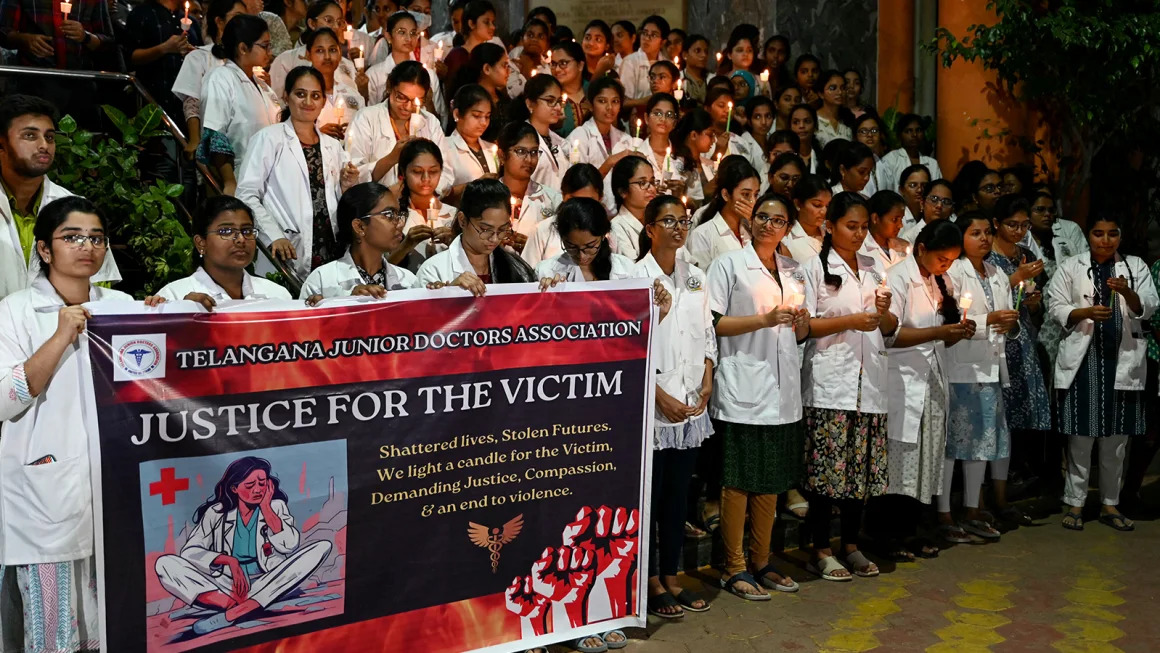
Young doctors protested against the rape and murder of a medical intern from Kolkata at Gandhi Hospital in Hyderabad on August 12. Photo: AFP
Dr. Sarvesh Pandey, General Secretary of the Federation of Medical Residents Associations (FORDA), said: "Around 300,000 doctors across the country have joined the protest and we expect even more to join tomorrow."
"The murder of this young female doctor is not the first, nor will it be the last, if no remedial measures are taken," the association said in a letter to India's Health Minister on August 13. The letter called for an investigation into the working conditions of doctors and an impartial inquiry into this brutal murder.
In Kolkata and Delhi, doctors held signs that read, "Save our doctors, save our future." In the southern city of Hyderabad, doctors held a candlelight vigil.
Many doctors also emphasize that acts of violence against healthcare workers and threats of physical violence often come from patients or their family members.
A 2015 survey conducted by the Indian Medical Association found that 75% of doctors in India had faced at least one form of violence, according to local media reports at the time.
For years, India has struggled to address its high rate of violence against women, with some serious rape cases drawing international attention. According to India's National Crime Records Bureau, a total of 31,516 rape cases were recorded in 2022, averaging 86 per day.
Experts warn that the number of reported cases is only a fraction of the actual number, especially in a country with a deeply ingrained patriarchal system, where shame and stigma surround rape victims and their families.
In 2012, the gang rape of a medical student shocked India and the international community. The victim was beaten, tortured, and left to die after a brutal attack on a public bus in New Delhi.
The case and subsequent protests across India attracted international media attention, prompting the government to enact legal reforms. The rape law was amended in 2013 to broaden the definition of the crime and impose stricter penalties not only for rape but also for sexual assault, harassment, and stalking.
Despite these changes, rape remains rampant in India, with victims and many believing the authorities have not done enough to protect women and punish the attackers.
Hoai Phuong (according to CNN)
Source: https://www.congluan.vn/cac-bac-si-an-do-dinh-cong-len-an-vu-cuong-hiep-va-giet-hai-nu-dong-nghiep-post307619.html



































































































Comment (0)