

Addressing the digital divide between urban and rural areas.
The draft Law on Digital Transformation dedicates Chapter III to regulating digital transformation within the political system and the digital government. Specifically, it legalizes the principles of digital transformation, requiring state agencies to comply in all activities such as: prioritizing citizens and users; data-driven management; open data by default; proactive service delivery; and the use of artificial intelligence systems in public service activities to ensure compliance with the law. Chapter III also stipulates the national digital architecture framework, a shared digital platform for agencies within the political system, and the provision of public services.
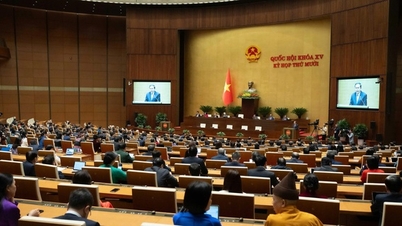
Agreeing with the provision that emphasizes the role of the Government in managing, operating, and providing online public services, Vice Chairwoman of the National Assembly Nguyen Thi Thanh highly appreciated that the draft Law has presented a national overall architectural framework and a common digital platform.

However, according to the Vice Chairman of the National Assembly, further review is needed to clarify the responsibilities of each group of agencies, specifically the responsibility of the executive branch in governance, the responsibility of the legislative branch in supervising and deciding on digital policies, the responsibility of the judicial branch in applying digital technology to serve justice and case management, and the responsibility of the auditing agency in controlling investment and expenditure for digital transformation.
Regarding digital infrastructure, National Assembly Vice Chairwoman Nguyen Thi Thanh highly appreciated the efforts of the drafting agency in building a fairly comprehensive policy framework encompassing digital infrastructure, public digital infrastructure, and digital technology industry infrastructure. This design reflects modern thinking, is consistent with international practices, and meets the development requirements of a digital government, digital economy, and digital society.
However, the Deputy Speaker of the National Assembly also noted that the provisions of the draft law only address principles and do not yet delve into specific policies.
"Currently, digital infrastructure in localities, especially in remote and disadvantaged areas, remains a major bottleneck in the national digital transformation process. In localities facing difficulties and budget constraints, securing funding for large-scale investment projects such as data centers, economic systems, and Internet of Things (IoT) connectivity systems is very challenging," the Vice Chairman of the National Assembly stated, highlighting the reality.
In light of these shortcomings, National Assembly Vice Chairwoman Nguyen Thi Thanh suggested that the drafting agency should research mechanisms for regional regulation or establish a national digital infrastructure development support fund to address the digitalization disparity between urban and rural areas, and between economically prosperous and less developed cities and provinces. Accordingly, attention should be paid to investing in digital infrastructure, including core network infrastructure, in areas with unstable power supply and a shortage of IT personnel.
At the same time, further research is needed on mechanisms for coordinating and supporting the development of digital infrastructure at the national level, with policies prioritizing investment in digital infrastructure from the central budget to ensure that digital infrastructure develops synchronously and inclusively, and that no locality is left behind in the digital transformation process.

Deputy Speaker of the National Assembly Nguyen Khac Dinh also suggested that the Government study ways to standardize digital infrastructure nationwide; avoiding a situation where each province invests in a different center, a different type of equipment, or hires a different company to develop a different programming language, leading to connectivity issues. Furthermore, when the Law on Digital Transformation is enacted, it must reduce costs and limit the tendency for every province to invest in centers, increase staffing, or propose purchasing equipment and machinery.
Clearly define the digital rights and obligations of the participating parties.
Emphasizing that this is the first legal document on digital transformation to be promulgated, the Chairman of the Committee on Representative Affairs, Nguyen Thanh Hai, noted that the draft Law adheres to very new and open content in the context of the strong digital transformation taking place in central and local ministries and agencies.

The Chairman of the Committee on Delegate Affairs suggested that a review is needed to ensure consistency and uniformity with specialized laws. The draft Law on Digital Transformation regulates the infrastructure of the digital government and digital society, and prohibits acts such as exploiting digital transformation to infringe upon national security... However, it is necessary to review it with other legal documents such as the Penal Code, the Criminal Procedure Code, the Cybersecurity Law, the Telecommunications Law, the Electronic Transactions Law, and the Personal Data Protection Law... to avoid inconsistencies and overlaps in practical implementation.
Regarding concepts such as "serious damage" and "sensitive data," the Chairman of the Committee on Representative Affairs suggested that more thorough and clear regulations are needed to prevent legal disputes during implementation.
Furthermore, the draft Law does not fully cover emerging high-tech crimes, such as not specifically regulating crimes involving the use of AI to create fake content, exploit blockchain vulnerabilities, or develop tools for cyberattacks... Therefore, the Chairman of the Committee on Representative Affairs proposed a review and amendment to avoid overlooking crimes, thereby reducing the effectiveness of preventing and combating high-tech crimes and posing a threat to digital economic security.
Also concerned about the misuse of the digital environment, the Chairman of the Economic and Financial Committee, Phan Van Mai, expressed his worries about the legality of digital consulting. He noted that many professionals, organizations, and even leaders currently use AI-powered consulting, potentially as part or even the sole basis of decisions.
"The legal standing of AI-powered advisory products is increasing, affecting agencies, leaders, and advisory personnel... Therefore, we need to conduct further research to formulate more policies," the Chairman of the Economic and Financial Committee emphasized.
In addition, the Chairman of the Economic and Financial Committee also suggested that Article 5 of the draft Law should be amended and other provisions reviewed to prohibit organizations and individuals from exploiting the digital environment to infringe upon the legitimate rights and interests of other organizations and individuals; and to continue reviewing to clearly establish the digital rights and obligations of participating parties.
Source: https://daibieunhandan.vn/bao-dam-ha-tang-so-phat-trien-dong-bo-khong-dia-phuong-nao-bi-tut-lai-phia-sau-10390692.html




![[Photo] Closing Ceremony of the 10th Session of the 15th National Assembly](/_next/image?url=https%3A%2F%2Fvphoto.vietnam.vn%2Fthumb%2F1200x675%2Fvietnam%2Fresource%2FIMAGE%2F2025%2F12%2F11%2F1765448959967_image-1437-jpg.webp&w=3840&q=75)















































![[OFFICIAL] MISA GROUP ANNOUNCES ITS PIONEERING BRAND POSITIONING IN BUILDING AGENTIC AI FOR BUSINESSES, HOUSEHOLDS, AND THE GOVERNMENT](https://vphoto.vietnam.vn/thumb/402x226/vietnam/resource/IMAGE/2025/12/11/1765444754256_agentic-ai_postfb-scaled.png)














































Comment (0)