

Due to its unique geographical location and climate, Vietnam is frequently affected by natural disasters, especially typhoons, floods, and landslides. Therefore, ensuring the rights of citizens when natural disasters and calamities occur is always a top priority in order to best protect people's lives and property and minimize the consequences caused by natural disasters.
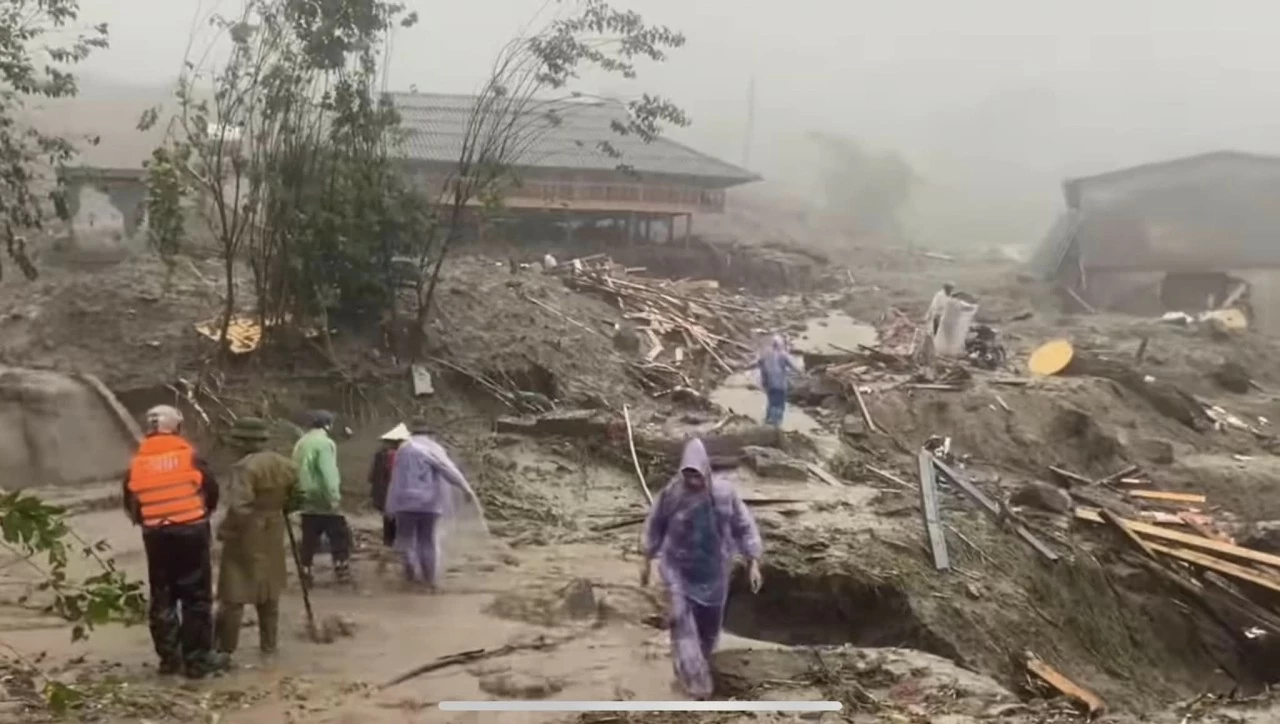 |
| Due to the impact of typhoon No. 3, many sections of national, provincial, and district roads were affected by landslides, and some irrigation works in Lao Cai were damaged. (Source: Government Information) |
Proactive prevention and response
One of the important tasks in disaster prevention and control is to do a good job of prevention and preparedness, so that we can be proactive in all situations.
In recent times, the forecasting of natural disasters and calamities has received special attention. Specifically, many policies, resolutions, directives, and conclusions have been issued to deal with natural disasters, calamities, and incidents. Directive No. 42-CT/TW dated March 24, 2020, of the Party Central Committee on strengthening the Party's leadership over the work of preventing, responding to, and mitigating the consequences of natural disasters is a guiding document that builds a comprehensive strategy for disaster prevention and response to climate change.
In particular, the 2023 Civil Defense Law clearly defines the levels of civil defense, aiming to respond promptly and effectively when the country faces potential threats, contributing to maintaining national security and stability. In addition, many decrees and decisions have been issued promptly to prevent, mitigate, and address the consequences of incidents, natural disasters, and catastrophes.
Recently, during Typhoon No. 3, from the moment the typhoon formed and entered the East Sea, the Prime Minister directed close monitoring of the situation, accurate forecasting of the typhoon's intensity and trajectory, warning of the risk of floods and landslides, and implementing emergency response measures before, during, and after the typhoon; issuing 10 official dispatches and establishing a forward command center in Hai Phong city to provide continuous, decisive, and urgent guidance to minimize damage.
Information and warnings about natural disasters, calamities, and incidents must be timely and rapid; developments must be regularly updated through all mass media channels (television, radio, the Internet, social media platforms like Facebook and Zalo, etc.), in multiple languages (Vietnamese, English, French, ethnic minority languages, and sign language, etc.) to ensure that all citizens have access to this information in various forms.
According to the Ministry of Agriculture and Rural Development, from 2016 to 2023, 843 automatic rain gauge stations and 16 automatic flood warning towers were installed in 48 provinces/cities nationwide; to date, nearly 1,400 automatic rain gauge stations have been invested in through social mobilization. In 2023, approximately 40,207 articles on disaster prevention and control were published; 38.2 million Zalo messages warning the community were sent to subscribers in affected areas; and communication and warnings on disaster prevention and control were maintained and strengthened on websites, social networks, and the Internet.
Preventive measures are also reflected in urban and rural planning: constructing drainage systems, land use planning, and flood control structures; building and improving infrastructure capable of withstanding natural disasters.
Organize conferences, training courses, and workshops to enhance community capacity in disaster prevention and control; conduct drills on scenarios and hypothetical situations so that people and authorities can always be ready to respond to any situation that may arise, avoiding being caught off guard or unprepared.
In 2023, 239 training courses and workshops on rescue and relief operations were conducted for 18,633 trainees from various ministries, localities, military regions, corps, and branches of the armed forces. Ten international exercises, 24 provincial/city-level exercises, 64 district/county-level exercises, and 162 commune/ward-level exercises were organized to respond to natural disasters, incidents, and search and rescue situations, with full participation from all relevant forces.
| "Prioritizing the protection of the lives, health, and property of the people and the State above all else, and first and foremost mobilizing all resources of society and the state, especially the 'four on-the-spot' principle for prevention and mitigation of consequences" is one of the five conclusions of Prime Minister Pham Minh Chinh at the online conference with ministries, sectors, and 26 provinces and cities to summarize, evaluate, and draw lessons from the work of preventing, mitigating, and overcoming the consequences of typhoon No. 3. |
Rescue and relief efforts are carried out urgently, quickly, and safely. Whenever natural disasters, floods, or landslides occur, the Party and State always pay close attention to and provide strict guidance on rescue and relief work. High-ranking leaders of the Party and State have personally visited the affected areas to assess the situation and direct response, rescue, and relief efforts.
Following the devastation and severe impact of Typhoon Yagi and heavy rains, floods, and landslides in the northern provinces in early September, Prime Minister Pham Minh Chinh personally inspected the situation and promptly and decisively directed the organization of rescue and relief plans, searching for missing victims, providing assistance to people in affected areas, and minimizing damage to lives and property.
In 2023 alone, ministries, sectors, and localities mobilized 204,507 personnel and 23,132 vehicles to effectively respond to and handle 4,336 incidents, rescuing 3,968 people and 207 vehicles; guided and assisted in relocating 962,933 people and 201,799 vehicles from dangerous areas to safe ones; and informed 328,227 vessels and 1,608,015 workers about the development and movement of storms and tropical depressions to proactively prevent damage.
Relief and support efforts during and after natural disasters are always carried out simultaneously and promptly to help people quickly stabilize their lives. Relief work includes: emergency food and essential supplies; support for infrastructure, housing, etc. On September 28, 2024, Prime Minister Pham Minh Chinh directed ministries, sectors, and localities to focus all efforts on supporting people in restoring their lives and production, including urgently and seriously implementing the six groups of solutions outlined in Resolution No. 143/NQ-CP dated September 17, 2024, on key tasks and solutions to quickly overcome the consequences of Typhoon No. 3 (Yagi).
In 2023, the Government allocated 8,500 billion VND to 43 provinces and cities to mitigate the consequences of natural disasters. The Ministry of Agriculture and Rural Development supplied 100 tons of rice seeds, 67 tons of corn seeds, 10 tons of vegetable seeds; and 56 tons and 10,000 liters of disinfectant chemicals for livestock, poultry, and aquaculture to localities to promptly stabilize production.
External relations activities related to disaster prevention and control have been strengthened. In 2023, Vietnam assumed the chairmanship of the ASEAN Committee on Disaster Management (ACDM); in coordination with the ASEAN Secretariat and relevant agencies, it organized the AMMDM Conference and related events with the theme “From Response to Early Action and Strengthening Resilience: ASEAN Towards Global Leadership in Disaster Management”, including: 4 Ministerial-level Conferences, 10 Senior Officials Meetings (SOM) meetings and 3 regional forums/workshops, with a total of 14 delegations participating with over 200 delegates, including approximately 150 international delegates and 50 Vietnamese delegates.
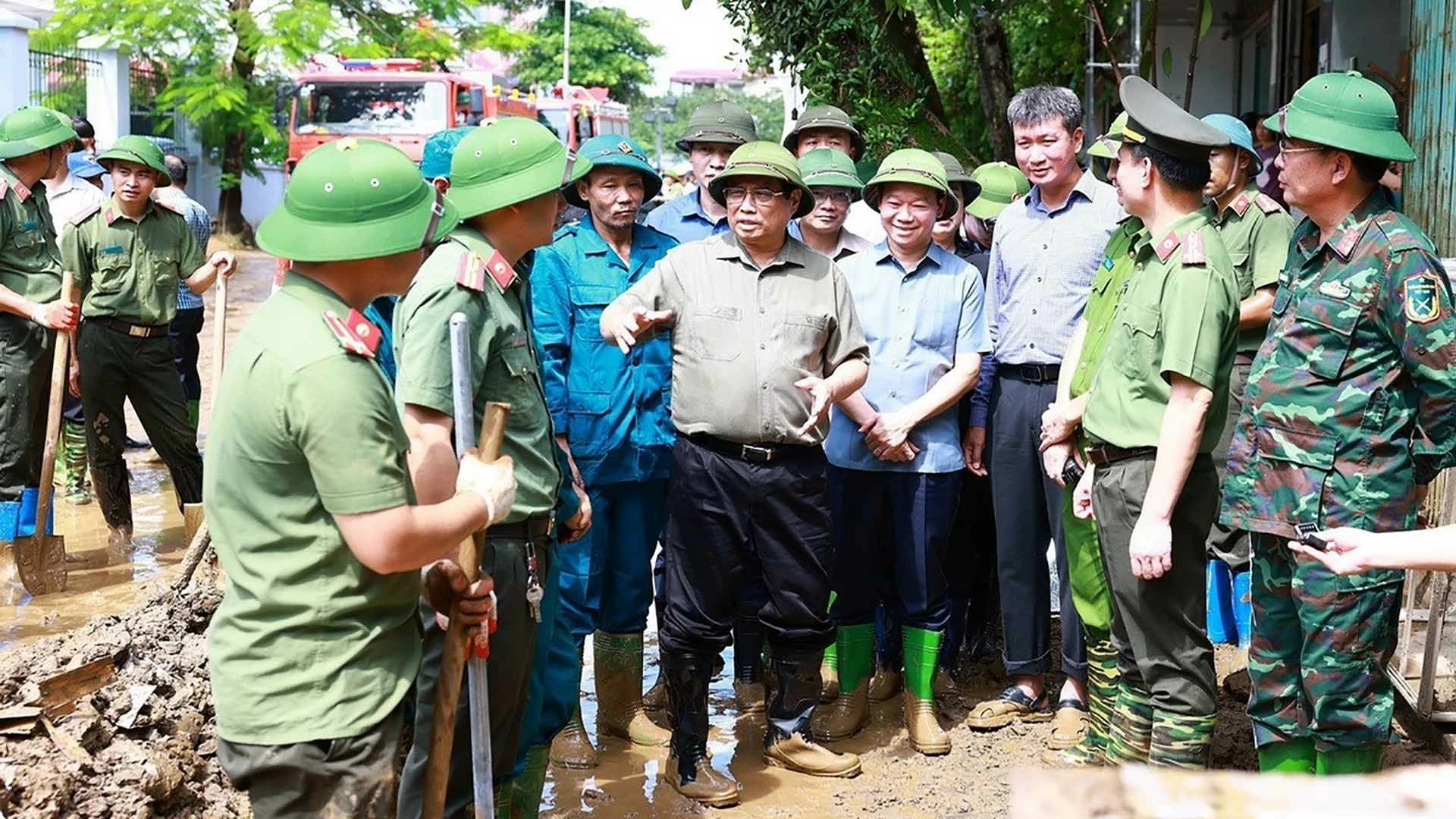 |
| The Prime Minister inspects flood relief efforts in Yen Bai city. (Source: VNA) |
Implement solutions in a synchronized and effective manner.
Extreme weather events and natural disasters are occurring more frequently and are becoming increasingly complex and unpredictable due to climate change, making forecasting, warning, support, and recovery efforts more difficult.
In reality, specialized disaster warning systems installed to monitor and supervise high-risk areas are unlikely to be comprehensive. Although the national meteorological and hydrological station network has been invested in and modernized, its density is still insufficient and it is not fully distributed in areas frequently affected by dangerous natural disasters; forecasting and warning work is currently limited to the district and provincial levels; investment in advanced forecasting technology at the local level is still limited, and some areas have yet to establish specialized forecasting and warning systems for disaster prevention and control.
The resilience of some infrastructure and structures such as bridges and culverts in some areas is still low; the assessment of infrastructure and structure quality, construction, updating, adjusting, and supplementing disaster response plans and strategies in some localities are still slow, lacking flexibility, specificity, and meticulousness; ensuring uninterrupted communication in some areas, especially remote and isolated regions, during natural disasters still faces obstacles; disrupted transportation makes it difficult to access the scene, leading to delays in relief efforts.
Mountainous provinces lack local response forces and support equipment. There is still a complacent and passive attitude towards disaster prevention and control among some agencies, units, and a segment of the population.
Disaster prevention and control is an extremely important task. To ensure this work yields good results in the future, it is necessary to focus on the following basic solutions:
Firstly, raise awareness throughout society about the harmful nature of natural disasters. Strengthen propaganda and education on the Party's guidelines and the State's policies and laws related to disaster prevention, response, and mitigation, creating unity in understanding and action in the face of the negative impacts of natural disasters. Promote the role of media and press, paying particular attention to vulnerable groups. Equip people with skills to prevent and mitigate damage from storms, flash floods, and landslides; overcome complacency among some segments of the population.
Secondly, we must continue to thoroughly understand and implement the Party's guidelines and policies, and seriously and effectively implement legal documents and directives of the State and Government. This includes focusing on implementing Directive 42/CT-TW of the Party Central Committee; the Law amending and supplementing the Law on Disaster Prevention and Control; the Law on Dikes, the Law on Civil Defense, and other guiding documents under the Laws to ensure the enforcement of laws in disaster prevention and control. Natural disasters are always complex and unpredictable, therefore it is necessary to review, supplement, and adjust the system of legal documents to serve as a basis for implementing disaster prevention and control work effectively.
Thirdly, improve the work of forecasting, warning, and monitoring natural disasters. Enhance the quality of forecasts, ensuring early, timely, and accurate predictions of the development of natural disasters, incidents, and catastrophes. Strengthen the installation of specialized natural disaster monitoring and surveillance systems, including tracking devices for ships at sea, rainfall and water level monitoring stations, and surveillance cameras for reservoirs and key dikes. Regularly review and update climate change and sea-level rise scenarios, and long-term forecasts of natural disasters and water resources.
Fourth, incorporate disaster prevention and control into the planning and development of socio-economic plans, programs, and investment projects of ministries, sectors, and localities, especially projects developing infrastructure, transportation, new urban areas, and concentrated residential areas. Enhance the resilience of disaster prevention and control structures and infrastructure. Improve irrigation and hydropower systems; expand the area and improve the quality of upstream and coastal protection forests.
Fifth, diversify resource mobilization while effectively utilizing resources according to the established hierarchy and authority. Mobilize domestic and international resources for disaster prevention and control. Strengthen international cooperation in managing, responding to, and mitigating the consequences of natural disasters; build infrastructure and apply science and technology in disaster prevention and control.
Source: https://baoquocte.vn/bao-ve-nguoi-dan-truoc-thien-tai-tham-hoa-293862.html






















![[Photo] Prime Minister Pham Minh Chinh holds a phone call with the CEO of Russia's Rosatom Corporation.](/_next/image?url=https%3A%2F%2Fvphoto.vietnam.vn%2Fthumb%2F1200x675%2Fvietnam%2Fresource%2FIMAGE%2F2025%2F12%2F11%2F1765464552365_dsc-5295-jpg.webp&w=3840&q=75)












































Comment (0)