

Tourism and resort real estate, the "leftover child" of the market.
In Resolution 08/2017, the Politburo resolved to make tourism a key industry, attracting social resources to invest in tourism development, investing in large-scale projects and entertainment venues in key areas…
As a result, in recent times, many investors have heavily invested in tourism real estate projects, resorts, hotels, or high-end resorts. However, the tourism and resort real estate segment is facing many legal obstacles.
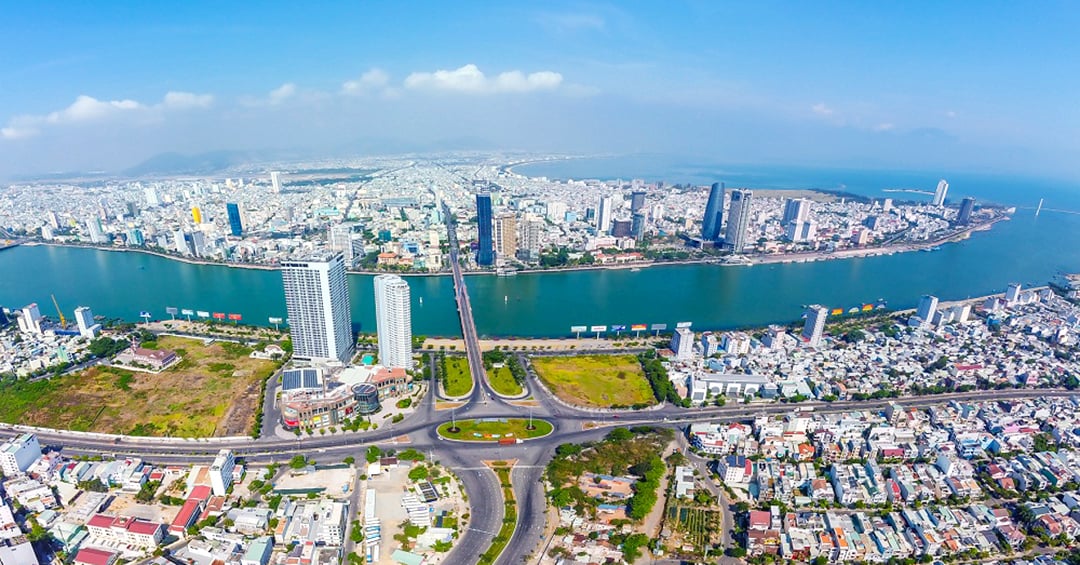
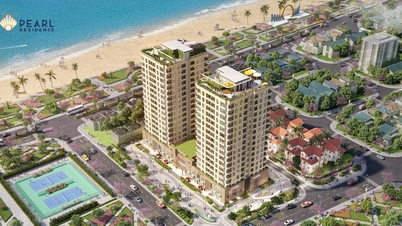
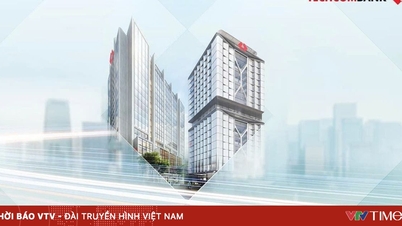
Illustrative image. (Source: DK)
During the seminar "Revising the Land Law: Creating Land for Tourism," held on the morning of October 19th, Mr. Nguyen Van Dinh, Vice Chairman of the Vietnam Real Estate Association, stated that currently, Vietnam has over 200 tourism real estate projects underway, creating nearly 100,000 condotel units, 3,000 villas, and 15,000 new hotel rooms.
By 2030, Vietnam could become a tourism powerhouse, with 160 million domestic tourists and 50-70 million international tourists. This would necessitate approximately 500,000 accommodation rooms, not to mention other types of services, especially high-end tourism, which is almost non-existent.
According to Mr. Dinh, in the current context, Vietnam has only achieved one-third of the infrastructure needed to meet the demand, and the quality will not be high in the future. Furthermore, this figure has stagnated in recent years due to unresolved legal issues.
Mr. Dinh stated that tourism and resort real estate is like a "neglected child" of the market. This is because the Land Law does not mention tourism real estate developers, and this group is absent from the Land Law, the Investment Law, and other regulations related to the real estate market.
"There are over 100 large-scale tourism projects currently stalled, awaiting legal resolution. If this situation continues, it will discourage tourism investment, demoralize investors, and even local authorities wanting to promote investment will face difficulties," Mr. Dinh said.
There are still many other difficulties.
Meanwhile, lawyer Nguyen Hong Chung, Chairman of the Board of Directors of DVL Ventures and Vice Chairman of the Hanoi Real Estate Club, said that tourism and resort real estate projects face another difficulty, a more "challenging" one, which is the regulation regarding cases where the State reclaims land for socio -economic development in the national and public interest.
Accordingly, projects where the state reclaims land are defined as those aimed at upgrading the general technical and social infrastructure of the population, ensuring social welfare for the population, and excluding projects with the goal of developing tourism, entertainment, or combining commercial housing with tourism development, service facilities, entertainment, and recreation.
However, the draft revised Land Law does not include provisions for land acquisition for new urban area projects. Therefore, it is essential to add the provision "new urban area projects with a scale of over 300 hectares" to the types of real estate products in the revised Land Law to ensure the consistency of technical and social infrastructure systems.
According to Mr. Chung, during the period from 2015-2019, tourism developed strongly, with many provinces and cities viewing tourism development as a good direction and identifying it as a key sector. This led to a situation where, although the law stipulates that tourism real estate is not subject to land reclamation by the State, many provinces still reclaimed land and allocated it to businesses because tourism projects were identified as key projects.
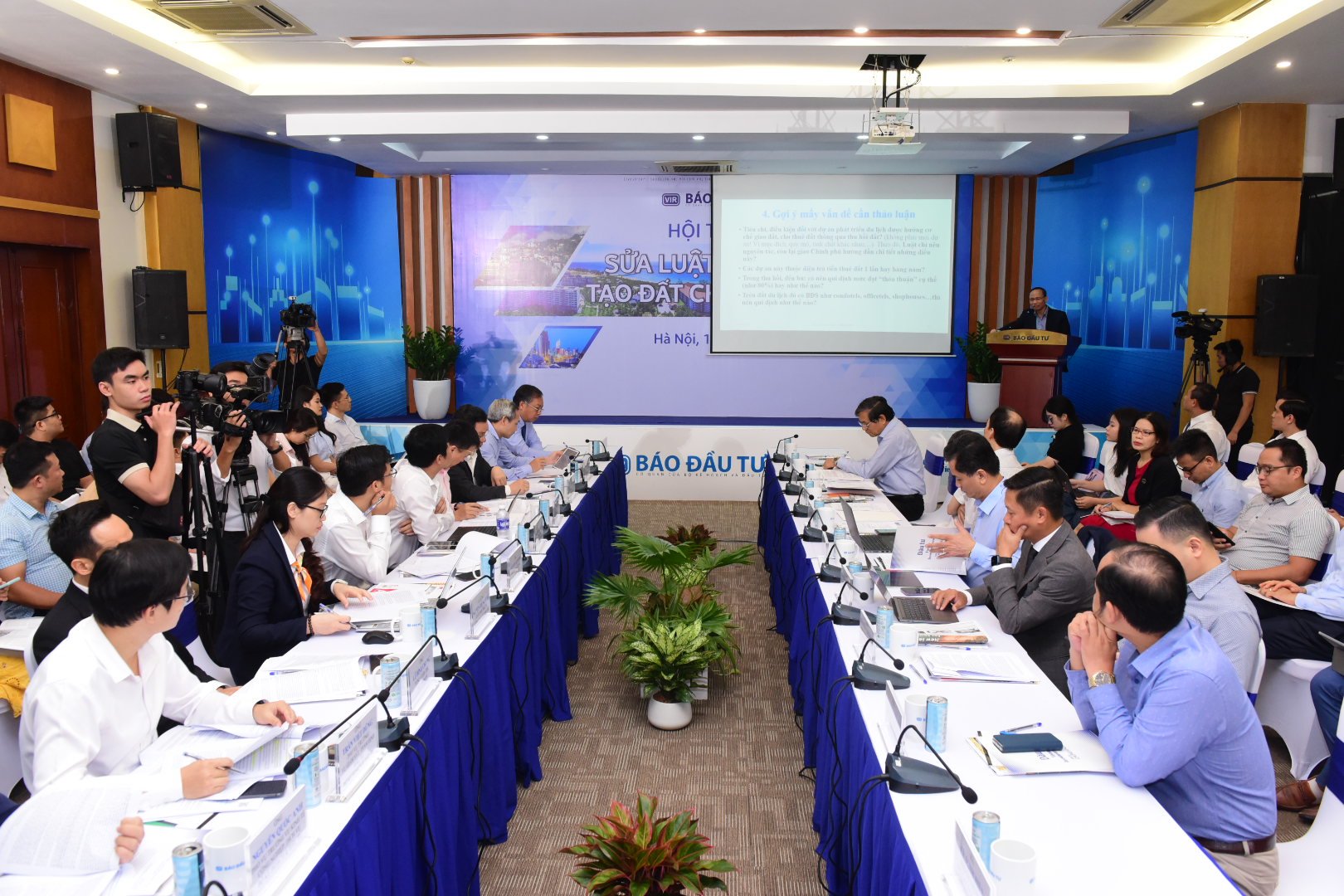
Scientific seminar with the theme "Revising the Land Law: Creating land for tourism". (Photo: DT)
As a consequence, legal issues related to tourism real estate began to arise after 2019. When a review was requested, a series of projects were suspended due to regulations on land allocation, and as a result, those projects are still suspended now, awaiting a new legal framework.
"For tourism to truly become a key economic sector, I believe the new Land Law needs specific regulations on land for tourism. At the same time, there needs to be truly open policies and mechanisms regarding land, taxes, investment, etc., to promote tourism development."
"Economic development in each stage has different priorities. Once we have identified tourism as a key economic sector, tourism projects such as amusement parks, entertainment complexes, and multi-functional complexes should be included in the list of projects for which the State will acquire land for socio-economic development," Mr. Chung proposed.
Real estate legal expert Nguyen Van Dinh also pointed out another shortcoming in the Draft Law on Land (amended), namely in cases of land acquisition for socio-economic development for national and public benefit.
The draft only stipulates that land can be reclaimed for mixed-use projects involving housing and commercial/service businesses if decided by the Provincial People's Council in accordance with local conditions.
Therefore, the project must include at least a portion of the land designated for residential use (without specifying the exact level or percentage) before the State can reclaim the land.
"I agree with the view that land should be reclaimed for purely tourism, entertainment, and recreation projects (without residential functions). However, in locations suitable for tourism, priority should be given to reclaiming land for key tourism projects that create momentum for socio-economic development in the locality, and even create a ripple effect for the entire region," Mr. Dinh expressed.
Mr. Dinh analyzed that, in reality, if land acquisition is not permitted, it will be impossible to implement large-scale projects to attract potential, capable investors. Maintaining the current regulations in the draft law will hinder the implementation of key tourism projects. To carry out tourism, entertainment, and recreation projects, localities are forced to "insert" a portion of residential land (possibly a very small percentage) into the project's planning scheme to meet the land acquisition requirements.
This form of "circumvention" will have negative consequences. The land allocated for residential use will remain unused, wasting resources, or if used, it will create residential functions within the tourism project area. Long-term residential living within the project will diminish the luxury level of a resort tourism project. Therefore, Mr. Dinh believes that Article 79 of the draft should include provisions for land acquisition for purely tourism, entertainment, and recreation projects without residential functions.
Source


![[Photo] Prime Minister Pham Minh Chinh holds a phone call with the CEO of Russia's Rosatom Corporation.](/_next/image?url=https%3A%2F%2Fvphoto.vietnam.vn%2Fthumb%2F1200x675%2Fvietnam%2Fresource%2FIMAGE%2F2025%2F12%2F11%2F1765464552365_dsc-5295-jpg.webp&w=3840&q=75)



































































Comment (0)