

A series of stroke cases
On September 2nd, a bus driver operating the Ho Chi Minh City - Binh Thuan route exhibited unusual symptoms such as suddenly collapsing, experiencing spasms and convulsions on the left side of his body, and turning his eyes and head to the right. The driver managed to get back on his feet and stop the bus. Passengers were quite confused and called an ambulance. However, the driver died upon arrival at the hospital.
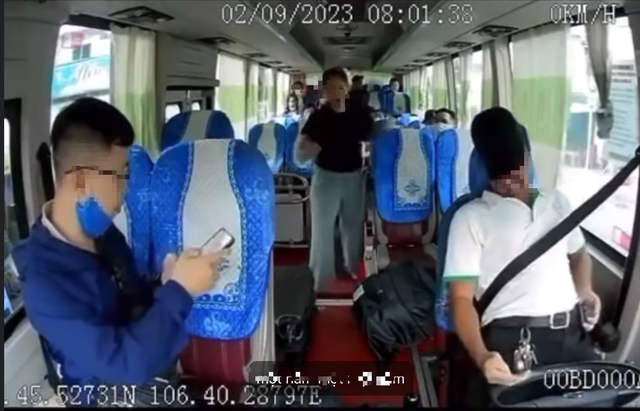
The bus driver suffered a stroke while driving on September 2nd.
Earlier, on August 7th, a passenger bus traveling from Ho Chi Minh City to Soc Trang suffered a stroke when the driver suddenly collapsed. However, he still managed to steer the bus to the side of the road, ensuring the safety of the passengers.
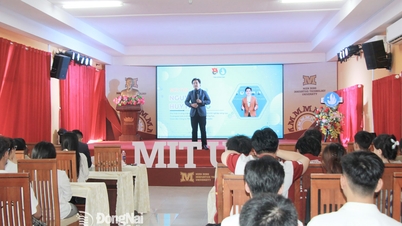
This morning (September 5th), while giving a speech at the opening ceremony of the new school year, the Principal of Tram Chim High School (Tam Nong District, Dong Thap Province ) suddenly collapsed, his body turning purple. He was rushed to the hospital by colleagues but did not survive. The initial diagnosis was death due to stroke.
What should you do if you see someone having symptoms of a stroke?
Associate Professor, Doctor Nguyen Huy Thang, Head of the Department of Cerebrovascular Pathology, People's Hospital 115, Ho Chi Minh City, and President of the Ho Chi Minh City Stroke Association, said that stroke can happen to anyone, at any time of day.
"In case someone shows signs of a stroke, they should be placed on their side, in a well-ventilated area, and their collar should be opened. Most importantly, the patient should be transported to the nearest hospital capable of treating strokes," Associate Professor Thang advised.
Some typical signs to recognize a stroke include:
The face is asymmetrical, with facial weakness and paralysis, one side of the face sagging, and a distorted smile.
Sudden difficulty or inability to move limbs, weakness or paralysis on one side of the body.
Sudden, severe headaches or dizziness occur, and although the patient does not experience weakness or paralysis in the limbs, they are unable to sit or walk normally.
Sudden loss of vision, such as blurred vision or difficulty seeing clearly.
Voice changes, lisping, slurred speech...
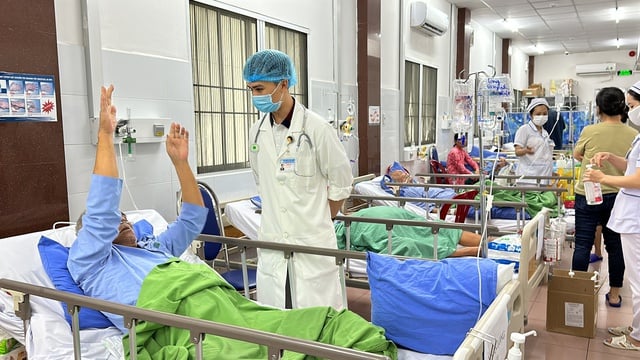
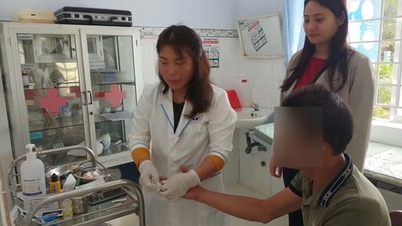
Patients undergoing physical therapy after stroke treatment.
For every minute the brain is deprived of blood, it loses nearly 2 million nerve cells.
According to Dr. Nguyen Ba Thang, Head of the Stroke Unit at the University Medical Center of Ho Chi Minh City, nearly 2 million nerve cells are lost every minute the brain is deprived of blood. Therefore, stroke victims need immediate emergency care to ensure safety and minimize brain damage.
When dealing with a stroke patient, family members should contact the 115 emergency system for guidance and transport the patient to hospitals as soon as possible for the best possible outcome.
"It's necessary to limit transporting patients by motorbike due to the risk of falls, burns from the exhaust pipe, the paralyzed leg getting caught in the wheel, or collisions with the road surface... Especially, do not perform cupping therapy, bloodletting, or give the patient medicine, especially traditional remedies, to avoid wasting precious time, being ineffective, and potentially harming the patient," Dr. Ba Thang advised.
To reduce the risk of stroke, people should undergo regular health checkups, maintain a healthy diet, exercise regularly, and prevent risk factors such as high blood pressure, diabetes, atherosclerosis, high cholesterol, smoking, and obesity.
Each year, Vietnam records approximately 200,000 stroke cases, and like other chronic diseases, this number is still on the rise. Preliminary results show that the average age of Vietnamese people currently suffering from stroke is around 65 years old; those under 45 account for 7.2%. Notably, the rate of stroke is 1.5 times higher in men than in women (unlike in other countries where women suffer more strokes than men).
Information reported at the 2022 International Stroke Conference.
Source link





![[Photo] Closing Ceremony of the 10th Session of the 15th National Assembly](/_next/image?url=https%3A%2F%2Fvphoto.vietnam.vn%2Fthumb%2F1200x675%2Fvietnam%2Fresource%2FIMAGE%2F2025%2F12%2F11%2F1765448959967_image-1437-jpg.webp&w=3840&q=75)













































![[OFFICIAL] MISA GROUP ANNOUNCES ITS PIONEERING BRAND POSITIONING IN BUILDING AGENTIC AI FOR BUSINESSES, HOUSEHOLDS, AND THE GOVERNMENT](https://vphoto.vietnam.vn/thumb/402x226/vietnam/resource/IMAGE/2025/12/11/1765444754256_agentic-ai_postfb-scaled.png)










































Comment (0)