

Laser technology applied to the treatment of varicose veins has the advantages of being fast, minimally invasive, painless, having a high success rate, leaving no scars, and especially allowing patients to go home the same day without needing to be hospitalized…
This was a complex case, and the procedure took twice as long as a normal case.
On October 8th, at MEDLATEC General Hospital, the hospital's medical team collaborated with experts to apply laser technology to treat a patient suffering from varicose veins.
The patient is Mrs. VTX (born in 1952, residing in Ngo Quyen District, Hai Phong City ). About a week ago, Mrs. X. came to MEDLATEC General Hospital for examination with symptoms of swollen blood vessels in her legs, itching, and excessive scratching…
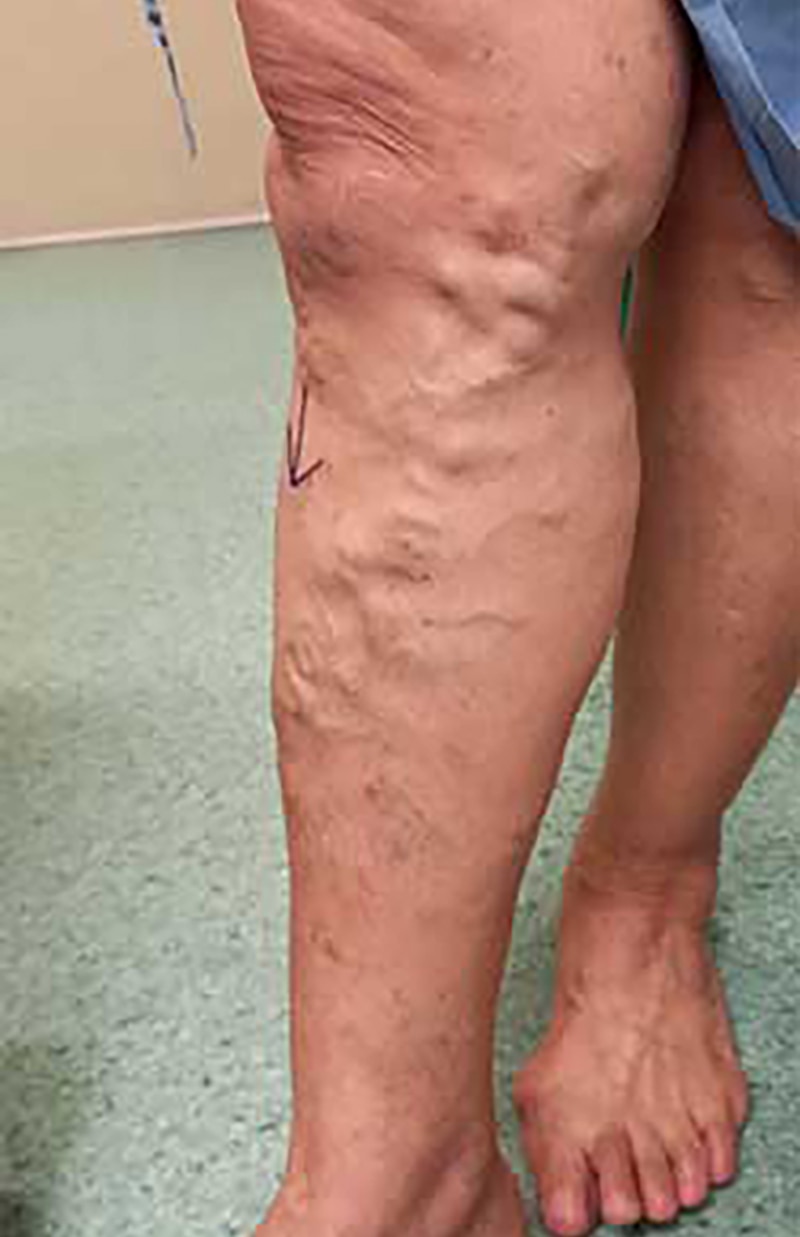
Image of a case of varicose veins in the lower limbs.
Ms. X shared that, in the past, after giving birth, both of her legs experienced itching and visible blue veins... the doctor recommended wearing compression stockings, but she didn't because she felt uncomfortable and restricted. Over time, the blood vessels swelled up.
Recently, the blood vessels have been increasingly swollen, so the children and grandchildren took her to MEDLATEC General Hospital for examination.
Here, doctors performed vascular ultrasound, currently the most effective method for diagnosing varicose veins. The ultrasound procedure was performed using the advanced VIVID S70N machine, allowing for detailed assessment of the size, course, and abnormalities of the veins, as well as the degree of valve insufficiency, with high accuracy.
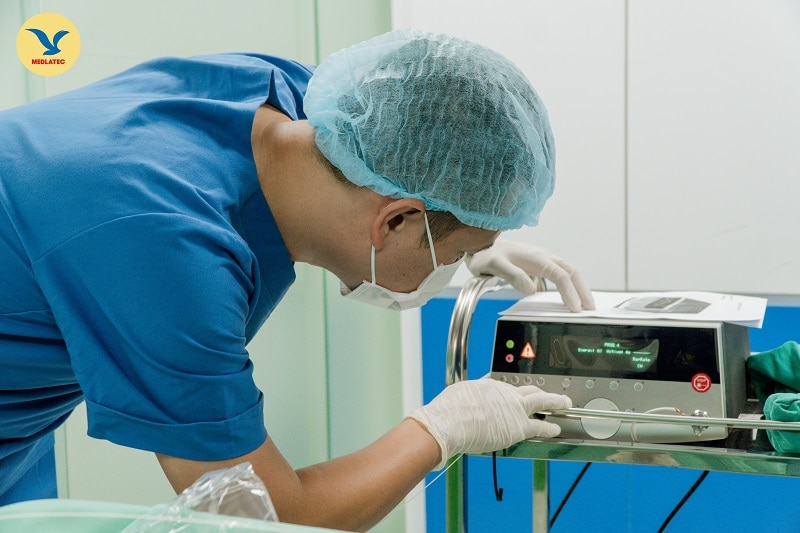
Laser ablation with a wavelength of 1,470nm is used to treat varicose veins at MEDLATEC.
Based on the ultrasound results, Mrs. X was diagnosed with bilateral lower extremity varicose veins at grade 3, with multiple large varicose veins affecting her appearance. The doctor recommended that the patient undergo a radical surgical procedure.
According to Dr. Nguyen Tri Kien, a specialist in Diagnostic Imaging at MEDLATEC General Hospital, in cases of grade 3 varicose veins, if left untreated or only minimally treated, the risk of progression to grade 4 (with ulceration) is very high.
Observations on patient X's leg skin before intervention revealed areas of skin discoloration (darkening, darkening) due to persistent oxygen deprivation. If this condition persists, the patient's leg is at risk of ulceration.
After the examination and consultation, the patient was scheduled for a laser treatment procedure. The patient was given local anesthesia and remained fully conscious, able to speak normally throughout the procedure.
Despite the complexity of the case, thanks to their experience and the support of modern technology, the doctors successfully performed the procedure.
Sharing about patient X's case, Dr. Kien said that in normal patients, the saphenous vein runs in a straight line, with a number of small but few side branches. However, in patient X's case, the vein was significantly dilated, its course was tortuous, and there were many side branches, some of which were larger than the main branch… These abnormal factors made the intervention process difficult, the catheter easily went astray, leading to a prolonged intervention time.
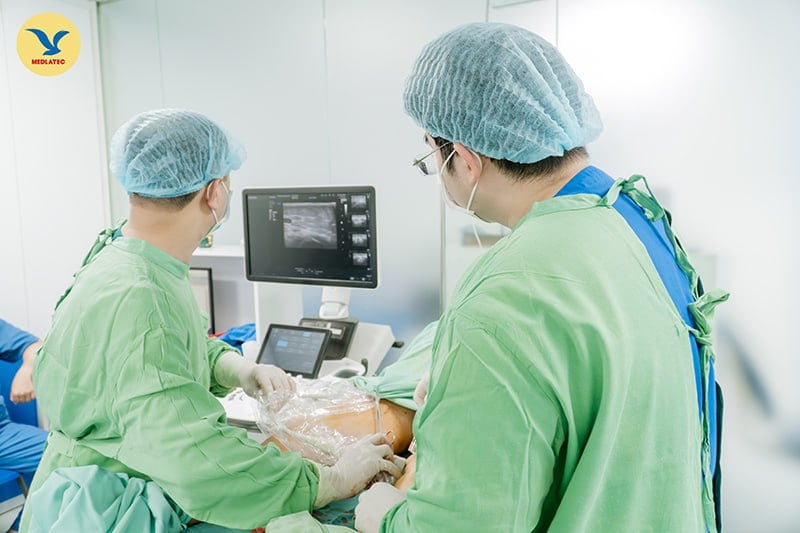
Considered a difficult case, the procedure involving two limbs using laser ablation usually takes 45 minutes, but in Mrs. X's case, it lasted 1 hour and 20 minutes.
" Compared to previous varicose vein treatments, this wasn't the most difficult case, the access route wasn't the most challenging, and the patient's level of irritation wasn't high. However, it was still considered a difficult case, as the needle and instruments couldn't reach the base of the saphenous vein during the previous attempts."
For a typical patient, the time from inserting the needle into the skin to reaching the intervention site is less than 5 minutes; however, in this case, it took 25 minutes to access the saphenous vein. The procedure for two limbs using a laser ablation device usually takes 45 minutes, but today's case lasted 1 hour and 20 minutes.
"Although the procedure takes longer, there is absolutely no impact on the patient; there is no increase in blood loss, no increase in pain, and the amount of anesthetic used remains unchanged ," Dr. Kien shared.
Immediately after the procedure, the patient was able to sit up and eat normally. Ms. X said she felt comfortable and experienced no pain. The doctors and medical staff at the hospital were attentive, helpful, and gentle. The facility is spacious, clean, and modern, and the process is quick, with no long waiting times.
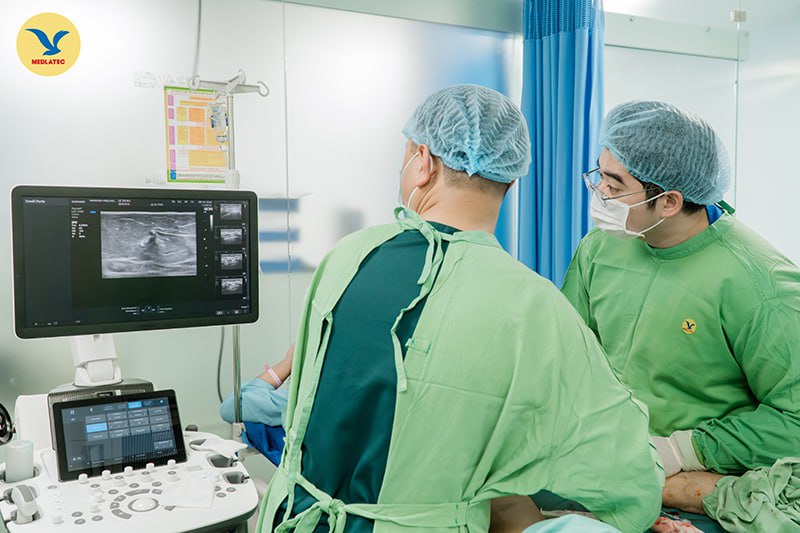
The team of experts and doctors were dedicated throughout the procedure in Mrs. X's case.
Sharing her reasons for choosing MEDLATEC General Hospital for treatment, Ms. X said: “ Previously, seeing my neighbors also being treated for the same condition, having to stay in the hospital for 7 days and then having to rest at home for 2 months without being able to walk, I was worried and didn't seek treatment. Recently, after visiting the hospital for an examination, I was advised by doctors at MEDLATEC about the high-frequency laser ablation method, which is painless, has a quick recovery time, and doesn't hinder daily activities, so I decided to undergo treatment.”
Furthermore, my children and grandchildren also regularly visit MEDLATEC for check-ups and health examinations, so my family is completely reassured about the quality, facilities, and especially the team of leading experts here .”
Things you need to know about varicose veins.
According to statistics from the World Health Organization (WHO), varicose veins are common in about 35% of working people and about 50% of retired people, with the incidence rate in women being three times higher than in men.
Varicose veins are understood as a decrease in the function of the lower extremity venous system in returning blood to the heart, leading to blood pooling in the legs, causing hemodynamic changes and deformation of the surrounding tissues.
In stages 1 and 2, the disease presents with mild symptoms such as irritability, numbness, and restlessness. Stages 3 and 4 show symptoms of cramps and restless feet (manifested by the inability to lie still, requiring bending, straightening, or raising the legs to feel comfortable). Stages 5 and 6 present with non-healing ulcers.
Dr. Kien emphasized that varicose veins are a chronic disease, not life-threatening. However, the disease causes discomfort and inconvenience in daily life, such as aching legs, difficulty walking, and edema if standing for long periods.
In severe cases, veins may appear prominent and tortuous under the skin, affecting aesthetics and potentially causing complications such as skin ulcers, abscesses, infections, and even sepsis.
According to Dr. Kien, those most susceptible to varicose veins are people who frequently work in environments where they sit or stand for long periods, such as police officers, soldiers, factory workers, teachers, and office workers.
Doctors recommend that women over 30 should get screened for varicose veins. Besides being a condition caused by lifestyle habits, it can also be hereditary. If a mother has varicose veins, her daughter has a 4 to 5 times higher risk of developing them.
Laser treatment for varicose veins – The optimal solution for treating varicose veins.
Treatment for varicose veins is determined based on the stage of the disease. In the early stages (C0-C1), measures such as lifestyle changes (exercise, adjusting daily routines), wearing compression stockings, and using medications to support circulation are often recommended to reduce initial symptoms.
When the disease progresses to later stages (from C2 onwards), endovascular interventions such as endovascular laser and radiofrequency ablation are considered the most effective treatments for large varicose veins.
For cases involving small venous branches, methods such as biological glue injection, surgery, or sclerotherapy are applied to achieve optimal treatment results.
In the case of patient VTX, diagnosed with stage C3 varicose veins, the doctor prescribed laser ablation.
Laser treatment for varicose veins in the lower extremities uses the heat from a laser light to shrink the veins. The doctor will insert a laser fiber into the dilated vein. After powering on, the laser beam is directed at the treatment area and slowly pulled back, causing the two vein walls to fuse together. Simultaneously, anesthesia combined with the injection of water around the vein helps reduce the impact of the laser on surrounding tissues, minimizing tissue burns and preventing complications to sensory nerves.
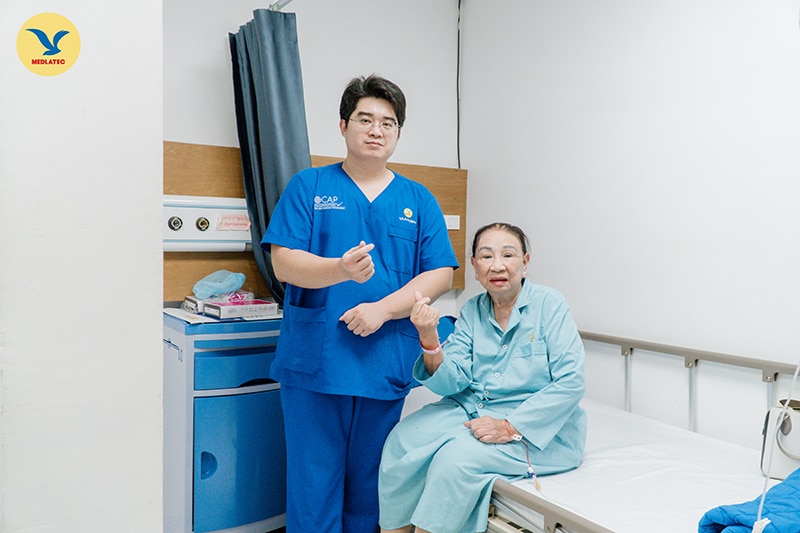
Ms. X was fully conscious and able to walk immediately after treatment.
The advantages of laser treatment include:
- The procedure is quick, minimally invasive, has few complications, and leaves no scars.
- The treatment time is short, and patients can be discharged on the same day.
- The recovery time is quite fast; patients can walk around one hour after surgery.
- This method has the highest success rate and aesthetic results.
Laser vein treatment is not a new technology worldwide; it was first applied 20 years ago, but only with short-wavelength lasers (720 nm). Currently, the laser wavelength used at the MEDLATEC Healthcare System is the most modern laser wavelength (blue light laser), which is 1470 nm, used in all advanced countries around the world.
The advantage of this method is that the laser uses direct heat to close and bond the two blood vessel walls together, whereas other methods close the vein indirectly by inducing inflammation. After laser intervention, patients can move around gently within an hour and do not need to remain immobile like with other surgical methods.
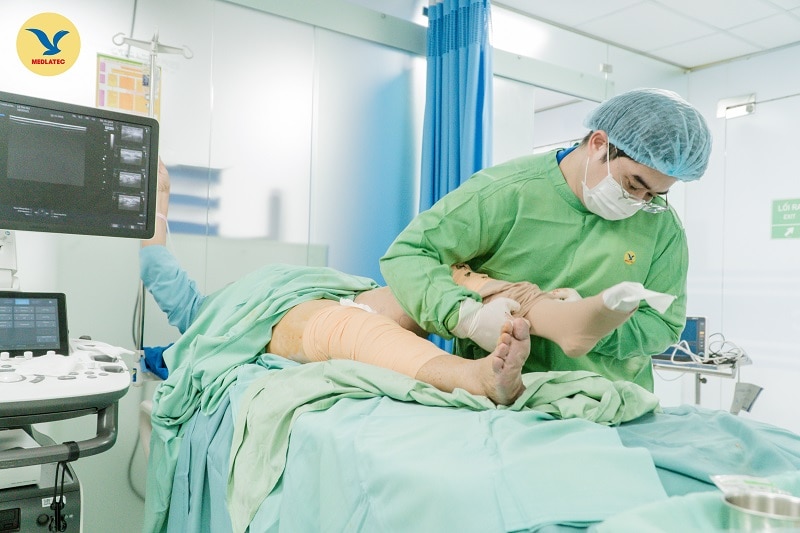
After the laser treatment is complete, the patient is fitted with compression stockings by the doctor.
To ensure treatment effectiveness, doctors recommend that patients wear compression stockings for 1-3 months after the procedure to maintain stable pressure and prevent recurrence.
For any questions regarding venous diseases, please contact our hotline at 1900 56 56 56 for advice and answers.





















































































Comment (0)