

Geopolitical tensions between the world's two largest economies cannot halt the flow of dialogue and trade in the technology sector.
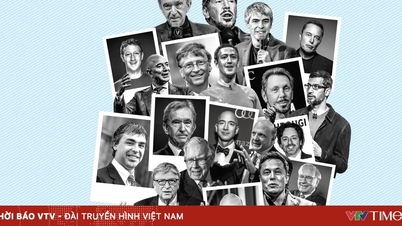
Leaders of America's largest technology companies have been frequently seen in China since the beginning of this year, shortly after the country ended its strict Covid-19 control measures.
Adapting to a politically centered economy
In June, Bill Gates, co-founder of the technology giant Microsoft, was received by Chinese President Xi Jinping in Beijing, an almost unprecedented exception for a business leader. "You are the first American friend I've met this year," the Chinese president told the American billionaire, not forgetting to offer a rare smile.

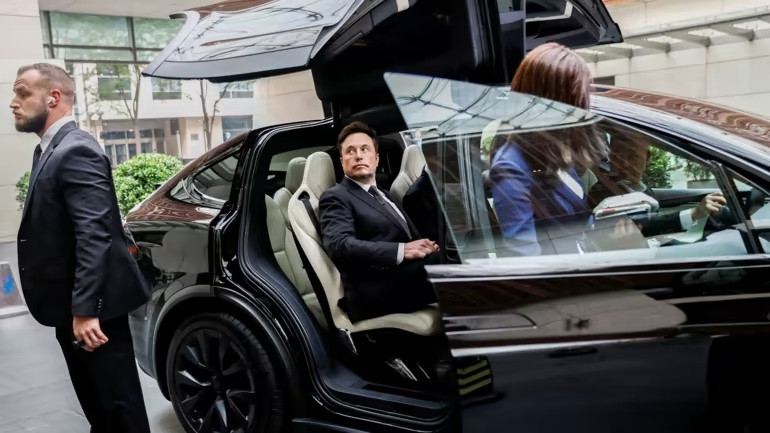
In late May, Elon Musk, co-founder of the market-leading electric vehicle company Tesla, also visited mainland China. The renowned entrepreneur met with Chinese government officials in Beijing before visiting a car assembly plant in Shanghai. Similarly, in April, Intel CEO Pat Gelsinger also visited and met with officials in the world's second-largest economy.
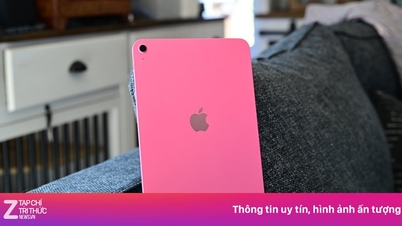
And in March, Apple CEO Tim Cook and Qualcomm CEO Cristiano Amon attended the China Development Forum held in Beijing, sponsored by the Chinese government, along with executives from other global companies. “Apple and China are developing together, and so it’s a symbiotic relationship,” Cook said during his first trip to China since the pandemic began.
US-China relations continued to spiral into crisis after Washington shot down a Beijing-owned spy balloon in February. However, this did not diminish the interest of the technology sector across the ocean in mainland China. In June, following Gates' visit, US Secretary of State Antony Blinken traveled to China to negotiate a thawing of relations, followed by Treasury Secretary Janet Yellen in July.
The attention that American tech leaders are paying to China demonstrates the country's vital importance to today's global giants. “The big question facing these giants is how to adapt to China’s new economy, where geopolitical issues are always at the forefront,” said Abishur Prakash, CEO of The Geopolitan Business, a Toronto-based consulting firm.
"They know the Chinese market is becoming less accessible," and "this is why executives are going to China to meet with government officials, to assess how the operating environment will change," Prakash said.
While Washington tightens sanctions to prevent rivals from accessing its technology, the country's largest tech companies remain heavily reliant on Chinese technology imports and the Chinese market. In fact, despite five years of "decoupling," this dependence has remained largely unchanged, and in some cases has even increased, leaving companies vulnerable to political influence.
"Lost" in Beijing
In 2018, Washington began shifting towards a policy of "decoupling" from China under the administration of President Donald Trump, imposing restrictions on exports and investment to prevent China from accessing advanced technologies from the country.
The United States is particularly keen to prevent the flow of technology that could be diverted for military use, while also reducing its over-reliance on supply chains located in China.
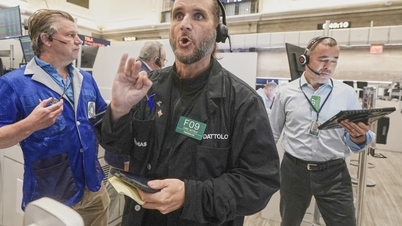
But five years later, a Nikkei Asia financial data analysis revealed that American technology companies still largely rely on China for the majority of their sales. The analysis, using data from the QUICK-FactSet database, showed that 17 of the top 100 global companies whose sales were in China in the most recent fiscal year were American technology-related companies.
Meanwhile, dependence on China, measured by percentage of annual sales, has either increased or remained virtually unchanged since 2018 for many leading tech brands, such as Apple and Tesla. Even companies in the semiconductor sector, which have been a particular target of the US government and more recently China, have seen little change in the portion of their revenue generated in mainland China.
Many international companies do not disclose revenue in China. QUICK-FactSet estimates this revenue from annual reports and other sources, then uses an "estimation algorithm based on weighted gross domestic product and accounting logic".
It's difficult to say whether China is more dependent on American technology than American technology companies are on Chinese markets and supply chains. However, regardless of the outcome, the level of dependence on each other hasn't shown any decline; in some cases, it has even increased compared to 2018.
(According to Nikkei Asia)
Source


![[Photo] Prime Minister Pham Minh Chinh holds a phone call with the CEO of Russia's Rosatom Corporation.](/_next/image?url=https%3A%2F%2Fvphoto.vietnam.vn%2Fthumb%2F1200x675%2Fvietnam%2Fresource%2FIMAGE%2F2025%2F12%2F11%2F1765464552365_dsc-5295-jpg.webp&w=3840&q=75)
![[Photo] Closing Ceremony of the 10th Session of the 15th National Assembly](/_next/image?url=https%3A%2F%2Fvphoto.vietnam.vn%2Fthumb%2F1200x675%2Fvietnam%2Fresource%2FIMAGE%2F2025%2F12%2F11%2F1765448959967_image-1437-jpg.webp&w=3840&q=75)





































![[OFFICIAL] MISA GROUP ANNOUNCES ITS PIONEERING BRAND POSITIONING IN BUILDING AGENTIC AI FOR BUSINESSES, HOUSEHOLDS, AND THE GOVERNMENT](https://vphoto.vietnam.vn/thumb/402x226/vietnam/resource/IMAGE/2025/12/11/1765444754256_agentic-ai_postfb-scaled.png)


























![[Photo gallery] Long Thanh Airport 'lights up' ready to welcome its first flight](https://vphoto.vietnam.vn/thumb/402x226/vietnam/resource/IMAGE/2025/12/11/1765467251707_bia_20251211222704.jpeg)


















Comment (0)