

C. OFFICIALLY ABOLISHING THE ISSUANCE OF JUNIOR HIGH SCHOOL GRADUATION CERTIFICATES
Regarding diplomas and certificates in the national education system, the draft law unifies the regulations by eliminating the issuance of junior high school diplomas, replacing them with the phrase "completion of the junior high school program or equivalent." Simultaneously, the draft stipulates that diplomas and certificates will be issued in paper or digital format, aiming to promote the implementation of digital transformation initiatives in education.
In addition, the draft standardizes the term "diploma of specialized training programs in certain specific fields" instead of "equivalent diploma," accurately reflecting the nature of degrees such as those of doctors, pharmacists, engineers, and architects; ensuring consistency with the amended Higher Education Law and aligning with international practices. The Minister of Education and Training will manage diplomas and certificates within the national education system to ensure flexibility and timely adjustments according to practical requirements, while maintaining the uniformity, interconnectedness, and transparency of the system.
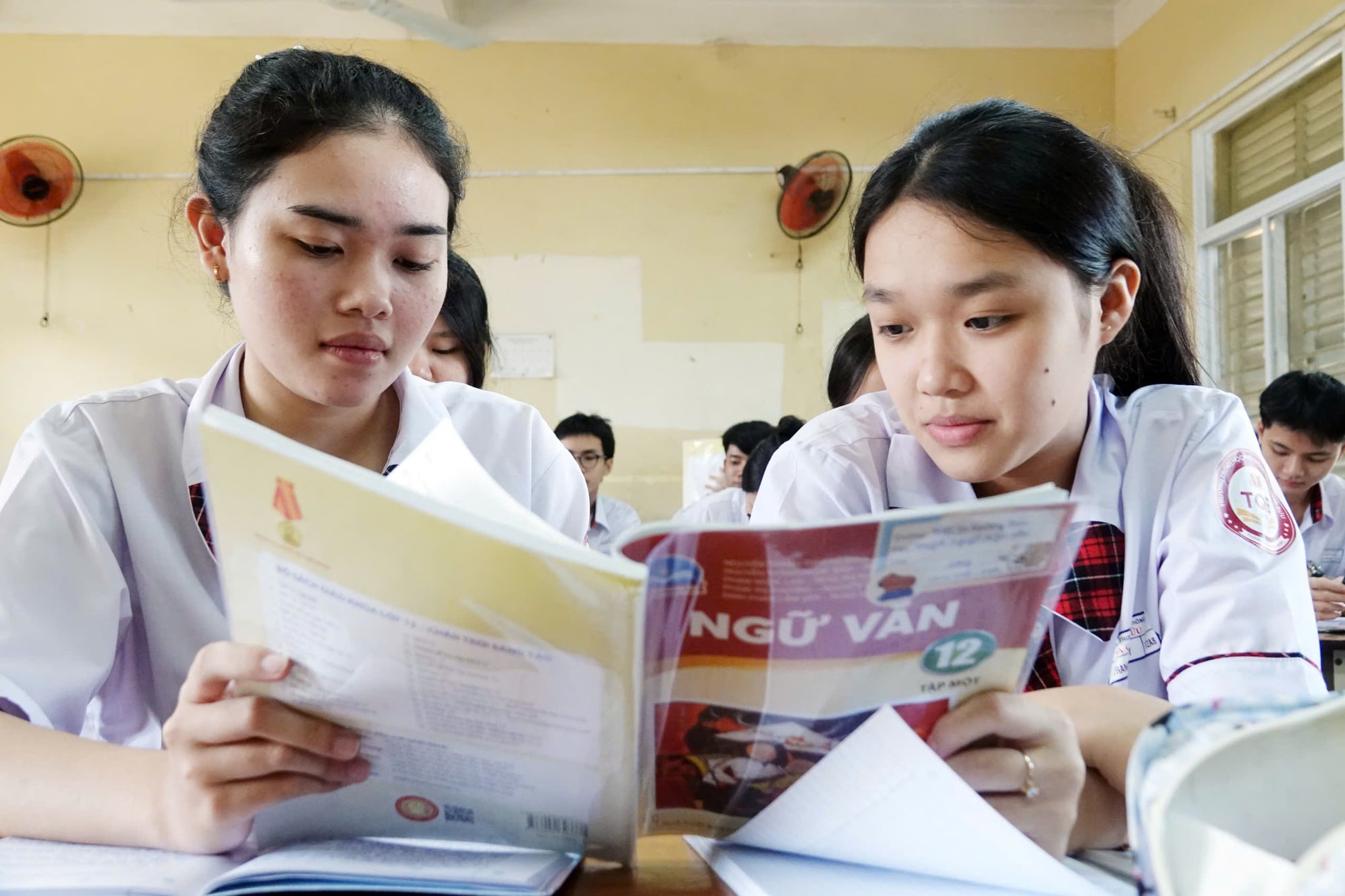
Starting from the 2026-2027 school year, a single set of textbooks will be used uniformly nationwide for general education.
PHOTO: DAO NGOC THACH
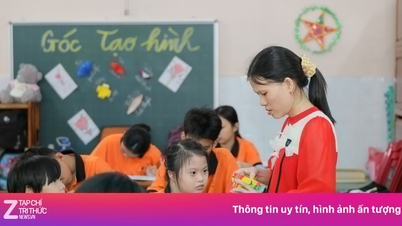
Regarding the levels and ages of general education, the law adds a provision that empowers the Minister of Education and Training to regulate cases where students are allowed to skip grades, study at ages older or younger than the prescribed age, thereby increasing flexibility and suitability to the diverse conditions and abilities of students, especially ethnic minority students, students with special circumstances, or those with outstanding talents and aptitudes; in line with the orientation of talent development and building an open, flexible, and modern education system.
The unified textbook program has not yet been legalized.
The government has incorporated feedback to revise the draft, stipulating that the Minister of Education and Training decides on a set of general education textbooks for nationwide use. This ensures that the Ministry of Education and Training can choose to compile a new set of textbooks or select and revise existing ones, depending on the practical situation and the decision of the competent authority.
In addition, the draft continues to entrust the Government with the authority to regulate the free provision of textbooks for students; while removing the provision "entrusting the Government with the detailed regulation on the socialization of textbooks." According to the Ministry of Education and Training, in the current context, there are not yet sufficient conditions to immediately legalize the option of a unified set of textbooks directly compiled by the state or implemented through a socialization mechanism, as the specific option is still under consideration by the competent authorities. Furthermore, the Ministry of Education and Training believes that such an open-ended regulation helps ensure the stability of the law, avoiding rigid constraints when the policy is still in the process of research and impact assessment.
Regulations for the National Scholarship Fund
The Education Law stipulates that the National Scholarship Fund has legal personality, its own seal and bank account; it is under the direct control of the Ministry of Education and Training and operates on a non-profit basis. In addition to annual state budget funding, the fund accepts voluntary contributions, donations, and legitimate gifts to expand its resources and increase scholarship opportunities for students, instead of relying solely on recurrent expenditures.
According to the Ministry of Education and Training, this mechanism is similar to the model of science and technology funds as stipulated in the Law on Science, Technology and Innovation. The government will issue regulations on the organization, management and use of the National Scholarship Fund.
Furthermore, the Resolution on some specific and outstanding mechanisms and policies to achieve breakthroughs in education and training clearly stipulates: The Minister of Education and Training shall decide on a set of general education textbooks to be used uniformly nationwide from the 2026-2027 school year; by 2030, textbooks shall be provided free of charge to students, prioritizing areas with special difficulties, ethnic minority areas, mountainous regions, border areas, and islands.
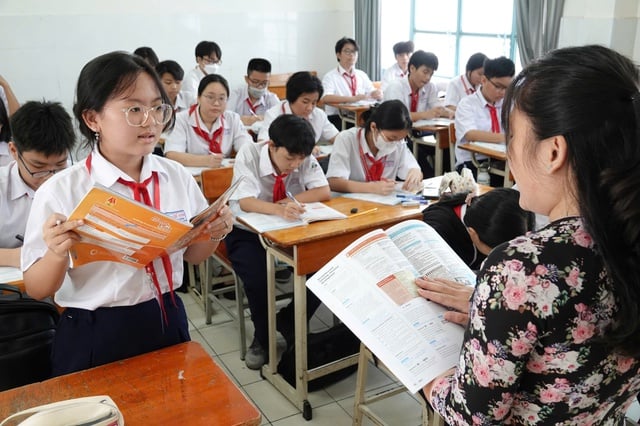
The resolution stipulates a phased preferential allowance for teachers, with a minimum of 70% for staff, a minimum of 30% for employees, and 100% for teachers in particularly difficult areas, ethnic minorities, border regions, and islands.
Photo: Dao Ngoc Thach
DIRECTOR OF THE DEPARTMENT OF EDUCATION AND TRAINING RECRUITMENT AND ACCEPTANCE OF PERSONNEL AT EDUCATIONAL INSTITUTIONS
The resolution on specific and superior mechanisms and policies to achieve breakthroughs in education and training has perfected the mechanism for recruiting, utilizing, and managing human resources according to clearly defined levels of authority. Accordingly, the Director of the Department of Education and Training is responsible for recruiting and accepting personnel at public educational institutions in the province and deciding on the transfer, reassignment, secondment, appointment, and change of job positions for cases falling under their authority or involving two or more communes.
The Chairman of the People's Committee at the commune level is responsible for the transfer, reassignment, secondment, appointment/dismissal, and changes in job positions for personnel in public educational institutions under the commune's management.
Simultaneously, the mechanism for autonomy is added for vocational and higher education institutions in determining job positions, recruiting, and signing contracts with foreign experts and scientists (PhDs) and Vietnamese citizens residing abroad, and confirming exemption from work permits for up to 3 years for teaching and research.
Regarding remuneration, the Resolution stipulates a phased preferential allowance for teachers, with a minimum of 70% for staff, a minimum of 30% for employees, and 100% for teachers in particularly difficult areas, ethnic minorities, border regions, and islands; it also allows state-owned and higher education institutions to independently decide on additional income from legitimate non-budgetary revenue sources.
Vocational high schools are at the same educational level as regular high schools.
The National Assembly also passed the revised draft Law on Vocational Education and Training (VET), aiming to promptly institutionalize the Party's resolutions, perfect the legal framework, and develop a skilled workforce.
With the draft revised Vocational Education and Training Law, vocational education and training is identified as key to developing a highly skilled workforce; the state has a policy of prioritizing the development of a high-quality vocational education and training system, paying attention to the development of vocational education and training in rural and disadvantaged areas.
The draft law also added vocational high schools to the same educational level as high schools, integrating core knowledge from the high school curriculum with vocational expertise, aiming to promote effective career guidance and streaming, contributing to the popularization of high school education while providing a skilled young workforce for the socio-economic development of the country.
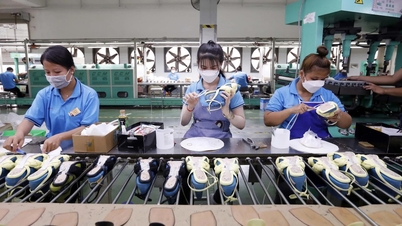
Businesses play a particularly important role in vocational education and training (VET), working alongside the government and VET institutions to train skilled human resources to meet the demands of the labor market.
Quy Hien
Regarding the authority and procedures for establishing or permitting the establishment, licensing educational activities, suspending student enrollment, and suspending educational activities, the amended and supplemented Education Law establishes principles and authority concerning investment and operational conditions in the education sector. Accordingly, consideration and decision-making must be consistent with the strategy, planning, and requirements of socio-economic development; meet the objectives of each educational level and training qualification; and be linked to the financial capacity, facilities, staff, and quality assurance conditions of the educational institution.
This law also categorizes institutions according to their respective capacities; it stipulates the authority of the Minister of Education and Training over pre-university schools, while clearly defining the authority over ethnic boarding schools, semi-boarding schools, and boarding schools at the highest educational level. Specific conditions are to be detailed by the Government in a decree to ensure feasibility and practicality.

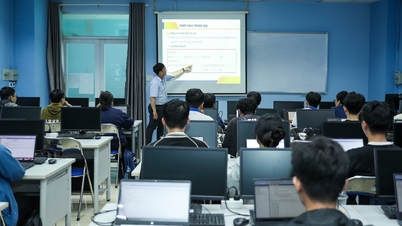
The amended Education Law clearly demonstrates the creation of conditions for students, after completing lower secondary education, upper secondary education, vocational secondary education and equivalent programs, to continue their studies at higher levels or enter the workforce.
Photo: TN
DO NOT IMPOSE STREAMING OR CLEAR REGULATIONS ON SERVICES IN EDUCATION
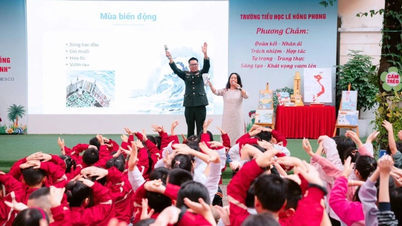
Regarding career guidance and educational streaming, the amended and supplemented Education Law, specifically Clauses 2 and 3 of Article 9, clearly demonstrates the creation of conditions for students, after completing lower secondary education, upper secondary education, vocational secondary education, and equivalent programs, to continue their studies at higher levels or participate in labor that matches their abilities, aptitudes, talents, personal circumstances, and the needs of society.
The Ministry of Education and Training stated that the Government has directed the ministry, within its assigned authority, to research and develop a plan to ensure the legitimate rights of students and guarantee the quality of education in a ministerial circular detailing regulations on streaming and articulation, as well as regulations on admissions.
The Education Law has also been amended to clarify that "services supporting educational activities" are services organized to facilitate, improve the quality and effectiveness of education, meet the comprehensive development needs of learners and the activities of educational institutions, but are not guaranteed by the state budget or are not included in tuition fees. The fee level is determined according to the principle of accurately and fully accounting for costs.
Source: https://thanhnien.vn/bo-truong-gd-dt-quyet-dinh-mot-bo-sach-giao-khoa-185251210204952278.htm




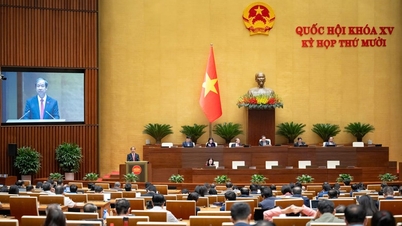


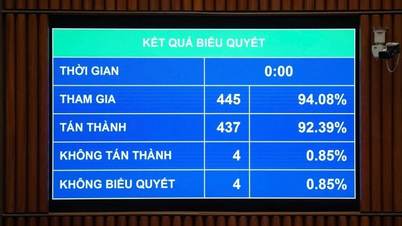



















![[Video] The craft of making Dong Ho folk paintings has been inscribed by UNESCO on the List of Crafts in Need of Urgent Safeguarding.](https://vphoto.vietnam.vn/thumb/402x226/vietnam/resource/IMAGE/2025/12/10/1765350246533_tranh-dong-ho-734-jpg.webp)












































Comment (0)