

Rare white humpback whale calf swims with its mother at Ningaloo Reef, Western Australia.
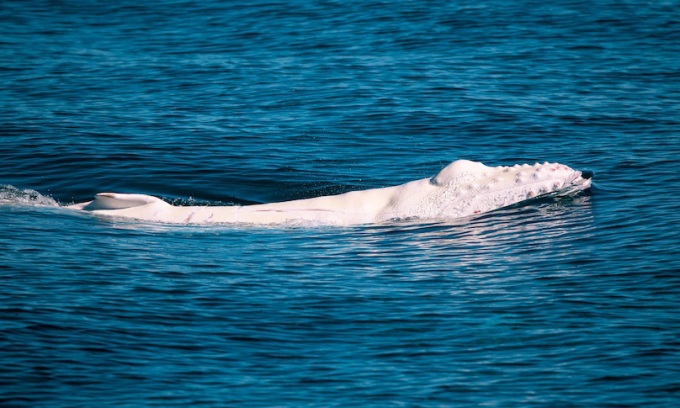
White humpback whales swim off the coast of Western Australia. Photo: Brooke Pyke
Photographer Brooke Pyke captured images of a mother and calf humpback whale appearing in waters about 2 km off the coast of Western Australia on July 11th. "We heard some rumors from ships ahead that there was a small white humpback whale. We were heading in the direction they had spotted it when suddenly we saw the huge mother humpback whale surface to breathe, right next to her bright white calf," Pyke recounted. She said everyone on the ship was amazed by that extraordinary moment.
John Totterdell, a scientist at the Whale Research Centre, has studied whales along the Western Australian coast for over 30 years. He and his colleagues were out surveying on July 11th and also encountered a white humpback whale.
"I don't think anyone has ever seen a completely white whale in Ningaloo, or maybe they have, but it's certainly very rare. We've been studying humpback whales here for almost 20 years, and we've seen some that are half-white and on the upper part of their bodies. But I've never seen one that's 100% white like this," Totterdell said.
Experts have not yet definitively determined whether the humpback whale calf has albinism. Leucism is a condition in which an animal lacks pigment, resulting in lighter or white skin and fur, while albinism is when the animal is completely white and its eyes are usually pink or red.
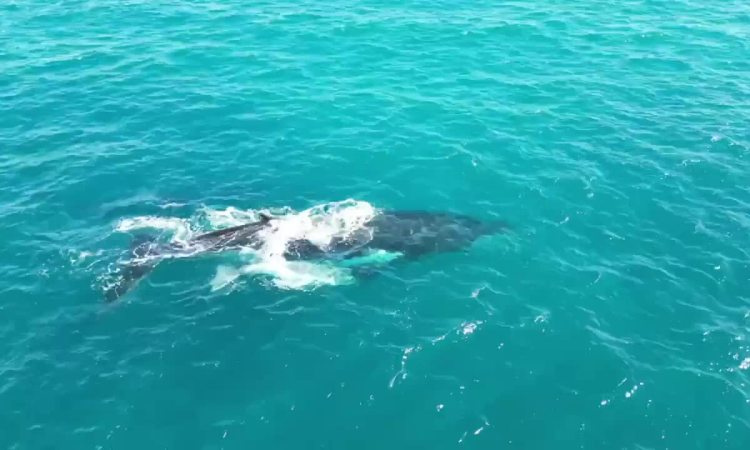
Drone footage captures white humpback whales swimming with their mother off the coast of Western Australia. Video : Newsflare
The Ningaloo Coast is a crucial stopover point for many humpback whale mother-calf pairs on their annual migration from Antarctica. Totterdell is a member of the biopsy sampling team for the Humpback Whale Sentinel program, which helps gather information about conditions further south.
"By sampling whale blubber, we can learn what they ate during the previous feeding season in Antarctica, and thus understand the state of the sea ice ecosystem. At least six populations in the Southern Hemisphere have been sampled during their spawning season in tropical waters off Africa, South America, and Australia," Totterdell said.
Totterdell said humpback whales also play a vital role in bringing nutrients from Antarctica to nourish coral reefs in Western Australia. "Many calves are attacked by killer whales and a large amount of carcass washes ashore. So there's a lot of nutrient exchange going on," he explained.
Thu Thao (According to ABC News )
Source link

![[Photo] Prime Minister Pham Minh Chinh holds a phone call with the CEO of Russia's Rosatom Corporation.](/_next/image?url=https%3A%2F%2Fvphoto.vietnam.vn%2Fthumb%2F1200x675%2Fvietnam%2Fresource%2FIMAGE%2F2025%2F12%2F11%2F1765464552365_dsc-5295-jpg.webp&w=3840&q=75)





































































Comment (0)