

Physical activity helps maintain mobility, dexterity, and balance, and reduces depression and fatigue in Parkinson's patients.
According to the Parkinson's Foundation of America, exercise improves gait, balance, flexibility, grip, and reduces tremors. Simultaneously, it improves cognitive function and reduces anxiety, depression, and fatigue—common symptoms in people with this disease. Research from the Parkinson's Foundation of America also indicates that increasing physical activity to at least 2.5 hours per week can slow the decline in quality of life in people with Parkinson's disease.
Muscle stretching
Stretching exercises help improve muscle stiffness caused by Parkinson's disease. This allows patients to become more flexible and perform daily activities such as walking and grasping more easily. You should hold each stretch for 10-30 seconds and repeat each exercise 3-4 times. Each session should last at least 10 minutes, 3-4 times per week. Breathe evenly during each stretch, avoiding stretching your arms and legs to the point of pain; only stretch with gentle pressure.
Patients should focus on the most affected areas of the body, including the chest, shoulders, elbows, back of the thighs (hamstrings) and knees, calves, wrists, palms, lower back, and neck. Stretching exercises should be performed while sitting or lying down to avoid muscle strain and fatigue.
Strength training
Strength training exercises such as weightlifting, bench press, push-ups, etc., help build muscle mass and endurance, usually focusing on muscle groups such as: abs (core muscles), thighs (quadriceps), glutes, back, arms (triceps), hands, and wrists.
Patients should perform strength training exercises 2-3 times per week, avoiding targeting the same muscle group on consecutive days, as muscles need rest and recovery. Distribute training time evenly across all muscle groups. Hand exercises (writing, reaching for overhead objects, etc.) help improve grip strength and reach for Parkinson's patients.
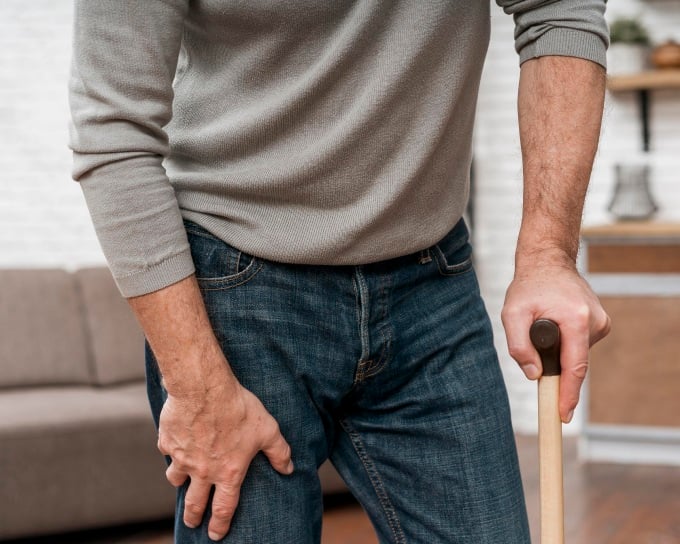
Physical activity helps maintain mobility for people with Parkinson's disease. Photo: Freepik
Aerobics
Aerobic exercise keeps the heart healthy, helps the body burn calories, and maintains a healthy weight. Examples include aerobic exercise, walking, jogging, swimming, dancing, water aerobics, and cycling, all of which can help maintain a healthy weight. Patients should aim for 30 minutes of aerobic exercise daily, five times a week. Being outdoors in the sun is good for health, but avoid excessive sun exposure and long walks, as these can increase heart rate.
Water exercise
Under the supervision of a lifeguard, water-based exercise can improve balance and strength in people with Parkinson's disease. For example, floating in a pool can support weakened muscles and improve balance. Swimming or performing certain strength and stretching exercises in the water helps strengthen muscles, balance, and mobility, while reducing stress on the body.
Body movements
Slow movement and stiffness are two characteristic symptoms of Parkinson's disease, which can affect the entire range of motion and mobility. This causes patients to take smaller steps or have difficulty moving their limbs in different directions. Body movements such as twisting the torso, turning the head and neck, stretching, and taking small steps can improve the range of motion of the neck, torso, and shoulders, increasing mobility.
Balance
People with Parkinson's disease often experience balance problems when standing or moving. Balance exercises such as dancing can help improve balance, preventing and minimizing falls. Balance exercises should be performed 2-3 times a week, for 20-30 minutes each time.
Yoga and Tai Chi
According to the Parkinson's Foundation of America, yoga helps improve flexibility, breathing, and posture, promotes relaxation, and reduces stress. A 2020 study by the University of Colorado Anschutz (USA) showed that the Chinese martial art of Tai Chi can help improve motor symptoms of Parkinson's disease, improve balance, reduce the risk of falls, and increase movement accuracy.
Before starting an exercise program, Parkinson's patients should consult their doctor about the type and intensity of exercise suitable for their physical condition and health. During exercise, they should stay hydrated and avoid overexertion. After being diagnosed with Parkinson's disease, patients should begin exercising as soon as possible. This is the "pre-rehabilitation" phase; they should not wait until they experience pain or movement problems to start exercising. Parkinson's patients who progress in exercising have a better quality of life than those who do not.
Mai Cat
(According to Everyday Health )
Source link
























![[Photo] Prime Minister Pham Minh Chinh holds a phone call with the CEO of Russia's Rosatom Corporation.](/_next/image?url=https%3A%2F%2Fvphoto.vietnam.vn%2Fthumb%2F1200x675%2Fvietnam%2Fresource%2FIMAGE%2F2025%2F12%2F11%2F1765464552365_dsc-5295-jpg.webp&w=3840&q=75)












































Comment (0)