

“How do we increase food production in a sustainable, resilient way? How do we feed 10 billion people globally while limiting input materials and reducing the use of land and water resources?”
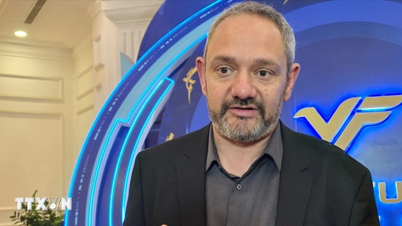
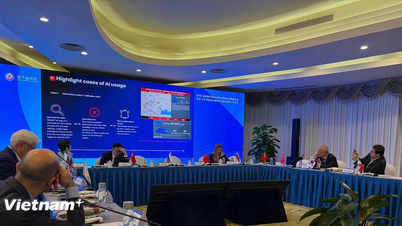
These questions were discussed and answered by the world's leading experts in the field of agriculture at the seminar "Innovation in Agriculture and Food," which took place on the afternoon of December 3, within the framework of the VinFuture 2025 Science and Technology Week.
Professor Pamela Christine Ronald, from the University of California, Davis (USA), member of the VinFuture Prize Council, and a scientist who won the VinFuture Special Prize for Women Scientists in 2022, said it is necessary to create crops that are beneficial to the environment, reduce emissions, and thereby gradually increase yields.
Agriculture contributes a significant proportion of greenhouse gas emissions. Rice plants emit methane, accounting for 12% of the world's total emissions. In an anaerobic (wetland) environment, rice roots lack oxygen, creating conditions for anaerobic microorganisms to grow and produce methane.
“We studied rice plants carrying the PSY 1 gene and found that they had faster root growth than conventional plants. When tested under favorable conditions, the rice variety reduced methane emissions by up to 40%,” said Professor Pamela Christine Ronald.
From this research, Professor Pamela Christine Ronald said that it is necessary to study the use of plant genetics to develop new rice varieties that can reduce methane emissions. The focus is on analyzing the microbial community in the soil and identifying rice genes that control root secretions and the connection with soil microorganisms, thereby creating crops that are beneficial to the environment and reduce emissions.
Finally, the microbes that incorporate carbon into stable soil organic carbon pools need to be identified; new tools are needed to quantify long-term changes in soil organic carbon under field conditions. Trials need to be scaled up to assess reproducibility across diverse soil types and cropping systems.
Professor Ermias Kebreab from the University of California, Davis (USA) emphasized the role of smart livestock farming in improving productivity, nutrition and circularity, while reducing greenhouse gas emissions, especially in the Southern Hemisphere.
He also introduced solutions using local agricultural by-products such as Vietnamese wild tea, seaweed and cassava leaves and residues to prepare feed for dairy cows. Research results show that adding seaweed to the feed ration helps reduce methane emissions by 30%–90% while still ensuring nutritional value and milk yield. Accurate feeding and nutritional analysis are key to achieving optimal results.
Dr. Nadia Radzman, Sainsbury Laboratory, University of Cambridge (UK), shares about the role of legumes and bioswitches in climate-adaptive agriculture. Legumes help fix nitrogen naturally through symbiotic relationships with microorganisms on the roots, reducing the need for chemical nitrogen fertilizers. Biotechnology, such as the use of CEP peptides, can increase the number of nodules and improve root physiology, while supporting carbon redistribution to fruits and seeds. MiRNAs play a role in regulating energy, helping plants use it effectively depending on the stage of development...
Sharing cutting-edge technology trends, discussing technical, economic and social challenges, as well as exploring opportunities for cooperation and practical applications towards a smart, efficient and sustainable agriculture, experts commented that food demand is expected to increase sharply by 100% by 2050, while staple crop products tend to decrease, with up to 50% of crop output not being used for food, posing challenges to food security and efficiency in the use of agricultural resources.
Besides, agriculture has a strong impact on the environment, the greenhouse gas effect pollutes water and soil due to the use of pesticides and fertilizers, destroys natural habitats, loses biodiversity, and degrades and erodes soil.
Therefore, it is necessary to increase output through system services, regenerative agriculture and agroforestry, improve soil quality, control pests and diseases, etc. to fill the output gap. Biodiversity, intercropping, intensive farming, organic farming, etc. are part of the solutions to increase output./.
Source: https://www.vietnamplus.vn/cac-nha-khoa-hoc-the-gioi-tim-loi-giai-cho-tuong-lai-nong-nghiep-giam-phat-thai-post1080865.vnp



















![[Photo] Parade to celebrate the 50th anniversary of Laos' National Day](/_next/image?url=https%3A%2F%2Fvphoto.vietnam.vn%2Fthumb%2F1200x675%2Fvietnam%2Fresource%2FIMAGE%2F2025%2F12%2F02%2F1764691918289_ndo_br_0-jpg.webp&w=3840&q=75)
![[Photo] Worshiping the Tuyet Son statue - a nearly 400-year-old treasure at Keo Pagoda](/_next/image?url=https%3A%2F%2Fvphoto.vietnam.vn%2Fthumb%2F1200x675%2Fvietnam%2Fresource%2FIMAGE%2F2025%2F12%2F02%2F1764679323086_ndo_br_tempimageomw0hi-4884-jpg.webp&w=3840&q=75)



















































Comment (0)