

Following the handshake between Chinese President and General Secretary Xi Jinping and founder Liang Wenfeng at a conference last month, many organizations in China have increased their use of DeepSeek.
At a symposium held in February, DeepSeek founder Luong Van Phong had the opportunity to shake hands with Chinese President and General Secretary Xi Jinping.
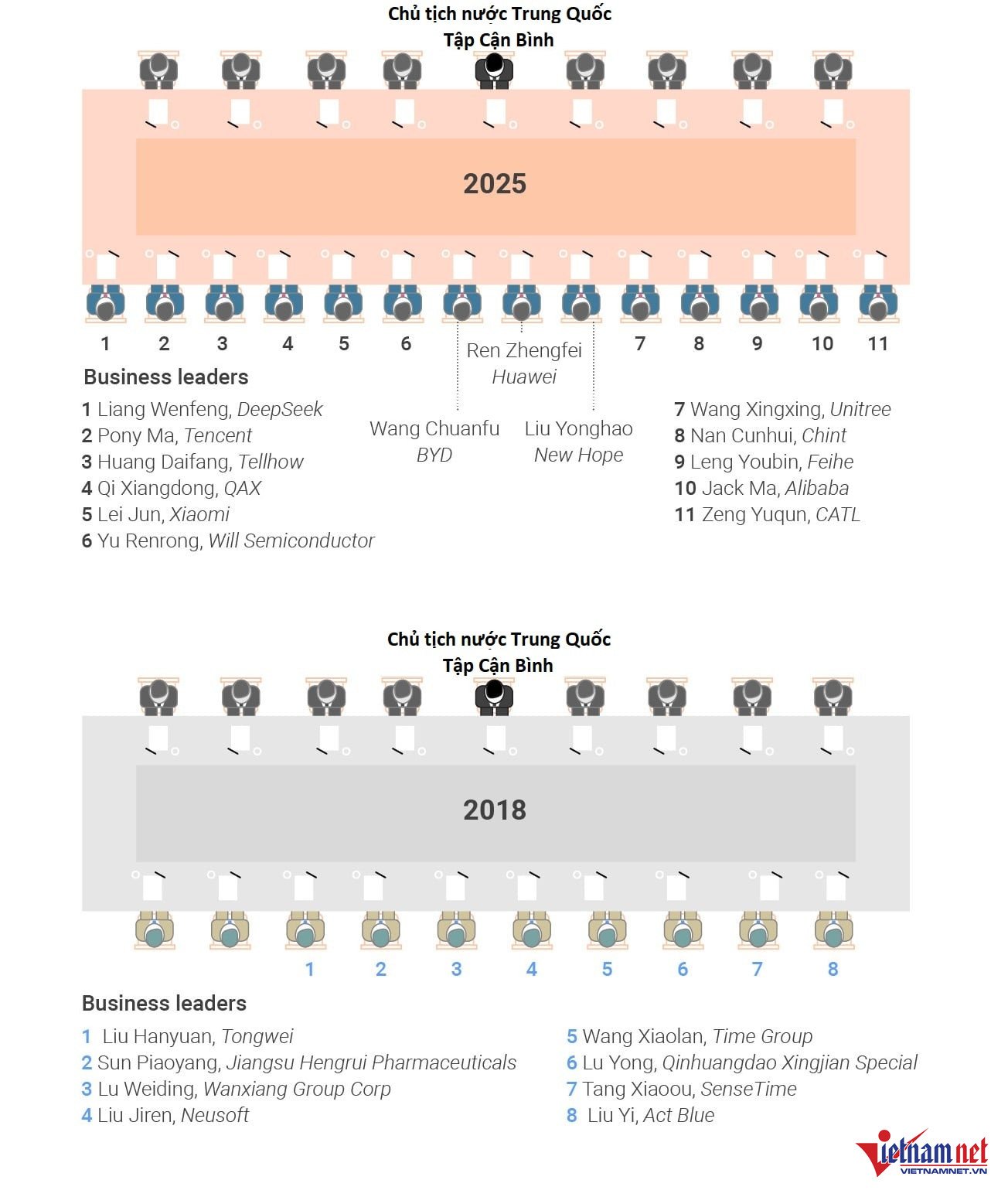
He was also seated in the front row alongside other prominent figures such as Ren Zhengfei of Huawei, Pony Ma of Tencent, and Jack Ma of Alibaba. Since then, his DeepSeek AI model has been increasingly applied in government agencies.
Courts use DeepSeek to draft rulings within minutes. Doctors in Fuzhou use it to plan treatment for patients. In the Americas, DeepSeek supports a hotline for the government.
Shenzhen officials analyze surveillance video using DeepSeek to identify missing persons and have had at least 300 successful cases.
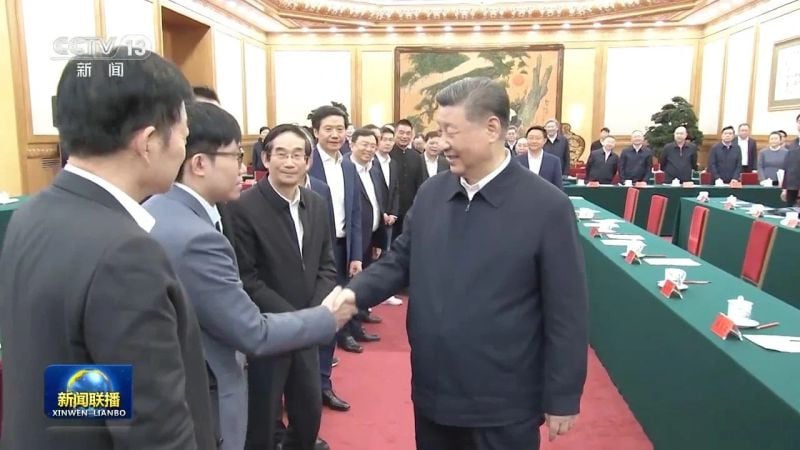
The New York Times noted that the enthusiastic reception of DeepSeek by the Chinese government reflects what often happens when Xi Jinping supports something, such as soccer, winter sports, or high-tech manufacturing.
Nevertheless, the rise of DeepSeek also proves one thing: Chinese companies are perfectly capable of producing advanced AI systems, undermining America's leadership in this strategic technology.
According to Huang Guang Bin, an AI expert at Southeast University in Nanjing, the Chinese government doesn't reject new technologies; rather, once a clear direction is established, they actively promote them vigorously.
Over the past few weeks, Chinese police have been conducting DeepSeek training sessions for their employees. Logistics and hotel companies are encouraging workers to use the model in graphic design and customer service.
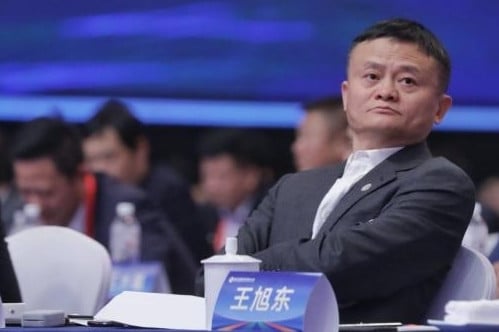
DeepSeek and its founder, Luong Van Phong, are seen as the country's new internet users. Xi Jinping's handshake further amplified this effect. Becoming a focal point in the world's second-largest economy – home to over a billion internet users – is every startup's dream.
However, questions about the effectiveness of using DeepSeek compared to previous methods remain open. According to the New York Times, while many officials have pledged to use the model in their work, very few have offered concrete examples of its superiority.
In addition, the surge in demand has raised concerns about whether DeepSeek has enough manpower and technical resources to meet it. The startup's services have been constantly disrupted as millions of people flocked to try them out. According to Chinese media, Liang Wenfeng's company only has 160 employees.
Furthermore, there are risks involved when government officials rush to use AI without fully understanding its potential dangers.
In an article published in The Paper, Zhong Huiyong, a researcher at Shanghai Jiao Tong University, recommended that officials should reassess AI-generated content before using it, as even the most advanced systems can provide inaccurate information. Those who rely too heavily on AI will also fail to grasp the true situation.
The willingness of Chinese officials to experiment with AI contrasts with other parts of the world. In January, OpenAI launched a version of ChatGPT specifically for government agencies. However, regulations regarding the use of AI in the public sector are inconsistent across departments.
For DeepSeek, attracting Beijing's attention isn't entirely beneficial. First, Chinese internet companies have only recently emerged from years of government crackdown. The greater their influence, the more intense the scrutiny they face. Abroad, DeepSeek's popularity has also raised concerns among regulators about censorship, security, and data handling. Australia and South Korea have instructed government employees not to use DeepSeek.
Secondly, DeepSeek's connection to the Chinese government became a pretext for complaints from rivals. For example, OpenAI wrote to the White House Office of Science and Technology Policy to warn that Beijing could use DeepSeek to "manipulate the model and cause harm."
The developer of ChatGPT compared DeepSeek to Huawei and argued that the US should adopt a policy encouraging its allies not to use such potentially risky technologies.
"Although the US still leads in AI, DeepSeek shows that the gap is no longer wide and is gradually narrowing," OpenAI wrote in the letter.
(According to NYT, CommonWealth)
Source: https://vietnamnet.vn/cai-bat-tay-voi-ong-tap-giup-deepseek-duoc-sung-ai-2382601.html
















![[Photo] Prime Minister Pham Minh Chinh holds a phone call with the CEO of Russia's Rosatom Corporation.](/_next/image?url=https%3A%2F%2Fvphoto.vietnam.vn%2Fthumb%2F1200x675%2Fvietnam%2Fresource%2FIMAGE%2F2025%2F12%2F11%2F1765464552365_dsc-5295-jpg.webp&w=3840&q=75)















































Comment (0)