

 |
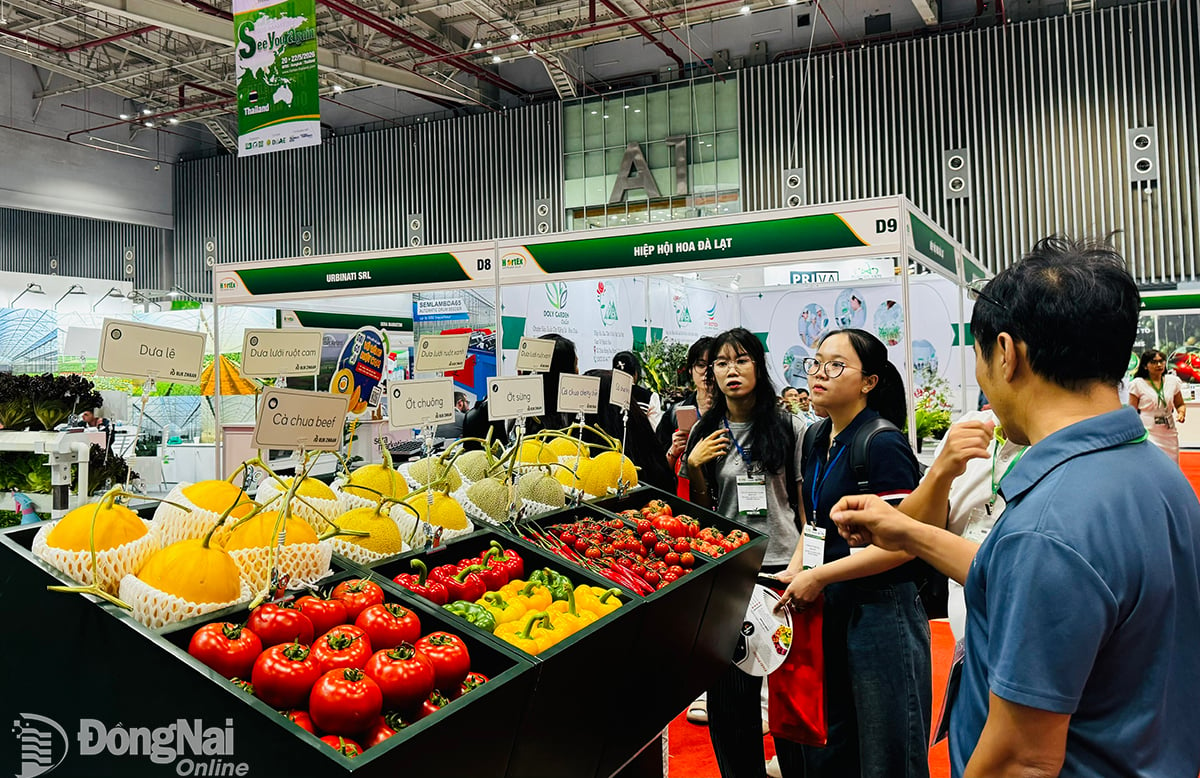
| A booth displaying agricultural products for export at the Vietnam International Exhibition on Vegetable and Fruit Production and Processing Technology in Ho Chi Minh City in March 2025. Photo: B. Nguyen |
Vietnam's agricultural exports to the EU are increasing rapidly, but if the production, harvesting, processing, and packaging processes are not improved, the agricultural products will face difficulties. This is because the EU is increasingly tightening quality standards and its policies are undergoing many changes.
Increasingly high standards
According to the Vietnam Fruit and Vegetable Association, in the last four years, the value of agricultural, forestry, and aquatic product exports to the EU has increased by less than 50%, but the number of warnings has increased by nearly 300%. Specifically, in 2020, Vietnam's agricultural exports to the EU reached over $2.9 billion and are projected to increase to over $4.2 billion in 2024. The number of warnings issued for Vietnamese agricultural products exported to the EU is rapidly increasing. In 2020, there were 40 warnings in the fields of plants, aquatic products, and livestock; this increased to 67 warnings in 2023 and 114 warnings in 2024. In the first two months of 2025 alone, Vietnam received another 16 warnings.
The main warnings concern pesticide residues, microbial contamination and mycotoxins, and heavy metal residues. In the aquaculture sector, warnings focus on antibiotic residues in products. Additionally, there are other warnings related to food additives and environmental pollutants.
According to Mr. Nguyen Van Muoi, Deputy Secretary General of the Vietnam Fruit and Vegetable Association, management agencies need to strengthen inspection and strict supervision of supply chains, raw material areas, as well as production, processing, packaging, and transportation facilities for exported agricultural products to ensure compliance with regulations on hygiene, epidemiology, and quarantine.
Mr. Nguyen Van Muoi, Deputy Secretary General of the Vietnam Fruit and Vegetable Association, commented that the trend in many countries is to increase food safety inspections for agricultural products, food, and seafood. Accordingly, agricultural products exported to the EU must ensure safety linked to traceability, and the products must be harvested sustainably. For example, at the end of 2017, the European Commission issued a "yellow card" to Vietnamese seafood exports to the EU market, citing insufficient efforts by Vietnam to combat illegal fishing. The EU is implementing a series of solutions to reduce carbon emissions and prioritize green products.
The change must start from the production process.
For agricultural products to meet EU export standards, a series of issues need to be addressed, from safe production to packaging, preliminary processing, and further processing—all must adhere to very strict procedures.
In the plant sector, EU warnings regarding pesticide residue levels account for the highest percentage (approximately 56.7% of the total warnings). The main reason is the overuse of fertilizers and chemical pesticides in crop cultivation in Vietnam, especially the improper and non-compliant use of these substances. Mr. Nguyen Van Muoi, Deputy Secretary General of the Vietnam Fruit and Vegetable Association, cited an example: “For durian trees during the fruiting stage, fertilizer suppliers recommend that farmers only use 2kg of phosphorus per tree, but when I visited the orchards and asked the farmers, I learned that they often use 5-6kg per tree. This situation is also quite common when they use other types of chemical fertilizers and pesticides. Therefore, agricultural products are often found to be in violation of residue limits during inspections. A reality in the aquaculture industry is the misuse of antibiotics, the unauthorized use of the wrong type of antibiotic or the use of incorrect dosages, and a lack of understanding of harmful bacteria during cultivation. In addition, the farming environment is also polluted by fertilizers and pesticides…”
Tan Yen Vegetable Cooperative (Gia Tan 3 commune, Thong Nhat district) is a pioneer in building a safe production chain model that meets VietGAP standards. For many years, the cooperative has exported large quantities of vegetables and fruits. Ms. An Tu Anh, Director of Tan Yen Vegetable Cooperative, shared that currently, many types of vegetables and fruits are being sold at "dirt cheap" prices because supply exceeds demand. Meanwhile, exporters are struggling to find large quantities of goods to fulfill export orders. This is because not only demanding markets like the EU and the US set high standards for agricultural products, but even previously less stringent markets are imposing stricter technical barriers. The cooperative has traveled to many provinces and cities to find safe raw material sources, but samples sent for testing consistently fail to meet the standards. The biggest challenge is not only pesticide residue, but also the significant risk of herbicide contamination of agricultural products because, through widespread and long-term use, the soil and water sources are also polluted by these chemicals.
Dr. Doan Huu Tien, Director of the Technical Equipment Transfer Center (Southern Fruit Research Institute), noted that the area under cultivation for various fruit trees, especially those for export, is increasing rapidly. Although Vietnamese fruit has been exported to dozens of countries, including many demanding markets such as Japan and the EU, exports currently depend mainly on China. In particular, many demanding markets are tightening technical barriers with numerous policy changes regarding imported agricultural products. Many shortcomings in production hinder Vietnamese fruit from meeting the requirements of these demanding export markets, such as inconsistent application of technical processes, uneven fruit quality, difficulty in controlling food safety and hygiene, and fruit traceability. The area of fruit trees certified under GAP and granted planting area codes remains modest. Many farmers implement safe production processes very well when obtaining certification, but once they have it, they become negligent and do not strictly adhere to these processes. This is also the reason why product quality is not guaranteed. The most important thing for producers is to be honest, to strictly adhere to production processes, and to keep a farming log. Transparency in the production process with consumers is essential.
Plains
Source: https://baodongnai.com.vn/kinh-te/202503/canh-bao-nong-cua-lien-minh-chau-au-ve-nong-san-xuat-khau-3e24841/










![[Photo] Prime Minister Pham Minh Chinh holds a phone call with the CEO of Russia's Rosatom Corporation.](/_next/image?url=https%3A%2F%2Fvphoto.vietnam.vn%2Fthumb%2F1200x675%2Fvietnam%2Fresource%2FIMAGE%2F2025%2F12%2F11%2F1765464552365_dsc-5295-jpg.webp&w=3840&q=75)











































Comment (0)