

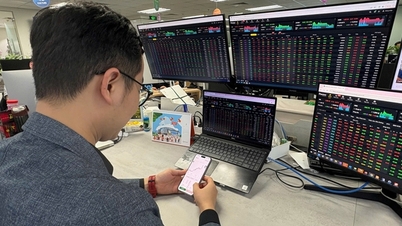
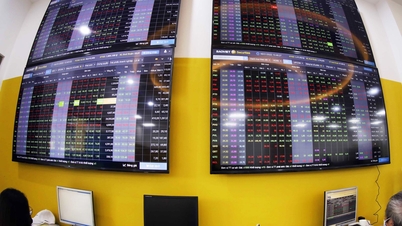
In September 2025, the Vietnamese stock market traded in the 1,600-1,700 point range, with many volatile sessions. Particularly in the latter half of September, leading up to the release of FTSE Russell's market classification report, investors were confused by deep, unexplained corrections in the index. Following this, rumors circulated in various online groups, including the possibility that the Vietnamese stock market would remain on the "waiting list."
Information about reform efforts, changes to the legal framework, or the Ministry of Finance 's working visit to the London Stock Exchange and FTSE Russell in mid-September is quickly updated in the media. However, the evaluation results are not simply based on efforts, but also depend on the views of FTSE and international investors. And investors want to know more, including things beyond their control or still under internal voting. This gap, between expectations and the reality of the official information flow, is fertile ground for rumors to take root and spread faster, especially when people are seeking to believe or find reasons for market developments.
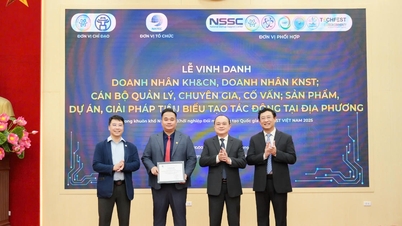
At this week's annual Securities Dialogue, themed "New Money, New Products, and Opportunities in Emerging Markets," organized by the Securities Journalists Club, alongside discussions about opportunities arising from new capital flows and new "products" stemming from the upgrade in market status, there was an equally important question: What advice would investors receive to prepare for this new era?
What Mr. Nguyen Duc Thong, General Director of SSI, particularly emphasized was the need for caution when receiving certain information online. According to Mr. Thong, Vietnamese investors are very good at receiving information, but need to be careful in identifying what is "fake news" and what is "real news." Agreeing with this advice, Mr. Bui Hoang Hai, Vice Chairman of the State Securities Commission, said that investors access information very quickly but also need to remain calm to process it.
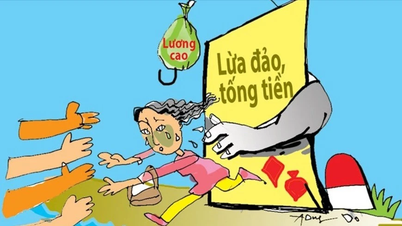
"Coincidentally, at the recent launch ceremony of the 'National Campaign to Combat Fraud,' Mr. Hieu PC - a very familiar cybersecurity expert - also shared that Vietnamese people access information very quickly and make decisions very quickly. But if only we would pause for a second, research more carefully, and slow down our decision-making a little, the number of online fraud cases would decrease," Mr. Hai also emphasized.
Today ( October 25th ), in Hanoi , nearly 70 countries signed the Hanoi Convention on Cybercrime, a document promoted by the United Nations to create a legal framework for international cooperation in protecting cyberspace. President Luong Cuong called this "a historic event, marking the beginning of an era of global cooperation on cyberspace."
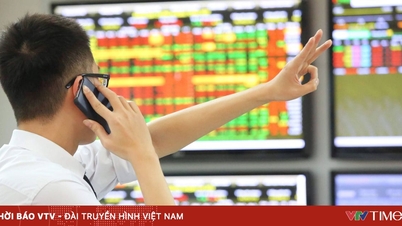
From a stock market perspective, the significance of the Hanoi Convention is not far-fetched. The line between "true information" and "false information," between investment signals and manipulation of sentiment, is becoming increasingly blurred. An investment decision can be influenced by a single online rumor, an unverified post, or simply by hearing "someone say that." Meanwhile, a few clicks of the mouse can be enough to cause rumors to destabilize the index.
Just as countries need to cooperate to combat cybercrime, market participants need to work together to create a more transparent information environment. When data is verified, new capital flows can operate stably. When trust is strengthened, the market can truly mature. Furthermore, according to Mr. Bui Hoang Hai, mass media need to disseminate knowledge more extensively and effectively to investors, as well as spread official information to help investors make sound decisions in the market, ensuring a stable, healthy, and transparent market operation.
Source: https://baodautu.vn/cham-lai-mot-giay-giua-dong-chay-thong-tin-soi-dong-d422286.html























































































Comment (0)