

Preventing water bursts is one of the important tasks of the Vietnam Coal and Mineral Industry Group (TKV), especially during the rainy season. This year, TKV's coal production and business activities are being affected by complex weather patterns, with a higher number of rainy days and total rainfall compared to previous years. The Group and its units are intensifying efforts to prevent water bursts and control water flow in mines, aiming to ensure the safety of personnel and production areas.
One of the potential challenges for coal mining units is the issue of water seepage in underground mines, which originates from various sources. These can include surface water bodies such as rivers, streams, ponds, open-pit mines, waste dumps (both active and inactive), and areas of subsidence or cracking. Of particular note are underground water bodies such as aquifers, geological boreholes, previously mined areas, old mine shafts, fault lines; and overlapping mining areas between open-pit and underground units, or between underground units. Water seepage causing water bursts in underground mines is also a major cause of coal industry accidents worldwide and in Vietnam.
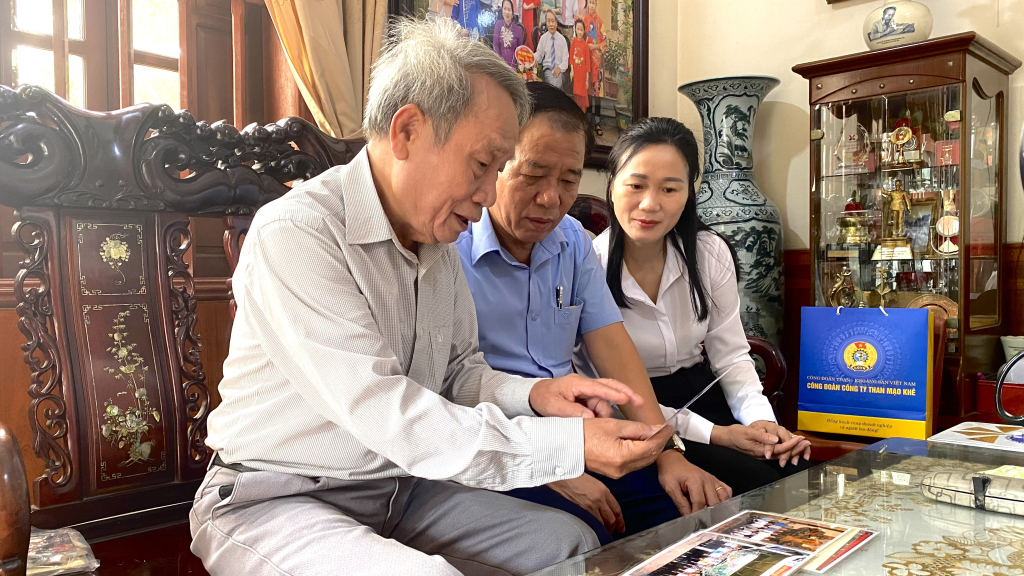
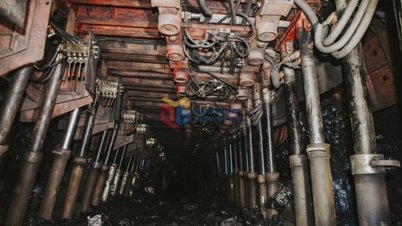
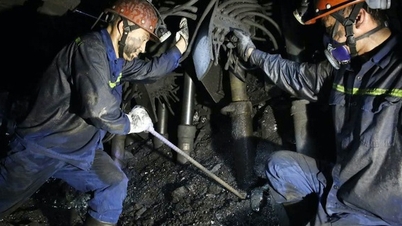
Labor Hero Nguyen Van Tia was one of those who witnessed the critical moment at Mao Khe Coal Mine when a water burst occurred in 2000. "The incident caused nearly 80 cubic meters of water to leak . " "Water poured down into the mine shaft, causing the entire hydraulic support system, worth 4 billion VND, to collapse. Thanks to our relentless rescue efforts, we saved the mine and ensured the safety of the people and the support system," Mr. Tia recalled.
In later stages, as coal mining technology developed, the risk of water bursts was better prevented and controlled at Mao Khe Coal Mine. However, due to the unique and complex nature of the geological strata, this remains a persistent challenge for the unit.
To ensure that preventative measures are always one step ahead, the unit meticulously conducts geological surveys and identifies water-bearing objects using various methods. Based on the annual exploitation plan and hydrogeological and engineering geological documents, and updated exploitation status, the unit will identify and delineate water-bearing objects, thereby developing solutions to ensure safety in production.
Thong Nhat Coal Company is also one of the largest underground coal mines in the Cam Pha region. Besides geological challenges, Thong Nhat also faces unique pressures from water-bearing geological strata. With production areas sinking deeper, complex geology difficult to explore in detail, and increasingly extreme weather conditions such as storms and heavy rain, controlling the risks from water-bearing strata has become a top priority for the company.
Regarding surface water, Thong Nhat Coal Company is coordinating with open-pit coal mining units above its underground production area, namely Deo Nai - Coc Sau Coal Joint Stock Company and Khe Sim Company, to level terrain at risk of subsidence and cracking, ensuring no water accumulates on the surface. For underground production areas, the company is tightening detailed measures regarding exploration, drilling for water drainage, and water separation to ensure safe working conditions.
Mr. Vu Huu Tuyen, Head of the Mining Technology Department of Thong Nhat Coal Company, said: "Every year, we develop plans and construction methods for TKV projects, then issue them within the company to carry out exploratory drilling with long and medium-range boreholes. According to the plan assigned by TKV, in 2024, Thong Nhat Coal Company will drill approximately 4,000 meters. In addition, the unit also independently reviews production areas at risk of water accumulation to drill additional boreholes."
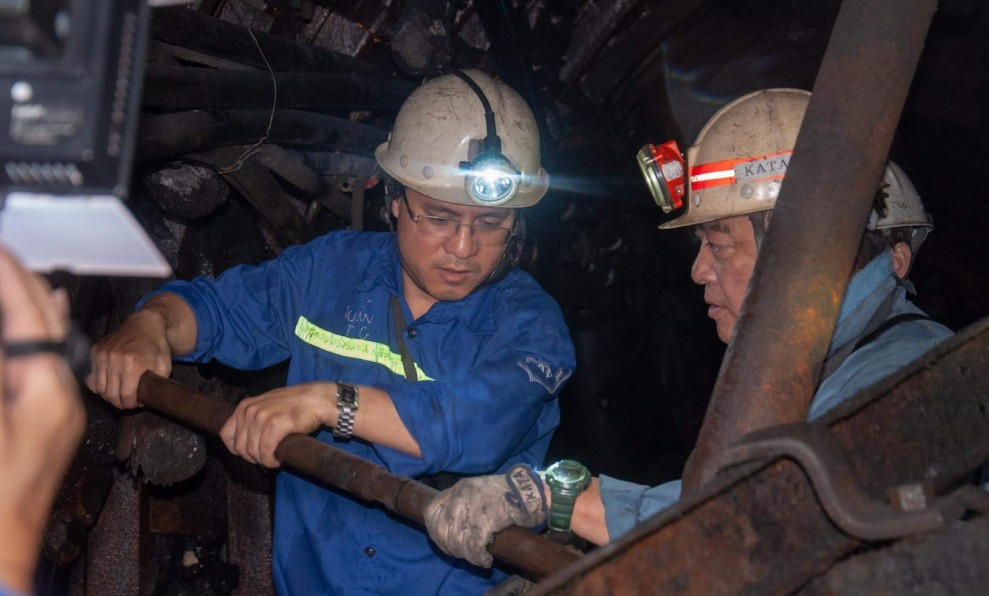
"Among the measures to prevent and mitigate the risk of water bursts, exploratory drilling for water drainage is one of the most important tasks. Based on experience, during the mining or construction of underground mines, when cracks or water leaks are detected from the mine faces, it is highly likely that the mining system is approaching water pockets, posing a potential risk of water burst. The immediate action required is exploratory drilling for water drainage to ensure safety. In 2024, TKV plans to carry out over 48,000 meters of exploratory drilling to prevent water bursts," added Mr. Do Manh Cuong, Head of the Mining Technology and Engineering Department of TKV.
According to forecasts from the National Center for Hydrometeorology, the frequency and intensity of storms and heavy rains in the remaining months of 2024 are expected to increase, with unpredictable developments. To proactively prevent the risk of water ingress, the Chairman of the Board of Directors and General Director of TKV (Vietnam Coal and Mineral Group) requested that units focus on reviewing and inspecting the surface topography above mining and tunnel excavation areas to promptly detect and fill in cracks and subsidence, especially in areas below the mining pits, in order to minimize surface water infiltration. underground mines. The corporation also specifically requested that underground coal mining units that mine thick seams and recover roof coal review the terrain; if water seepage is detected, mining must be stopped to conduct exploratory drilling.
From 2020 to the present, TKV has been granted 4 exploration licenses and 9 exploration projects to upgrade reserves within the scope of these mining licenses by the Ministry of Natural Resources and Environment. Accordingly, the volume of exploratory boreholes drilled to serve hydrological measurements under these licenses and projects is 27 boreholes/16,605 meters. The boreholes are being constructed in accordance with the progress of the licenses and exploration projects.
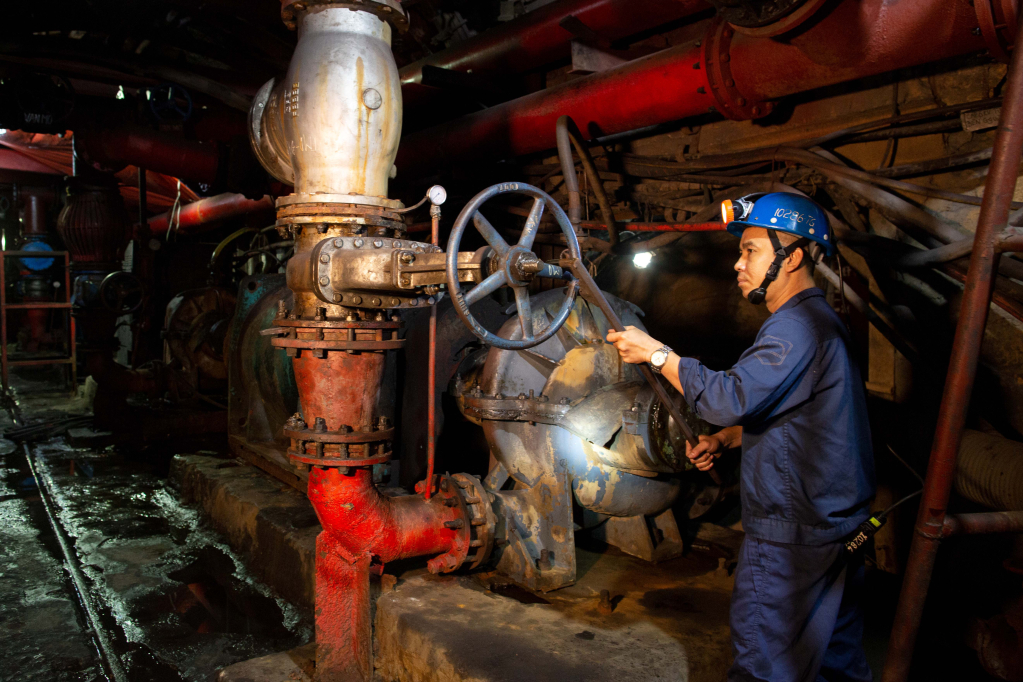
In addition to ensuring detailed and meticulous exploratory drilling, units need to regularly update water levels at hydrological monitoring boreholes to assess the scale and impact of water-bearing objects. Based on this, measures can be taken to drain water safely from production areas; ensure the capacity of underground water pumping stations; and implement plans to prevent mine flooding during the rainy season. Furthermore, TKV is urgently reviewing its overall management processes and technological conditions, while continuing to promote and improve the skills and awareness of its staff and workers regarding water burst prevention.
Source


































































Comment (0)