

The world of technology is witnessing an unprecedented scenario. From the bustling electronics markets of Huaqiangbei (Shenzhen, China) or Akihabara (Tokyo, Japan) to the strategic meeting rooms of Microsoft, Google or Dell, all are reeling in a storm called “memory chip shortage”.
No longer just fanciful warnings, a new supply chain crisis is looming, fueled by humanity's insatiable thirst for AI.
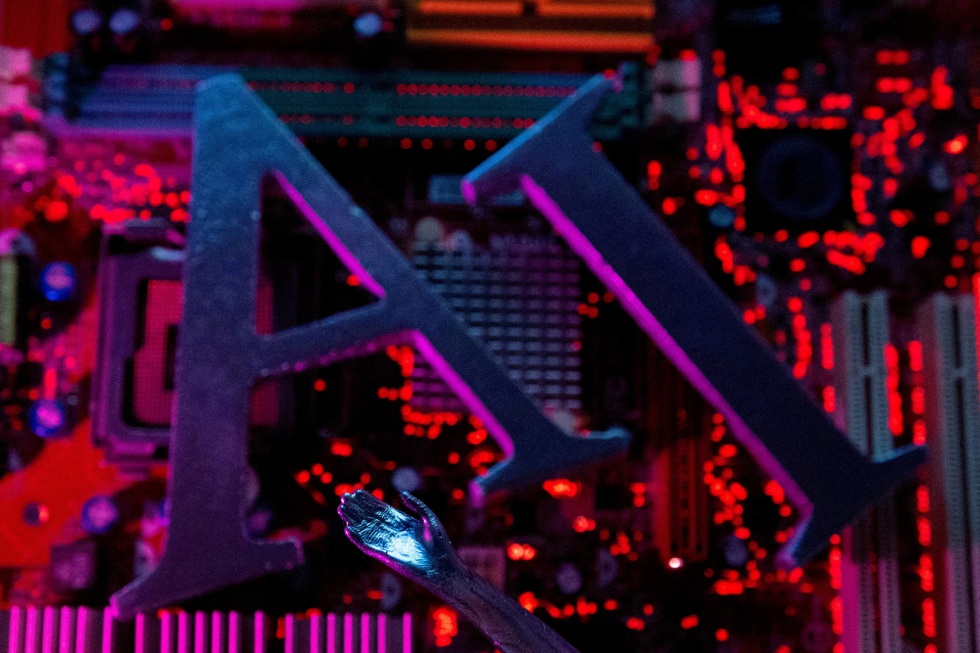
The AI fever is pushing the world into a new supply chain crisis (Photo: Reuters).
When the AI "thirst" drains the lifeblood of the digital world
In November 2022, the birth of ChatGPT triggered an unprecedented digital arms race. But few expected that its immediate consequences would deal a heavy blow to the most seemingly ordinary components, namely memory chips.
The core of the problem lies in the vital shift of semiconductor manufacturers. To serve Nvidia’s monster AI processors, memory chip “kings” such as Samsung Electronics, SK Hynix and Micron Technology are massively converting their production lines to high-bandwidth memory (HBM) – chips with fat profit margins. As a result, production capacity for traditional DRAM (used in PCs, smartphones) and flash memory is being cut mercilessly.
Dan Nystedt, vice president of research at TriOrient, used the metaphor: "The AI infrastructure race is devouring available chip supply."
Data from TrendForce paints a grim picture: Average inventories at DRAM suppliers in October fell to an alarming level of just 2-4 weeks, compared to the safe level of 13-17 weeks at the end of 2024.
In that context, a fierce "fratricidal war" to compete for supply is taking place between the giants. According to close sources, Google, Microsoft, ByteDance and Meta are rushing to compete, even accepting any price to collect goods from Samsung and SK Hynix.
The story is no longer about money. An anonymous industry source told Reuters a bitter reality: “Everyone is begging for supplies.” Even China’s most powerful corporations, such as Alibaba and Tencent, have had to send senior executives to Samsung and SK Hynix headquarters to “ diplomatize ” and lobby for supply allocation.
"Price storm" is coming: From the server to the phone in your hand
If you think this is a battle for tech billionaires, take a look at your phone or laptop. Scarcity at the top is creating a domino effect, piling pressure on the pockets of end users.
It's a classic "double whammy": Factories can't keep up with the high-end chips needed for AI, while also neglecting the low-end chip segment, choking off supply for smartphones, PCs, and consumer electronics.
Alarm bells have been ringing among device makers. Francis Wong, marketing director of Realme India, expressed concern that memory chip costs were rising at an “unprecedented rate since the advent of smartphones,” warning that phone prices could rise by 20-30%.
"Companies can cut costs on cameras, batteries or casings, but storage costs are something that must be borne and cannot be avoided," Mr. Wong emphasized.
The PC market isn’t just holding its breath. Dell Technologies and HP Inc. executives both admit they’ve never seen costs rise at such a rapid pace. Dell says costs are rising across its entire product portfolio, from DRAM to SSDs. HP predicts the second half of 2026 will be a particularly difficult period, with price increases inevitable.
Even Apple, known for its superior control of its supply chain, is starting to feel the heat. CFO Kevan Parekh admitted that memory chip prices are creating a structural cost driver for new products.
In China, Xiaomi and Lenovo have started stockpiling components as a defensive measure, accepting 50% higher inventories than normal levels to avoid price shocks next year.

Dell's chief operating officer Jeff Clarke said he has never seen "costs move at such a rapid pace" (Photo: Bloomberg).
The "black market" is booming and transactions are calculated by the hour.
The scarcity has thrown the market into turmoil, creating opportunities for speculators and the secondary market to boom.
In the electronics mecca of Akihabara (Japan), the shopping atmosphere has become tense. Stores are forced to apply a subsidy-era policy: limiting the number of purchases per person to prevent speculation. The price of DDR5 RAM - a favorite of gamers - has doubled in just a few weeks. Many shelves are empty.
The situation in Shenzhen, China, is even more dramatic. Eva Wu, a component distributor, describes the current market as like the stock market. Chip quotes are no longer valid monthly, but change daily, even hourly.
The story of Mr. Paul Coronado in California (USA) is the clearest proof of this "crazy". His company specializes in selling recycled memory chips from old servers - a product that few people paid attention to before. But now, his sales have nearly doubled, up to 900,000 USD/month. All the goods are cleaned up by intermediaries in Hong Kong (China) to smuggle back to China.
A trader in Beijing revealed that she was holding 20,000 RAM sticks, determined not to sell, waiting for prices to rise further. The hoarding and speculation are making the shortage worse, creating a spiral of rising prices with no end in sight.
This fever has turned the used-component market into a truly brutal arena. On underground technology forums, batches of RAM or hard drives that were once shelved suddenly turned into pure gold. Component hunters describe the current scene as a frenzy of digging: any device with a memory chip, from discarded servers to old, worn-out PCs, is mercilessly “cut into pieces” to recover components.
Even the traditional “cash on delivery” rule was broken. Many big traders in Hoa Cuong Bac required a 100% cash deposit as soon as the verbal price was agreed, because if the transfer was delayed by only 30 minutes, the shipment would immediately be transferred to someone else at a higher price. The trading atmosphere was tense, rushed and full of risks, like the footage of Wall Street on a volatile market day, except that here, the price chart was going up and down at a galloping pace.
Macro Risk: When the AI Bubble Hits a Physical Wall
This crisis is not just about corporate profit margins or retail prices. It is becoming a macroeconomic risk.
“The memory chip shortage has now gone beyond a component issue,” said Sanchit Vir Gogia, CEO of consultancy Greyhound Research. “The expansion of AI infrastructure is colliding with a supply chain that is unable to meet physical constraints.”
Experts warn that the prolonged shortage risks slowing down the global digitalization process, delaying hundreds of billions of dollars in investment in digital infrastructure. More dangerously, it creates additional inflationary pressure on a global economy that is already very fragile in the face of geopolitical fluctuations and tariff barriers.
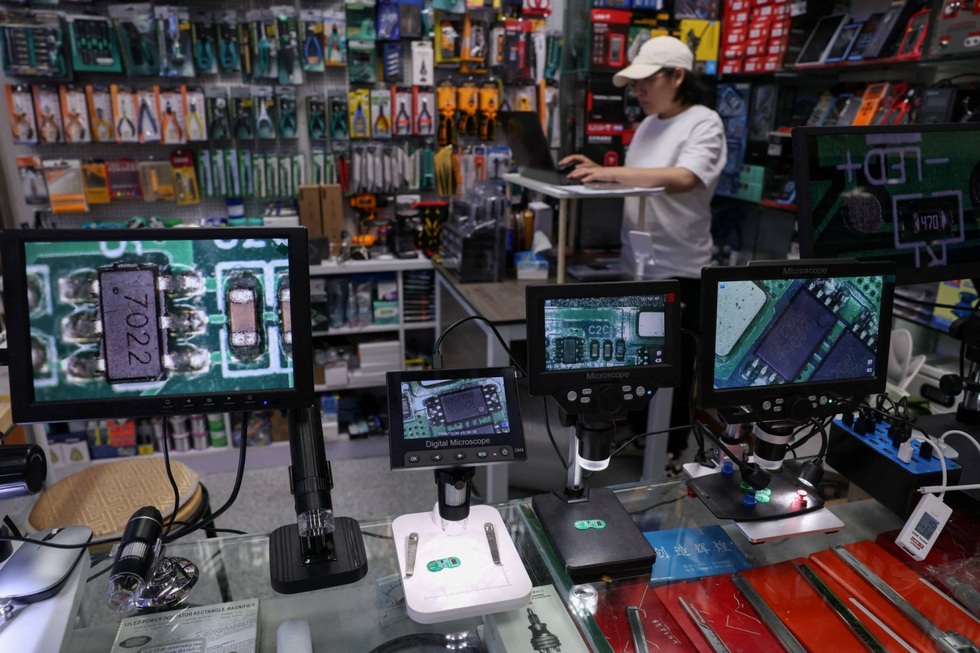
Chips are displayed for sale at a booth in the Huaqiangbei Electronics Market in Shenzhen, Guangdong Province (China). Many Chinese smartphone manufacturers are warning of the possibility of price increases (Photo: Reuters).
The big question is whether this is a sign of a bubble about to burst. New chip factories take at least two years to build. If companies massively expand capacity (as Samsung and SK Hynix are doing) and the AI craze cools suddenly, the semiconductor industry could fall into a state of overcapacity like it has in the past.
But that’s a story for the future. For now, the harsh reality is that traditional memory chip production lines won’t be operational until 2027-2028. According to Citi, SK Hynix has told analysts that the shortage will last until at least the end of 2027.
SK Group Chairman Chey Tae-won summed up the situation with a powerful remark at a forum in Seoul: "We have entered an era where supply is facing a serious bottleneck. Chip requests are coming in so fast that we are worried about how to manage. If we cannot deliver, many partners may fall into a situation where they cannot do business."
The warning from the head of one of the world's largest memory chip empires shows that this crisis is no longer a prediction. It is here, and will reshape the global economic and technological landscape in the next few years in the most severe way.
Source: https://dantri.com.vn/kinh-doanh/con-dien-ai-va-cuoc-chien-chip-nho-khi-ga-khong-lo-cung-phai-van-nai-20251204090530974.htm




















![[Photo] Parade to celebrate the 50th anniversary of Laos' National Day](/_next/image?url=https%3A%2F%2Fvphoto.vietnam.vn%2Fthumb%2F1200x675%2Fvietnam%2Fresource%2FIMAGE%2F2025%2F12%2F02%2F1764691918289_ndo_br_0-jpg.webp&w=3840&q=75)



















![[VIMC 40 days of lightning speed] Hai Phong Port determined to break through, reaching the target of 2 million TEUs by 2025](https://vphoto.vietnam.vn/thumb/402x226/vietnam/resource/IMAGE/2025/12/04/1764816441820_chp_4-12-25.jpeg)
















































Comment (0)