

Besides solar power, wind power has now become an essential fuel source for life. Competition in the wind power sector has therefore become an inevitable trend among countries worldwide.
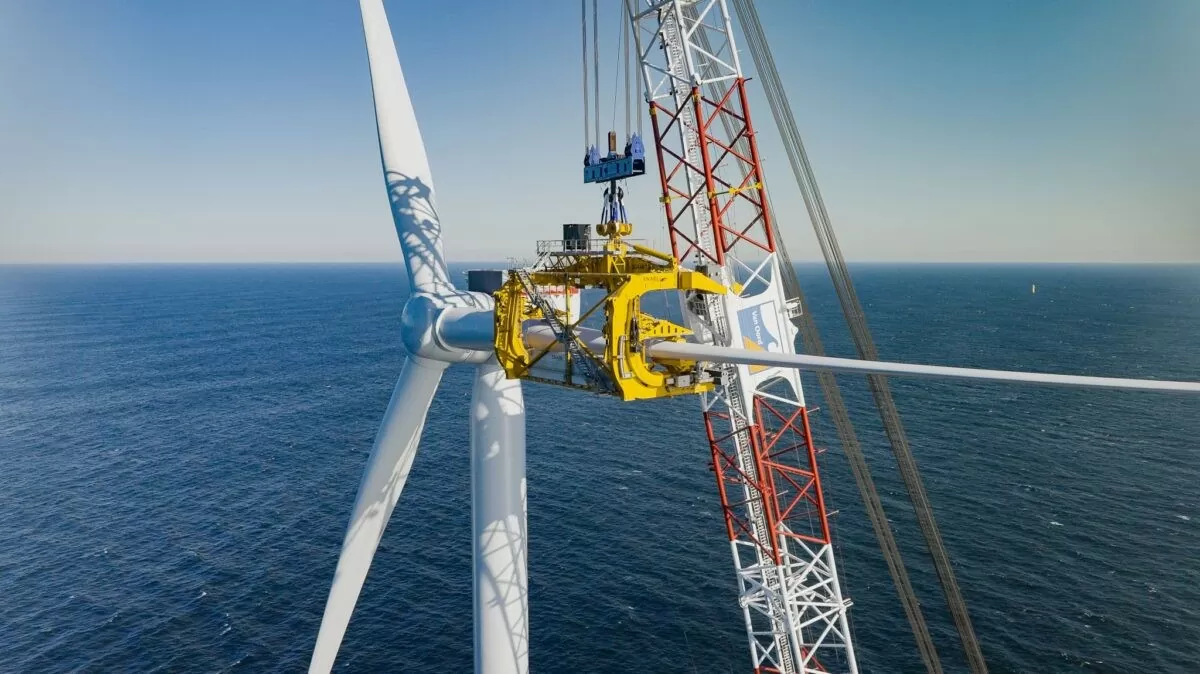 |
| The first turbine has been installed in the South Fork Wind project in the United States. (Source: Orsted) |
With the demand for electricity constantly increasing in countries around the world , while coal and natural gas used for thermal power generation cause environmental pollution, renewable energy, including wind power, is increasingly being prioritized for development.
Future energy sources
Offshore wind power – a new generation of green energy – has a history of development spanning approximately 30 years in countries such as Denmark, the UK, Germany, China, and the US. Following the COP 26 Summit in 2021 (in the UK), the Global Alliance of Offshore Wind Power Nations (GOWA) was formed. The trend of offshore wind power development worldwide is rapidly increasing, currently at 57 GW and potentially reaching 500 GW installed by 2040 and 1,000 GW by 2050.
According to the International Renewable Energy Agency (IRENA) report from October 2020: Renewable energy sources could generate 130,000 TWh of electricity per year (more than double current global electricity consumption).
Historically, global renewable energy has made significant progress following the Kyoto Protocol (1999), the Paris Agreement (2015), and the SDG Millennium Development Goals aimed at reducing greenhouse gas emissions, the cause of global climate change. From 2005 with 50 GW of wind power and 15 GW of solar power, by the end of 2018, the total wind power capacity had reached a record high of 590 GW and solar power capacity of 400 GW.
According to IRENA's forecast: The current annual renewable energy installation rate for wind and solar power is 109 GW/54 GW/year, projected to reach 300 GW/200 GW/year in 2030 and 360 GW/240 GW/year in 2050. The current contribution of renewable energy to the total power supply is 25%, projected to reach 57% in 2030 and 86% in 2050.
Long-distance race
The first utility-scale offshore wind farm in the U.S. began operations in mid-March 2024, aiming to serve approximately 70,000 homes at full capacity.
Named South Fork Wind, this wind farm comprises 12 turbines located 56km off the coast of Long Island, with a capacity of 130 megawatts (MW). New York City aims to achieve 70% renewable energy by 2030 and 9 gigawatts (GW) of offshore wind power by 2035. The commissioning of South Fork Wind brings New York closer to these goals and marks the beginning of the state's offshore wind future.
In Europe, 2023 was a record year for the construction of new wind farms and investment in a sector that had faced significant challenges in 2022 amid global supply chain disruptions, soaring inflation, and volatile interest rates and energy markets due to the conflict in Ukraine.
In 2023, investment in offshore wind power in Europe increased to €30 billion, up from €0.4 billion in 2022. European Union (EU) countries also installed new wind farms with a record total capacity of 16.2 GW, of which approximately 80% were onshore wind farms.
WindEurope – an association promoting wind power in Europe – believes the EU can achieve its clean energy targets thanks to significant development and investment in the wind sector in 2023. WindEurope estimates Europe will reach a total wind power capacity of 393 GW by 2030 – nearing the 425 GW needed to meet the EU's 2030 renewable energy targets.
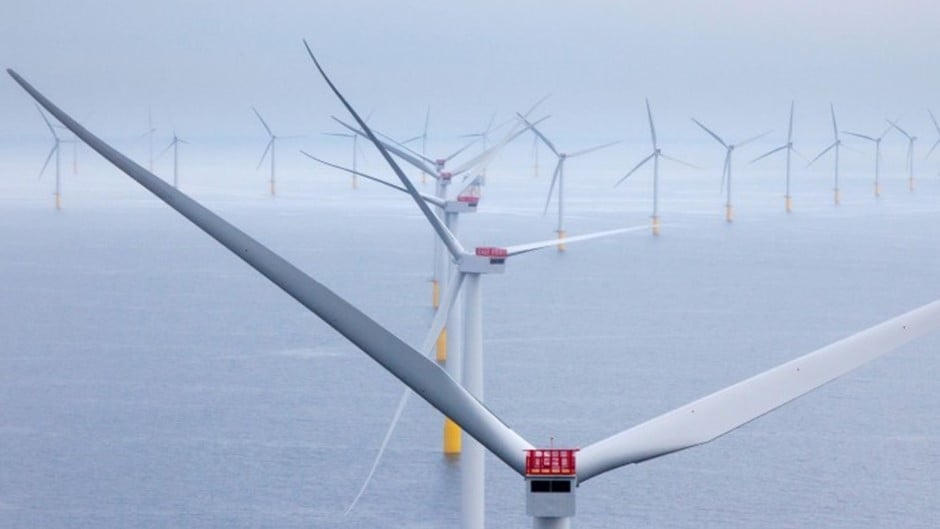 |
| Danish renewable energy group Orsted has announced plans to build the world's largest offshore wind farm off the east coast of England. (Source: Orsted) |
Belgium, Ireland, and the UK are strengthening cooperation to transform the North Sea into Europe's largest wind power hub. In mid-May 2024, the three countries signed a joint declaration on wind power development, aiming to build infrastructure connecting offshore wind farms off the coast of Ireland with Belgium's Princess Elisabeth energy island, thereby creating an energy corridor between the three countries. This is a significant step towards closer cooperation in the offshore wind sector and realizes the ambition of making the North Sea Europe's largest sustainable wind power source.
Meanwhile, in late February 2024, the Australian government approved the Yanco Delta wind farm project in New South Wales – one of the largest clean energy projects in this Oceania nation. Yanco Delta is expected to have a capacity of 1,500 MW, enough to power 700,000 homes in the state.
The project includes the construction of 208 wind turbines, an 800 MW battery storage system, and infrastructure connecting to the power grid. This is a major step in the Australian government's plan to make the country a renewable energy superpower. The project will help reduce nearly 5 million tonnes of greenhouse gas emissions annually, equivalent to removing 1.5 million cars from the road.
In Asia, Japan aims for new offshore wind power projects domestically to reach a total capacity of 10 million KW by 2030 and 30-45 million KW by 2040. The government has allocated 4 billion yen (US$27.1 million) to support floating offshore wind power technology, plus another 400 billion yen financed through green convertible bonds (GX) to build the related supply chain.
Major Japanese energy companies have formed an alliance to promote and develop mass production technology in the field of wind power. This is seen as a move to enhance Japan's competitiveness with international rivals in the offshore floating wind energy sector.
In January 2024, Saudi Arabia also invested in the largest wind power project in the Middle East, with a capacity of 1.1 MW and a value of $1.5 billion. Located in the Gulf of Suez and the Jebel El-Zeit region, the project is financed by a Saudi Arabia-Egypt joint venture. It will provide electricity to approximately one million households, contributing to a reduction of 2.4 million tons of CO2 emissions annually, saving around 840,000 tons of fuel annually, and creating approximately 6,000 direct and indirect jobs. Upon completion, it will be the largest wind power project in the Middle East and one of the largest onshore wind energy projects in the world.
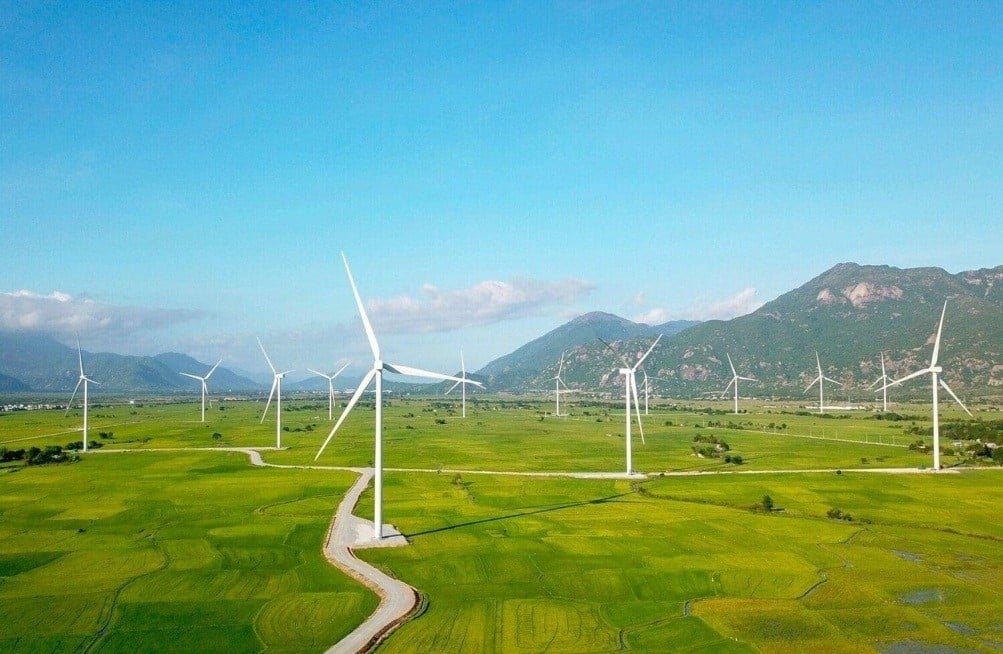 |
| Wind farm in Ninh Thuan , Vietnam. (Source: Thanh Nien) |
Regarding the field of floating offshore wind power, many countries around the world are developing production technologies that can generate wind power in even deeper waters. This technology involves a turbine mounted on a floating substructure and anchored to the seabed with chains. This means that offshore wind power generation can be deployed in waters with depths of 300 meters or more. This technology is expected to bring wind energy to new markets, including the Mediterranean. Experts hope this technology will be fully commercialized by 2030.
According to data from the Global Wind Energy Council, Europe currently leads in floating wind power with a capacity of 208 MW, equivalent to 88% of the world's installed wind power capacity. Much of this comes from small pilot projects, but many countries, including France, the UK, Norway, and Ireland, are beginning to consider scaling up production to commercial levels.
For their part, Asian countries are also focusing on researching and implementing offshore floating wind power projects. In October 2023, Japan announced four potential areas for pilot projects. South Korea is considered to have great potential and is investing in development to become one of the countries with the largest floating wind farms in the world when construction is completed in 2028.
Wind power and marine economy
Vietnam has an offshore wind power potential of over 600 GW, attracting significant investor interest and investment in various projects. To ensure sustainable development of the offshore wind industry, it is crucial to conduct research and establish a legal framework to promote offshore wind power (laws, a national strategy on offshore wind power, and related policy documents).
Vietnam has committed internationally to reducing carbon dioxide emissions to net-zero by 2050. Onshore, nearshore, and offshore wind power sources are projected to account for the largest share of total electricity generation by 2045. Developing offshore wind power, in addition to exploiting the enormous energy potential, also ensures the realization of the vision for marine economic development…
Vietnam has an offshore wind potential of approximately 600 GW. Of this, the technical potential for offshore wind power is 261 GW for fixed-foundation offshore wind farms (at depth).
In December 2022, the Ministry of Industry and Trade drafted the Power Development Plan VIII (PDP 8), setting a target of 7 GW of offshore wind power by 2030 and 87 GW by 2050. In 2021, the Offshore Wind Power Roadmap for Vietnam, published by the World Bank, presented a high-scenario of 70 GW by 2050, envisioning a successful offshore wind power industry and suggesting that Vietnam could rank third in Asia (after China and Japan). The investment cost per 1 MW of offshore wind power has decreased sharply from 255 USD/MWh in 2012 to approximately 80 USD/MWh currently, and is projected to be around 58 USD/MWh after 2030.
With such advantages, wind power is considered by many countries, especially coastal nations, as a groundbreaking solution to ensure national energy security, reduce dependence on imported fuels, and reduce emissions of pollutants and greenhouse gases. Therefore, competition and development in this green energy sector are booming globally.
Source: https://baoquocte.vn/cuoc-canh-tranh-nguon-nang-luong-xanh-tren-toan-cau-278564.html














































































Comment (0)