

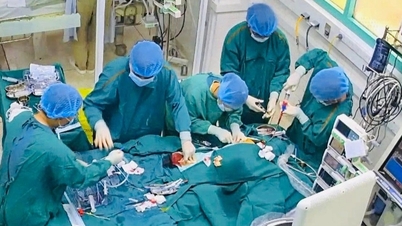
On September 19th, information from Can Tho Central General Hospital indicated that doctors at the hospital had successfully saved a patient with a penetrating chest wound, hemorrhagic shock complicated by cardiac arrest, and a critical condition.
Previously, patient TVT, 50 years old, residing in Soc Trang , was admitted to a local hospital with a penetrating chest wound, hemorrhagic shock, cardiopulmonary arrest, pneumothorax, and hemothorax. After emergency treatment, blood transfusion, surgical hemostasis, and drainage, the patient was transferred to Can Tho Central General Hospital in critical condition, with low blood pressure and receiving high-dose vasopressors.
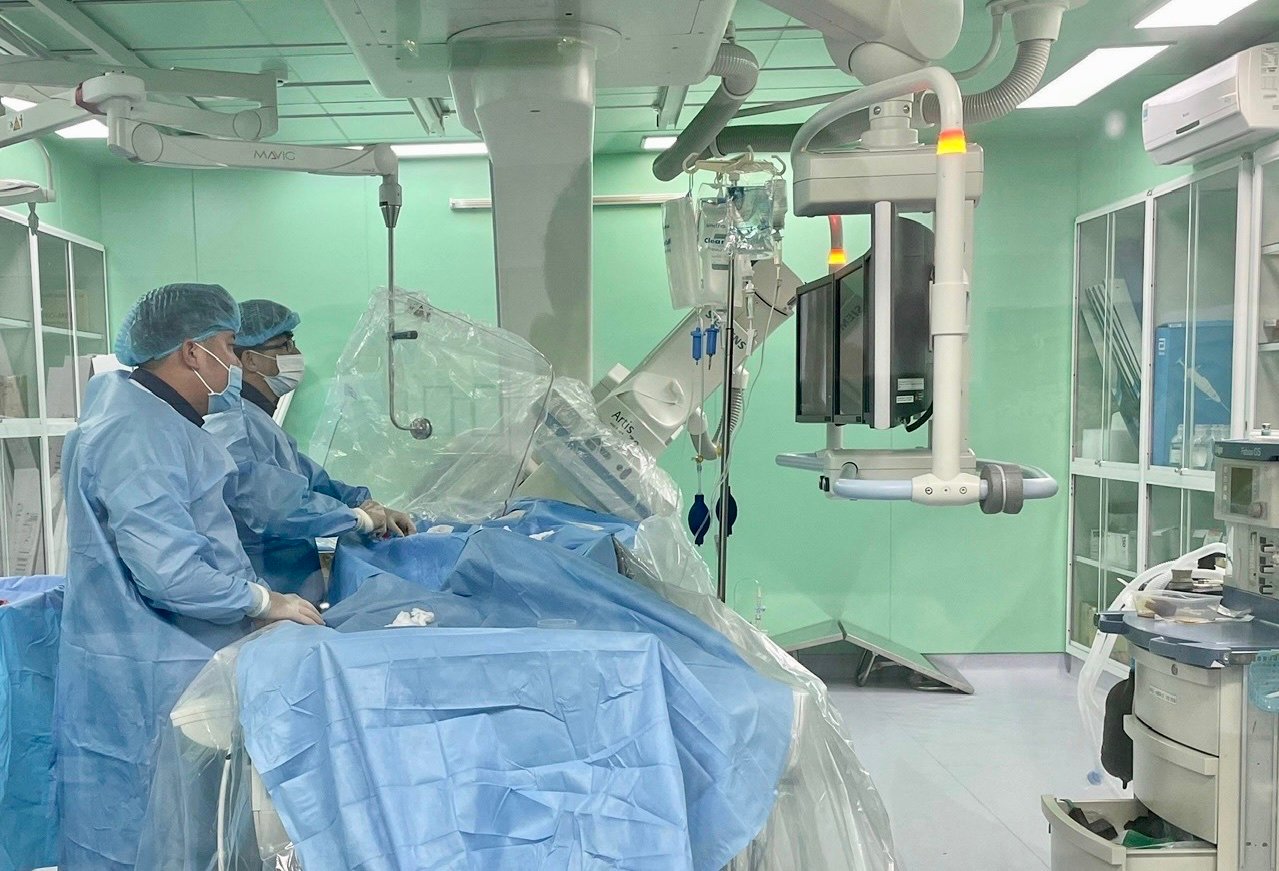
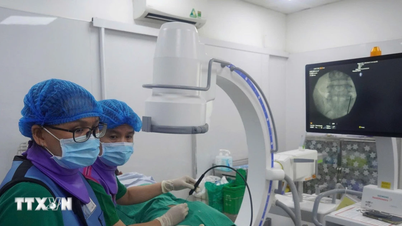
Dr. Tran Cong Khanh and his team performed angiography and embolization to control bleeding in the patient.
Despite emergency treatment, mechanical ventilation, intravenous fluids, and blood transfusions, the patient's severe blood loss did not improve.
Following a consultation, the doctors ordered a contrast-enhanced CT scan of the chest for the patient, which revealed a vascular leakage in the right axilla. Immediately afterward, the intervention team, led by Dr. Tran Cong Khanh, Deputy Head of the Diagnostic Imaging Department of the hospital, performed an angiography and arterial embolization procedure to control bleeding using a DSA machine. This is considered a minimally invasive treatment method with maximum effectiveness, especially for patients experiencing severe hemorrhagic shock and coagulation disorders. During the intervention, the doctors selectively targeted the leakage branch, angiographed to determine its location, and then injected a glue mixture to occlude the leakage.
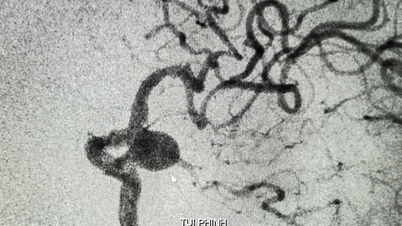
After about 30 minutes, the intervention was successful, and follow-up imaging showed no signs of extravasation. During the emergency treatment, the patient received a total of 27 units of blood and blood products.
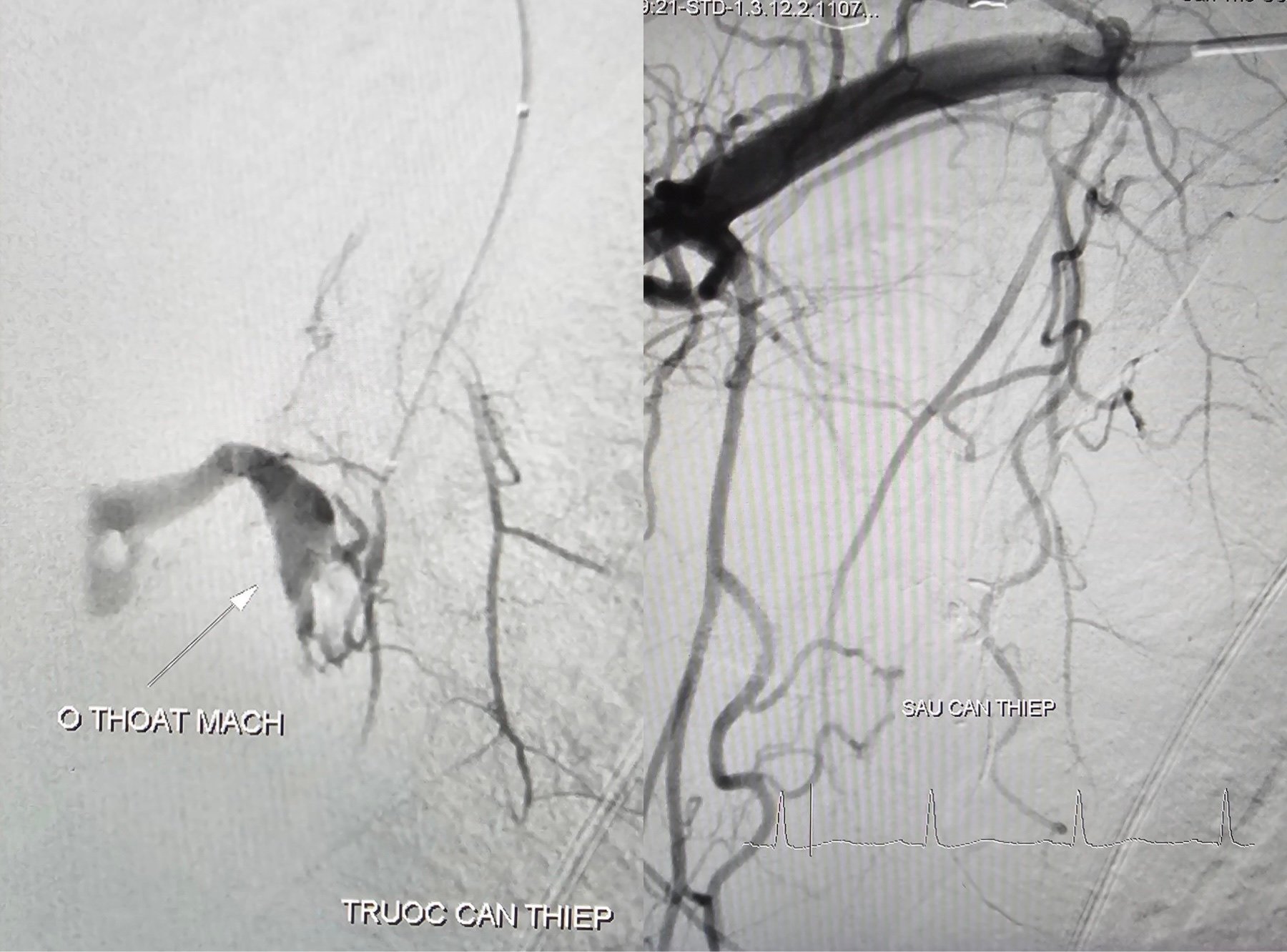
Extravasation site before and after hemostatic intervention.
Currently, following the intervention, the patient is awake, responsive, has pink mucous membranes, a dry surgical wound, stable vital signs, has been weaned off the ventilator, and is continuing treatment in the Thoracic and Vascular Surgery Department.
According to Dr. Tram Cong Chat, Head of the Thoracic and Vascular Surgery Department at Can Tho Central General Hospital, penetrating chest wounds are a common surgical emergency. The cause of chest wounds is usually due to sharp objects (knives, scissors, and other sharp objects) directly penetrating the chest, either from the neck downwards or from the abdomen upwards, causing damage to vital organs inside the chest or abdominal organs. Hemorrhagic shock due to penetrating chest wounds requires immediate emergency treatment and multidisciplinary collaboration. Simultaneous resuscitation to combat shock and surgical hemostasis to address the underlying cause are necessary to save the patient's life.
Source link
























































































Comment (0)