

 |
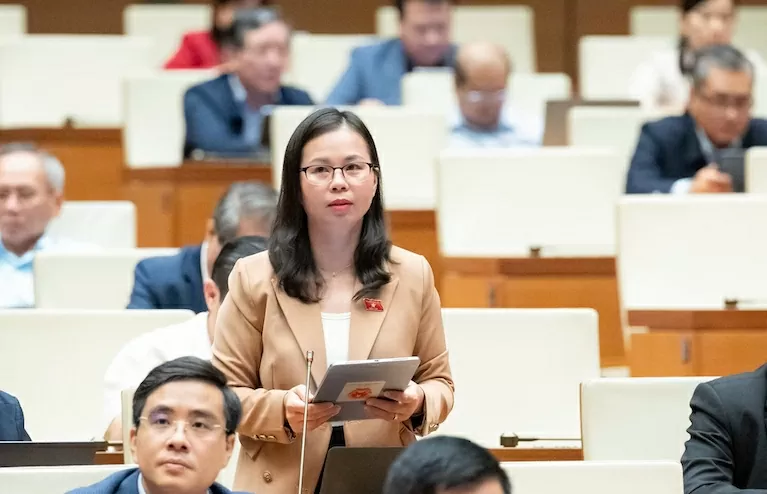
| Delegate Chu Thi Hong Thai pointed out the paradox of free tuition but the total cost of education increases through socialized funds. (Source: National Assembly) |
Socialization of education needs to be appropriate for each region.
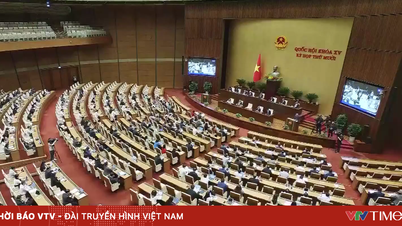
This is the issue raised by National Assembly delegates at the discussion session on the Investment Policy of the National Target Program on Modernizing and Improving the Quality of Education and Training for the 2026-2035 period, which took place on the afternoon of December 2.
Expressing her opinion, delegate Chu Thi Hong Thai ( Lang Son delegation) said that the draft and the report on acceptance and explanation stated that the socialization rate only accounts for 10% of the total investment in projects on preschool, general education and vocational education, mainly to supplement equipment, learning spaces, playgrounds, experiential activities... But the explanation has not fully assessed the risks in difficult areas.
Ms. Hong Thai pointed out the reality that in many mountainous communes, remote areas, there are almost no businesses with enough financial potential, people have low incomes so the ability to mobilize socialization is very limited.
In that context, if we still set a socialization rate of 10% without achieving it from businesses, there is an existing risk that educational institutions and local authorities will shift to mobilizing and calling for voluntary contributions from parents to complete the targets on facilities and equipment.
The female delegate expressed her opinion that this approach leads to a paradox: in name, the State implements the policy of exempting tuition fees or not increasing tuition fees, but in reality, the total educational costs that households have to bear can increase through non-tuition revenues such as socialized fees, sponsorship fees, equipment fees, and experiences.
"If not well identified and controlled, the socialization mechanism as currently designed risks reducing the effectiveness of the tuition exemption and reduction policy, creating more financial pressure on poor families, especially in ethnic minority areas, and going against the goal of equitable access to education set by the program," delegate Hong Thai noted.
Emphasizing the view that socialization is necessary but must be appropriate to the conditions of each region, the delegate suggested not applying the exact rate of 10% and limiting mobilization from parents and only socializing supplementary items, essential items must be guaranteed by the budget to not increase education costs for people, especially when we are implementing the policy of free tuition for high school students.
 |
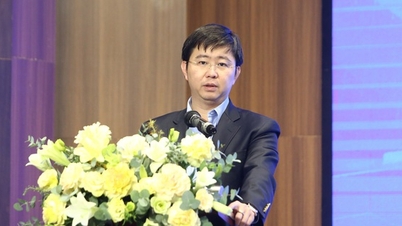
| Delegate Tran Khanh Thu. (Source: National Assembly) |
Need for policies to attract high-quality English teachers
Delegate Tran Khanh Thu (Hung Yen delegation) stated that the program has set a goal of making English the second language in the national education system, in which by 2030, 30% of preschool and general education facilities strive to have equipment to implement teaching and learning in English.
By 2035, the program strives for 100% of preschool and general education facilities to meet standards in terms of facilities and teaching equipment to implement teaching and learning in English, gradually making English the second language in schools.
Ms. Thu said that this is a major orientation, demonstrating the determination to deeply integrate internationally, but to successfully implement it, it is necessary to frankly and thoroughly assess the conditions and challenges regarding facilities as well as human resources and the environment.
According to the report of the Ministry of Education and Training, we are still short of about 4,000 English teachers at all levels of general education. The capacity of the team is also a problem. On the other hand, the average age of English teachers is currently quite high (44.2 years old). Some older teachers are less interested or have difficulty finding modern teaching methods suitable for each group of students, so the quality and effectiveness of teaching the subject have not been as expected.
From there, delegate Khanh Thu suggested that there should be a specific roadmap to implement these contents, especially in mountainous provinces and disadvantaged areas. In particular, it is necessary to increase investment in infrastructure for provinces, especially mountainous provinces, such as supporting the construction of standard foreign language rooms for 100% of mountainous district schools before 2030; prioritizing mountainous areas, border areas, and areas with particularly difficult socio-economic conditions.
In addition, there needs to be a strong enough policy to attract high-quality English teachers, such as increasing the incentive allowance to 70-100% of the basic salary for teachers in disadvantaged areas; supporting housing, and committing to long-term contracts. In addition, there needs to be a policy to promote the application of technology, connecting online classes, using artificial intelligence (AI) to support to compensate for the lack of teachers; building English centers in disadvantaged areas according to the inter-commune model.
Discussing this content, delegate Nguyen Thi Lan Anh (Lao Cai delegation) proposed that the drafting agency add the content that the State prioritizes resources to support training and fostering English teachers for mountainous provinces, ethnic minority areas and particularly disadvantaged localities.
The female delegate hopes to encourage businesses, social organizations, and international organizations to coordinate with the Ministry of Education and Training to support English teaching equipment for schools in disadvantaged areas, and assign the Ministry of Education and Training to coordinate with relevant ministries to develop a plan to train English teachers for disadvantaged areas with separate funding support from the central budget.
According to Ms. Lan Anh, only with reasonable decentralization and appropriate mechanisms can the goal of making English a second language in schools be truly feasible, fair and effective in all regions of the country.
Source: https://baoquocte.vn/national-congress-delegates-discussion-on-paradoxes-about-philosophy-but-the-total-economic-phi-giao-duc-cua-moi-gia-dinh-lai-tang-336507.html


![[Photo] Cat Ba - Green island paradise](/_next/image?url=https%3A%2F%2Fvphoto.vietnam.vn%2Fthumb%2F1200x675%2Fvietnam%2Fresource%2FIMAGE%2F2025%2F12%2F04%2F1764821844074_ndo_br_1-dcbthienduongxanh638-jpg.webp&w=3840&q=75)































![[VIMC 40 days of lightning speed] Da Nang Port: Unity - Lightning speed - Breakthrough to the finish line](https://vphoto.vietnam.vn/thumb/402x226/vietnam/resource/IMAGE/2025/12/04/1764833540882_cdn_4-12-25.jpeg)


































Comment (0)