

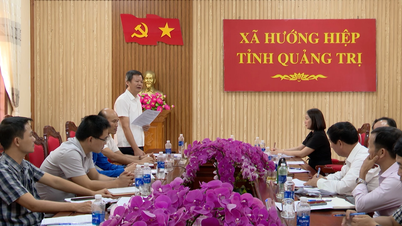
During the group discussion session, the Head of the Can Tho City National Assembly Delegation, Nguyen Tuan Anh, offered suggestions regarding the model of university organization. Mr. Tuan Anh noted that the Vietnamese university system initially consisted of universities, which were later supplemented by academies (also universities but with different names). Recently, the Higher Education Law has added more types of universities: national universities and regional universities.
No longer relevant
There are three regional universities nationwide: Thai Nguyen University, Da Nang University, and Hue University. After about 25 years of implementation, the two-tier model has revealed shortcomings in its organizational structure. Within a university, there is a Board of Directors, units serving training, and member schools. These member universities, in turn, have similar organizational structures. For example, if a university has 10 member schools and the university has a Training Department, then the other 10 member schools will also have 10 training departments.
Representative Nguyen Tuan Anh argued that the organizational structure of this model is too cumbersome, consumes too much money, and even requires increasing the number of students to rationalize costs. He suggested that the draft Law on Higher Education (amended) should not specifically mention regional universities (currently regulated in Articles 11 and 12). According to the representative's analysis, after streamlining the organizational structure and merging provinces, the "regional" nature of the current regional universities is no longer appropriate, especially as we are implementing digital transformation in national governance.
The Ministry of Education and Training manages dozens of universities. Therefore, it is not necessary to have three regional universities just to manage a few affiliated member universities. Representative Tuan Anh shared that Resolution 71, recently issued, requires the elimination of intermediate levels, streamlining the apparatus, and especially reorganizing universities. The latest spirit is to reorganize universities, including those of central government agencies located in the area or those managed by local authorities, in order to facilitate student recruitment and the shared use of resources and facilities. With the spirit of Resolution 71, if the regulations on regional universities are maintained, implementing the reorganization of universities in these localities will certainly be difficult, as the reorganization will be limited or have to be done later. Regional universities are stipulated in the law, so they cannot be reorganized or restructured.
Representative Nguyen Tuan Anh proposed several solutions. Firstly, the law should stipulate that there cannot be two-tiered universities within the higher education system; only single-tiered universities should exist (like Hanoi University of Science and Technology, National Economics University, Can Tho University, Ho Chi Minh City University of Economics, etc.). Vietnam should only have universities that offer in-depth specialized training in certain fields, and universities that offer multi-disciplinary training.
In the event that Option 1 is not approved, Mr. Tuan Anh suggested that the Ministry of Education and Training re-evaluate the situation and determine whether the current regional universities, if they have no students and do not provide training, are merely intermediate-level institutions. If they are intermediate-level, they should be resolutely eliminated.
One expert argued that maintaining the regional university model would only bring short-term benefits but harm national interests in the long run. Therefore, he agreed with the proposal to abolish the regional university model, minimize bureaucratic red tape in university administration, and eliminate intermediate levels. University administration must be streamlined; failure to do so will render the problem of ensuring the quality of higher education ineffective.

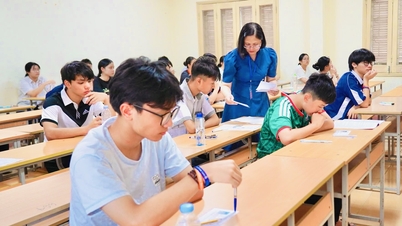
Candidates seek information about university admissions at the 2025 University Admissions Counseling Fair. Photo:
Previously, when the Ministry of Education and Training sought opinions on the draft amendment to the Law on Higher Education, Professor Bui Xuan Hai, Rector of Hai Phong University, stated that the two-tiered university model (without "universities within universities") is almost non-existent worldwide. This prevents member universities from developing and puts them in a "double bind," subject to both the management of the university and the state management agency.
Transition to an integrated university model.
If we abolish the two-tiered university model, based on legal regulations, we will have to amend Government Decision 452 on the planning of the network of higher education and teacher training institutions for the period 2021-2030, with a vision to 2050.
Vietnam currently has various models of higher education, such as two-tiered universities, universities within universities (National University, regional universities); one-tiered universities, schools within universities (Hanoi University of Science and Technology, National Economics University, Ho Chi Minh City University of Economics, etc.); academies; universities; and research institutes (postgraduate training). An assessment of the impact of the amended Higher Education Law reveals that the regulations regarding the organization of universities with member universities (two-tiered model) have many shortcomings, especially when implementing the autonomy mechanism.
Speaking to the press, National Assembly representative Trinh Thi Tu Anh affirmed that abolishing the two-tier model, or at least reducing the management role of the national/regional university level, will help member universities have autonomy equivalent to independent universities. This is consistent with the direction of the amended Higher Education Law, emphasizing autonomy linked to accountability and quality assurance.
This change is also in line with international trends. The shift from a "university within a university" model to an integrated university model with schools/colleges that do not have separate legal status will help Vietnam integrate better with advanced higher education systems. This will facilitate international cooperation and attract investment for these universities.
According to Decision 452, the Government has outlined the development and distribution of the university network until 2030, specifically: developing two national universities into leading higher education institutions in Asia; developing Hue University and Da Nang University into national universities; upgrading and expanding the development space of Thai Nguyen University in the Northern Midlands and mountainous region; and upgrading and developing additional regional universities in the North Central, South Central, Central Highlands, and Mekong Delta regions.
Source: https://vtcnews.vn/dai-hoc-vung-den-luc-het-vai-role-ar983405.html

































































































Comment (0)