

From barren sugarcane land to "green gold" gardens.
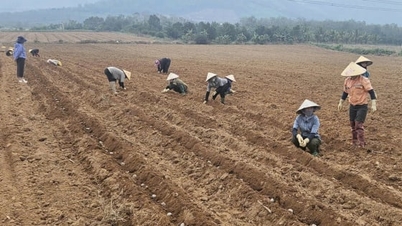
In previous years, Mrs. Nguyen Thi Bien's nearly 1.5-hectare garden (residing in Hong Binh hamlet, Nghia Mai commune, Nghe An province) was mainly planted with sugarcane, oranges, and a few short-term crops. However, the inconsistent yields and crop failures due to weather conditions caused Mrs. Bien's family constant worry each season.
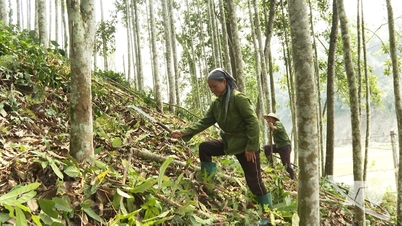
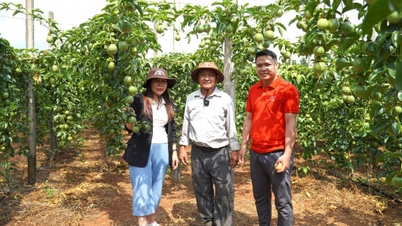
In 2021, after researching various new agricultural models, Ms. Bien decided to experiment with planting 300 sandalwood trees interspersed with 600 Taiwanese (Chinese) guava trees. It was a bold change, but she believed that boldness was necessary to transform her life.
“The shade from the sandalwood trees doesn't affect the guava trees at all; in fact, it reduces leaf spot. Both trees use the same care and fertilization process, saving a lot of costs. The economic efficiency is 2-3 times higher than growing oranges and tangerines before,” Mrs. Bien said excitedly.

Her intercropped sandalwood and guava orchard is now lush and green. Many sandalwood trees have already yielded leaves and fruit. Thanks to this combination, her orchard not only provides annual income but also promises significant value in the future when the sandalwood enters its timber harvesting cycle.
Not only Mrs. Bien, but many households in Nghia Lam commune are also changing their production models thanks to this high-value crop. The family of Mr. Le Son (residing in Dua village, Nghia Lam commune) had been involved in sugarcane and other crops for many years. However, the harsh climate and fluctuating prices caused their income to decline steadily. At one point, the family was almost penniless after a sugarcane harvest with low prices.
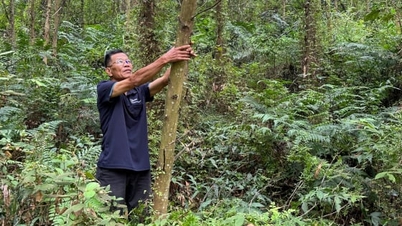
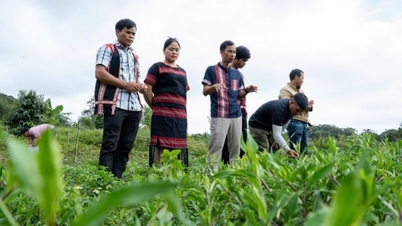
In 2019, after visiting many model farms in other provinces, Mr. Son decided to boldly convert 2 hectares of land to sandalwood cultivation. “Initially, I was worried because it was an unfamiliar variety, and I didn't know if it would suit the soil. But after a year, the trees grew well, had few pests and diseases, and required little care, so I became even more confident,” Mr. Son shared.
According to Mr. Son, sandalwood is a tree species with exceptionally high economic value: fresh leaves sell for 100,000 - 120,000 VND/kg, the fruit for 150,000 - 200,000 VND/kg, and the heartwood, when mature, can reach 20 - 25 million VND/kg. Sandalwood also has a long harvesting cycle: leaves can be harvested from the third year, fruit from the fourth year, and timber can be harvested after 12 years. "It can be said that you plant it once and harvest it many times," Mr. Son said.

Currently, Mr. Son has expanded his plantation to over 6 hectares, intercropping with short, medium, and long-term host plants to create a suitable growing environment for sandalwood. He calls this a highly effective "short-term gains to support long-term growth" model.
Cooperative societies get involved, creating product supply chains.
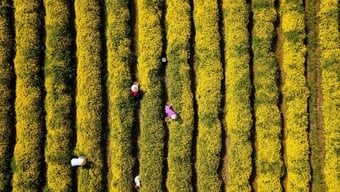
To support output and quality management, many households have joined the Nghe An Sandalwood Cooperative. From an initial 10 members, the Cooperative now has over 30 members, forming a sandalwood growing area of nearly 50 hectares in the former Nghia Dan district.
Mr. Nguyen Hai Hung, Chairman of the Nghe An Sandalwood Cooperative, said that the entire province of Nghe An currently has about 200 hectares of sandalwood. The cooperative supports the issuance of QR codes to each plantation to trace the origin, ensure output, and build a long-term brand for Nghe An sandalwood products.
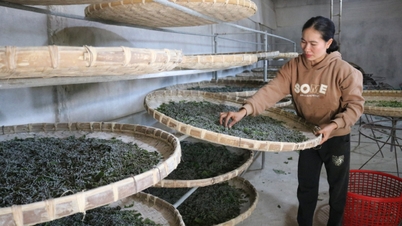
“The cooperative also connects with processing and purchasing businesses for sandalwood fruit and leaves, aiming to build a closed production chain. Many areas are now yielding fruit and leaves, providing a stable income for households. In addition to consuming raw materials, some processed sandalwood products such as leaf tea, essential oils, and skincare powders have begun to appear on the market, increasing value and opening up more development opportunities for growers,” Mr. Hung said.

Although it offers great potential, people should not rush into cultivating sandalwood without a thorough understanding of the process and market, to avoid repeating the mistakes of many crops that experienced booms only to have their prices plummet. Sandalwood requires standard varieties, suitable host trees, and specific cultivation techniques. If planted haphazardly without established distribution channels, the risks are very high.
Mr. Hung stated: "For sandalwood to truly become a strategic crop, production must follow planned zones, linked to businesses and markets. Only when a sustainable value chain is built can growers feel secure in the long term."
Sandalwood is a versatile tree, as all parts—roots, trunk, leaves, and fruit—can be processed into valuable products. The heartwood is used to produce high-end furniture, cosmetics, essential oils, and handcrafted sculptures. The roots and branches are used to extract essential oils and skincare powders. The leaves are used to make tea and premium beverages. The fruit is used as a medicinal ingredient and cosmetic raw material.
Beyond its commercial value, sandalwood is also highly valued for its ecological advantages: it is resistant to pests and diseases, drought-tolerant, has deep roots, prevents soil erosion, and is suitable for many soil types such as sandy soil, basaltic red soil, and laterite-clay soil – areas where many other trees struggle to adapt. This ability to thrive makes sandalwood an optimal choice for areas that were once barren.
Besides providing diverse income from leaves, fruits, and wood, sandalwood also helps improve the environment, conserve soil, reduce erosion, and create green forests in semi-mountainous areas, contributing to sustainable poverty alleviation for the local people.
Source: https://tienphong.vn/dan-huong-ben-re-tren-dat-do-giup-nguoi-dan-thoat-ngheo-post1803939.tpo




































































Comment (0)