

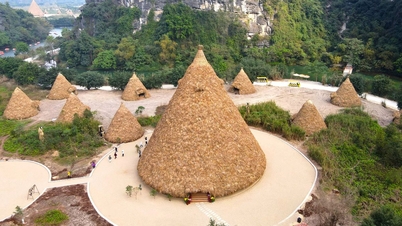
Archaeological sites are one of the unique types of cultural heritage resources, and one of the outstanding universal values of the Trang An Scenic Landscape Complex. Over time, the province has gradually paid attention to researching, preserving, and promoting the value of archaeological sites, aiming to "awaken" their potential, gradually forming distinctive tourism products, creating a sustainable development trend, and contributing to the comprehensive development of Ninh Binh province.
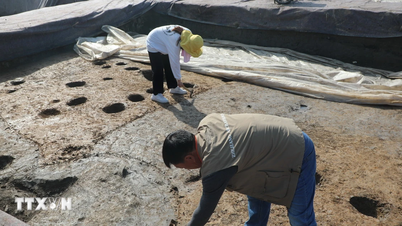
Archaeologists both domestic and international have confirmed that the Trang An Scenic Landscape Complex is a relatively well-preserved area of geological and geomorphological historical values, along with values related to the history of life, the evolution of humankind, the history of beliefs and religions, and architectural art. The potential of archaeological heritage resources at the Trang An Scenic Landscape Complex is clearly demonstrated through prehistoric archaeological sites. Through collaborative research and archaeological excavations between domestic and international research units, it can be affirmed that Trang An is a complete, rich, and intact source of information for our study of prehistoric humanity.
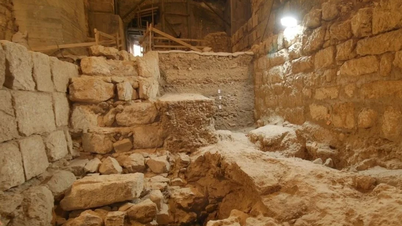
This vast archive reveals a tradition of prehistoric human habitation in Ninh Binh, a tradition of using the land and sea by prehistoric people with many successive cultures, lasting up to 30,000 years, evidenced by over 30 prehistoric archaeological sites that have been discovered and studied. Similarly, archaeological discoveries underground over the years have increasingly revealed the appearance of the Hoa Lu capital. This includes a strong citadel, many large-scale architectural structures, and elaborately decorated palaces and pavilions reflecting the unique artistic style of the Dinh and Early Le dynasties; and the planned layout of the palace system from the Forbidden City to the Imperial City, religious living areas, and more.
Along with that are the relics of the Tran Dynasty, most notably the Vu Lam Royal Palace, which is distinctly different from the other Tran Dynasty relics in the North of Vietnam, possessing unique geopolitical , historical, religious, and cultural values unlike anywhere else: Vu Lam Royal Palace served as a base for resistance against the Mongol invaders; and it was also the first place where the Tran kings converted to Buddhism—the origin of the Truc Lam Yen Tu Zen lineage.
The value of archaeological heritage resources in Ninh Binh in general, and Trang An in particular, encompasses the past, present, and future. Many archaeological sites have been discovered, providing not only important historical and scientific data on the formation and development of Ninh Binh from prehistoric and early historical times to the current revolutionary periods, but also leveraging their value through development into tourist destinations and products, such as Hoa Lu Ancient Capital, the Cave of Ancient People (Cuc Phuong National Park), and Thien Ha Cave… initially yielding positive results.
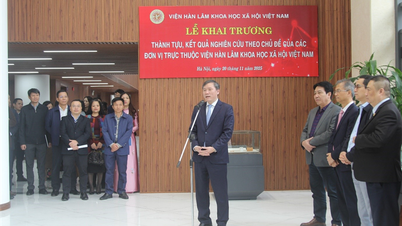
According to Dr. Vo Thi Phuong Thuy of the Vietnam Academy of Social Sciences: Over the past 10 years of research conducted in Hoa Lu in particular and Trang An in general, focusing on landscape archaeology, the initial results show that the prospects for researching and developing landscape tourism here are enormous. If landscape archaeology research in this area is intensified, the research results will provide data for many tourism products aimed at exploiting the unique and outstanding historical and landscape values of this place.
For example, after studying the historical landscape of Hoa Lu, some tourism products that could be developed include: tours exploring the Hoa Lu citadel walls, helping visitors visualize and directly experience the unique landscape of the Hoa Lu capital, which consists of walls formed by limestone mountain ranges and rivers (natural formations), enclosed by earthen and brick walls, and water channels (man-made).
This tour could combine various modes of transportation such as cycling and motorbikes along flat sections of the city walls like Thanh Den and Tuong Dong; walking along smaller earthen sections like Tuong Vau, Tuong Bim, and Tuong Bo; and mountain climbing along naturally formed sections of the walls and mountain passes such as Hang Sung Mountain, Ngon Den Mountain, Vau Pass, and Dot Pass. Another potential product to be developed in Hoa Lu is, with more thorough research on the waterway system in the Inner and Outer Citadels, a tour along these ancient waterways could be created...
If this can be achieved, it could be a unique feature of Trang An-Ninh Binh tourism that no other heritage site in Vietnam possesses. It would be a heritage site always linked to in-depth scientific research and the exploitation of this strength for tourism development. This could also be a direction that brings many sustainable development values to tourism in the Trang An Heritage site.
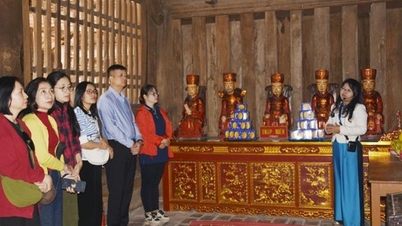
Dr. Vo Thi Phuong Thuy also believes that the key to exploiting the tourism potential from archaeological research in general and landscape archaeology in particular in Hoa Lu is to simultaneously carry out two tasks: Promoting in-depth archaeological research to gain a better understanding of the history and landscape of Hoa Lu; and especially, training a team of tour guides specializing in archaeological tours. Archaeological research results are highly specialized, and tourists without a certain level of knowledge will find them difficult to understand and less appealing. Therefore, training a team of specialized tour guides for archaeological tours in Trang An is essential. These tour guides will receive thorough and in-depth training in both tourism and archaeology so that they can explain archaeological research findings in an understandable and engaging way, while still ensuring accuracy and conveying scientific value. This will allow tourists to better understand and access seemingly dry and complex archaeological research findings.
Comrade Nguyen Cao Tan, Deputy Director of the Department of Tourism, affirmed: The trend of a large number of tourists wanting to access archaeological sites is a natural human need to learn about the past, understand what has passed, recognize what is new in the present, and even more so, to predict the future. Preserving archaeological sites and creating spaces for tourists to access and understand their value without negatively impacting them requires systematic, meticulous work and significant investment. At the same time, the role of the community is crucial, because only when the local community and many others are aware of the value of the sites and work together to better protect them will they contribute to responsible and sustainable tourism development.
Nguyen Thom
Source
















![[Photo] Prime Minister Pham Minh Chinh holds a phone call with the CEO of Russia's Rosatom Corporation.](/_next/image?url=https%3A%2F%2Fvphoto.vietnam.vn%2Fthumb%2F1200x675%2Fvietnam%2Fresource%2FIMAGE%2F2025%2F12%2F11%2F1765464552365_dsc-5295-jpg.webp&w=3840&q=75)










































Comment (0)