

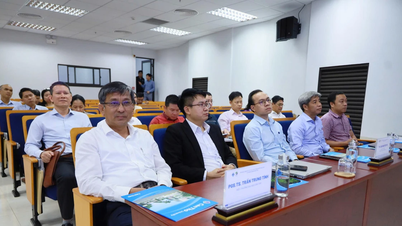
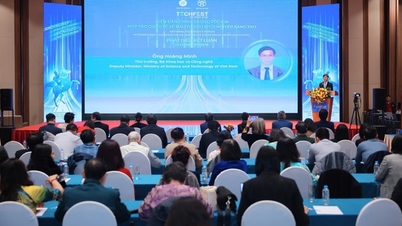
The conference was organized by Hong Bang International University in collaboration with the Vietnam Association of Hospital Pharmacists.
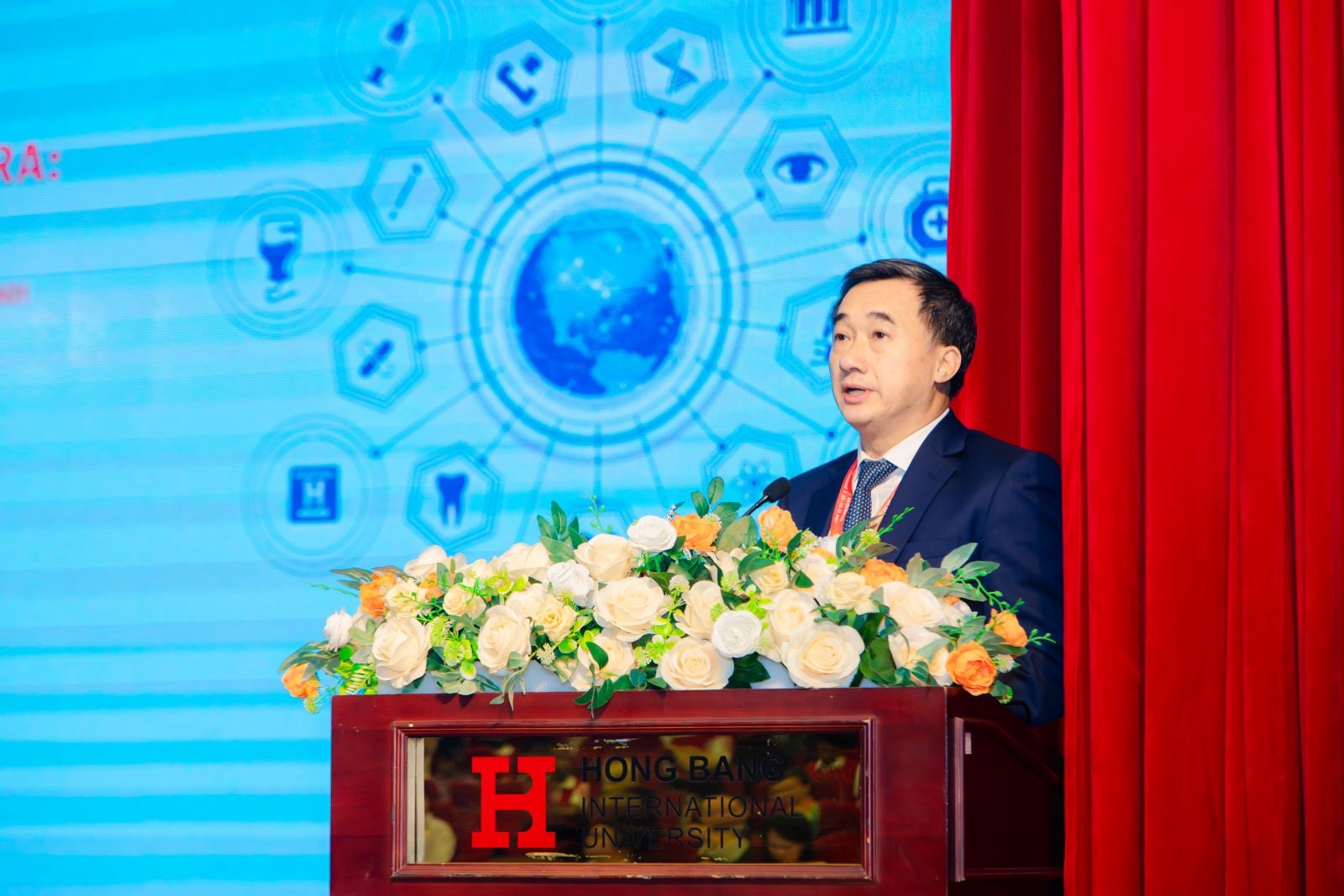
Professor Tran Van Thuan, Deputy Minister of Health, stated that Vietnam currently does not lack medical data. Systems such as health insurance claims processing, electronic medical records, electronic health records, and digital healthcare platforms are generating an ever-increasing amount of data. However, the challenge lies in the ability to connect, standardize, and analyze this data to transform it into reliable scientific evidence for training, research, and policy planning.
According to Deputy Minister Tran Van Thuan, Human Resource Assessment (HTA), along with digital transformation, is identified as a crucial foundation for building a modern, transparent, cost-effective, and patient-centered healthcare system. Integrating HTA into training and research programs not only enhances the professional capacity of healthcare personnel but also contributes to fostering an evidence-based mindset in management decisions.
Representatives from the Vietnam Social Security agency stated that health insurance claims data and medical examination and treatment cost data are becoming important input sources for HTA (Health Insurance Assessment) studies. However, exploiting real-world data still faces many difficulties due to the lack of a unified legal framework on data sharing and anonymization, as well as differences in encoding standards and clinical information quality among healthcare facilities.
According to MSc. Nguyen Truong Nam from the National Center for Health Information, regarding data infrastructure, by 2025, medical facilities nationwide will have connected to the health insurance claims and payment system and the National Population Database. Electronic medical records have been implemented in 881 out of a total of 1,645 hospitals; electronic health records have been implemented in 34 provinces and cities with more than 24.4 million records. This is considered an important foundation for developing large data repositories to serve training, research, and forecasting of health policies in the future.
Sharing international experiences on the application of HTA in health insurance fund management and specialized human resource training, Dr. Pritaporn Kingkaew, representative of the Health Technology and Intervention Assessment Program (HITAP) of Thailand, introduced the national HTA database model and how to use evidence in selecting health interventions.
Accordingly, Thailand's HTA ecosystem includes an HTA database, a standard cost catalog, a health utility database, and methodological guidelines and priority setting tools. This model helps standardize the process of creating and applying evidence and is considered a valuable reference for Vietnam in training and policy development.
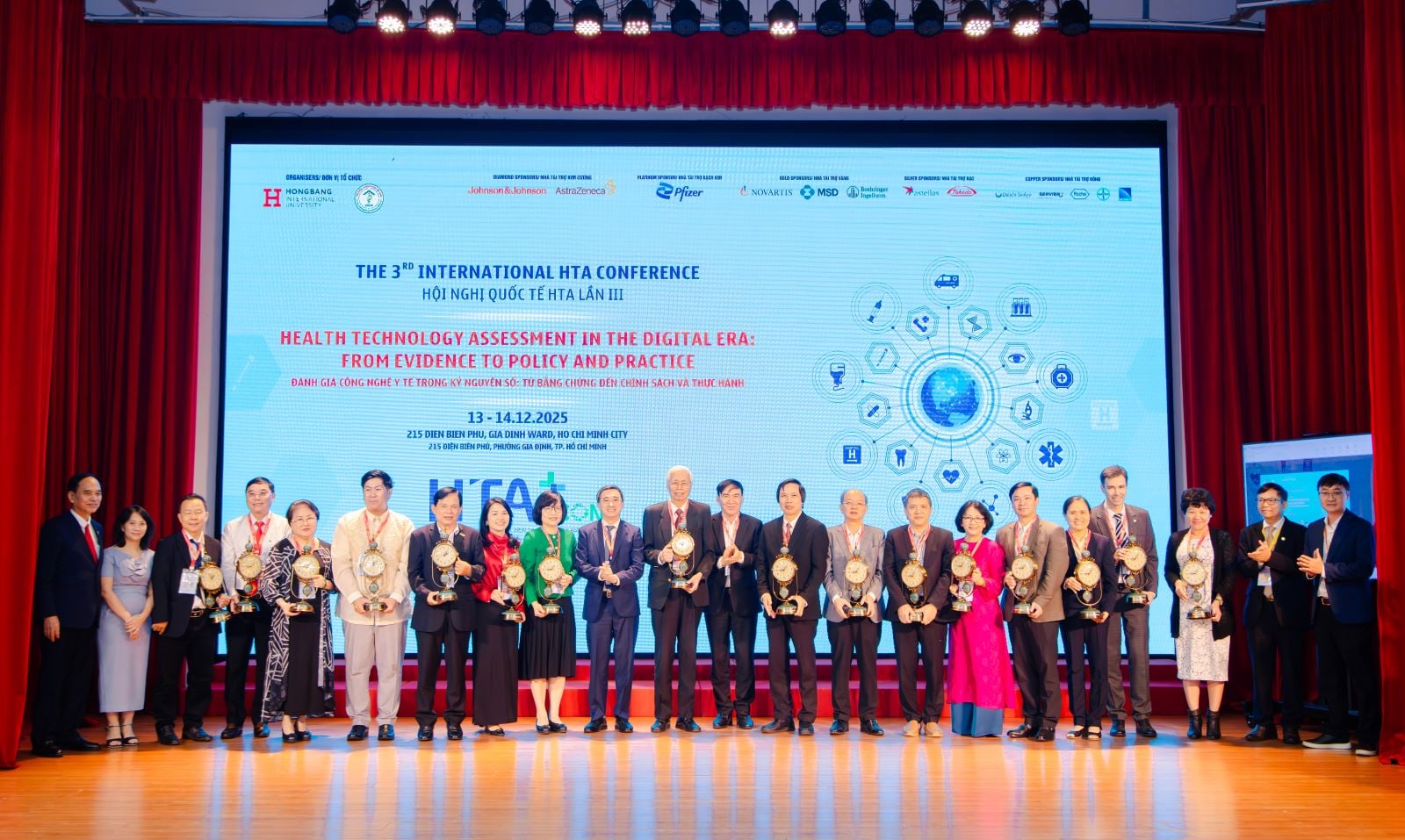
Experts from Russia and Denmark also shared their experiences on modern payment models such as outcome-based payment, evidence-based payment, and value-based procurement. These are topics of interest to many medical, pharmaceutical, and health economics training institutions, aiming to update their curricula to align with modern healthcare management trends worldwide.
Associate Professor Dr. Nguyen Thi Thu Thuy, Vice Rector of Hong Bang International University, provided information on several HTA research studies based on real-world data, highlighting challenges in methodology, data, and human resources, and proposing solutions to improve the quality of HTA research and training in Vietnam.
The 3rd HTA Conference was organized with diverse content, including plenary sessions, thematic sessions, a young scientists' forum, and a research poster presentation area focusing on the application of information technology and artificial intelligence in healthcare, hospital-level HTA, and medical equipment evaluation – areas of interest for inclusion in interdisciplinary training and research programs.
According to experts, the academic exchanges at the conference showed that HTA is not only a tool to support policy decision-making but also an increasingly important field of training and research, contributing to building high-quality human resources and promoting the sustainable long-term development of Vietnam's healthcare system.
Source: https://baotintuc.vn/van-de-quan-tam/dao-tao-danh-gia-cong-nghe-y-te-trong-boi-canh-chuyen-doi-so-20251213123611232.htm


![[Photo] Prime Minister Pham Minh Chinh attends the Conference summarizing and implementing tasks of the judicial sector.](/_next/image?url=https%3A%2F%2Fvphoto.vietnam.vn%2Fthumb%2F1200x675%2Fvietnam%2Fresource%2FIMAGE%2F2025%2F12%2F13%2F1765616082148_dsc-5565-jpg.webp&w=3840&q=75)



















































































Comment (0)