

Ms. Phan Thi Thanh Xuan, General Secretary of the Vietnam Leather, Footwear and Handbag Association, shared this with a reporter from the Industry and Trade Newspaper.
 |
| Ms. Phan Thi Thanh Xuan - General Secretary of the Vietnam Leather, Footwear and Handbag Association |
Leather and footwear are among the key export items to the CPTPP. What is your assessment of the opportunities this market offers for leather and footwear exports?
The CPTPP is one of the most important FTAs for the footwear industry. Among the CPTPP participating countries, Canada and Mexico did not have prior FTAs, so when the CPTPP came into effect, the growth rate of footwear exports to these two markets increased very rapidly, reaching 20%. For Vietnam's markets within the CPTPP bloc, except for Brunei, most of the remaining countries saw tariffs reduced to 0% immediately upon the FTA's entry into force, bringing positive results for businesses. CPTPP countries currently account for 12% of total export turnover, meaning this market offers significant benefits.
Another positive sign is that this agreement has led to a shift in the supply of raw materials and components into Vietnam. For FTAs to take effect, we must comply with the rules of origin. Because of the preparations made right from the TPP negotiations (the predecessor of the CPTPP), the supply of raw materials and components shifted to Vietnam, contributing to an increase in the localization rate for exported footwear products from 45% to 55%, and it continues to rise. This is a significant success for the footwear industry, alongside export growth.
Currently, many countries in the CPTPP bloc are strengthening their requirements for sustainable development. So, to meet these requirements, what solutions have Vietnamese footwear businesses implemented recently?
Sustainable development poses a significant challenge for the footwear industry in particular and Vietnamese businesses in general. Participating in new-generation FTAs can be understood as similar to the situation where, previously, we only traveled within the city, but now we travel on highways. And traveling on highways requires high-quality, modern vehicles. Inferior, outdated vehicles will be left out of the game.
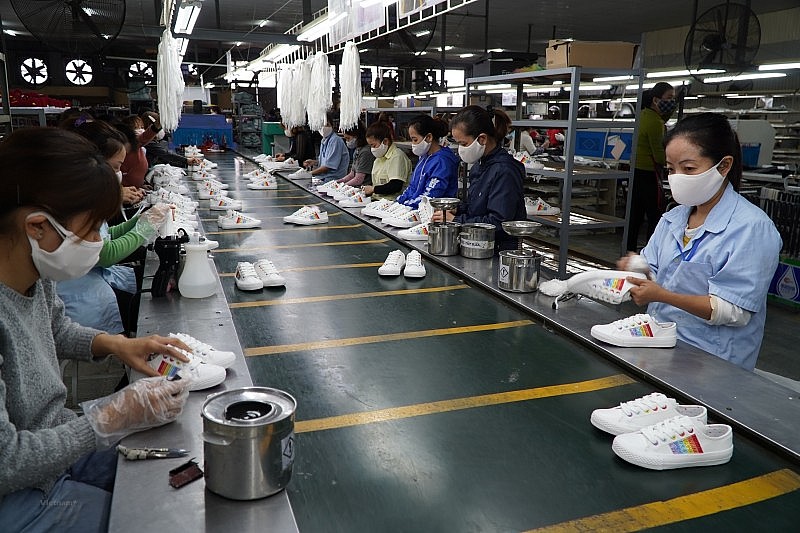 |
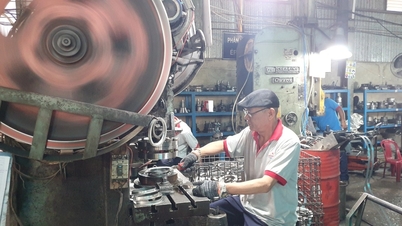
| Footwear businesses are preparing solutions for sustainable development. |
To meet sustainable development criteria, businesses must fulfill many requirements, such as those related to waste management, working conditions for employees, and the environment.
The issue of business compliance is very clear. As supply chains become increasingly transparent, traceability is a requirement that businesses must meet. Thus, the demand for sustainable development is not only mandated by government policies but also by reputable brands. This is both a challenge and an opportunity for businesses to enhance their competitiveness in the market.
Therefore, the first solution is for businesses to undergo digital transformation, thereby addressing the issue of management costs, enhancing internal capabilities, and ensuring transparency in the supply chain so that businesses can access services more effectively.
Businesses also need the cooperation of government agencies in terms of policies such as encouraging innovation. At the same time, they need to focus on investing in human resources. Even with good machinery, without a high-quality workforce, they will not be able to meet the demands.
Currently, there is much talk about Industry 5.0, which is the green technology and digital ecosystem. From 2030 onwards, these applications will become increasingly common, aligning with Vietnam's international commitments made at the COP 26 conference. Therefore, businesses are compelled to transform to keep up with the trend.
Sustainable development is an unchangeable issue, but it cannot be rushed, as the costs involved are significant. What roadmaps have footwear businesses outlined for the future to meet your requirements while ensuring business continuity?
Businesses involved in the export process always adhere to the regulations and requirements of their clients. Meeting these requirements is also a way for businesses to improve their internal capabilities, as obtaining certification allows them to assess their performance and secure orders. This provides a strong impetus for production reform and prepares businesses for sustainable development.
Later on, as market demands become higher, more stringent, and require greater resources, businesses need to focus on applying digital transformation in their production processes to save costs and improve production efficiency.
The second solution is that businesses are focusing on finding sources of raw materials that meet standards. Some businesses are investing to proactively develop their own raw material supply. This is a fundamental solution that footwear businesses have been focusing on implementing recently.
From the association's perspective, what recommendations do you have for the authorities to best support businesses in their transition to sustainable development?
The story of sustainable development is a long-term task, not just for the next 5 or 10 years, but for the long term, and I think we need a comprehensive, overarching solution.
Regarding the textile, garment, and footwear industries, at the end of 2022, the Prime Minister approved the development strategy for these sectors. The strategy includes a plan for sustainable development of these industries. We believe it is necessary to immediately develop a specific action plan in conjunction with the strategy, clearly outlining the demands and expectations placed on businesses by the global community and enterprises. This includes institutional and policy solutions to encourage innovation, and standardization of business requirements to meet international standards. This is a fundamental, comprehensive solution to help the textile, garment, and footwear industries move faster and further.
Thank you, ma'am!
Source link
























































































Comment (0)