

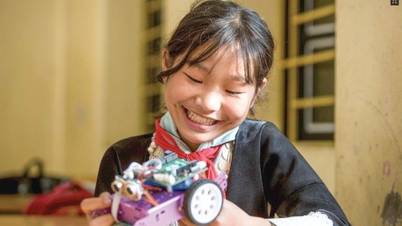
National Assembly delegate Ha Anh Phuong shared that, as a teacher who used to teach in mountainous areas, she encountered many difficulties when students did not have access to labs and modern teaching equipment. She once guided ethnic minority students to research plastic straws when she had “two nos”: no means, no laboratory equipment to perform basic steps such as separating hydrogen and oxygen in the interdisciplinary Physics - Chemistry learning process.
“At that time, the teacher and students came up with a very creative way: they went to bakeries to ask for help borrowing tools and suitable heat sources for the experiment. When they needed to make a straw cutter, they did not have the means to buy the equipment. They collected scrap components, assembled them themselves, and finally created a working cutter,” said Ms. Phuong.
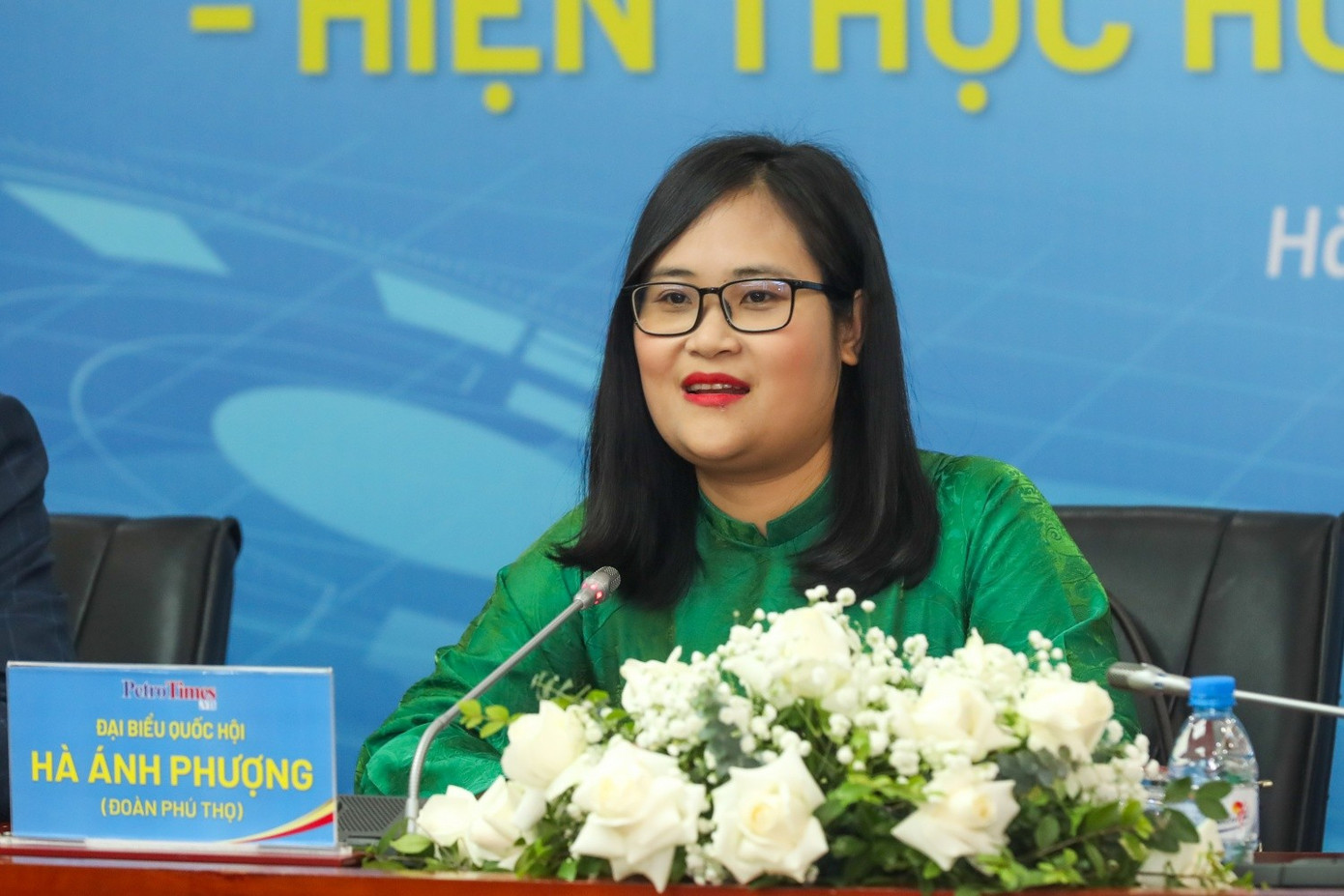
According to teacher Ha Anh Phuong, the children in the poor areas have no money or machinery, but "necessity is the mother of invention", and have gradually persevered to complete the project. They have used interdisciplinary knowledge to solve a problem of reducing plastic waste by making straws from bamboo, combining physics and chemistry knowledge to prevent mold on the straws.
That experience not only made them more mature, but also opened up opportunities to connect with students from many countries, improving their skills and knowledge. For her, it was the clearest proof of the power of STEM education - a journey that helps students overcome the limitations of their circumstances to reach greater things.
Ms. Ha Anh Phuong believes that STEM education will create an opportunity to narrow regional gaps. When there is a common learning platform, students from mountainous and urban areas will have equal learning opportunities, create a common playground, share experiences... From there, a community of STEM students will be formed to learn, share, and do inter-school and inter-regional projects.
It is important to train and develop teachers because if you want students to be good at STEM, you must first have good teachers in STEM. In fact, teachers today are facing challenges such as: fear of change, limited ability to teach integrated learning, interdisciplinary project learning, and limited knowledge related to STEM because most teachers are trained to teach individual subjects.
"In addition, the rate of high school students choosing natural science majors in recent years has decreased significantly, while the rate of choosing the Social Science group has increased. This raises concerns about the shortage of basic science human resources in the future," said Ms. Phuong.
Urgent need to equip modern STEM classrooms
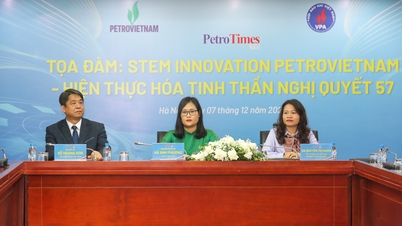
Mr. Do Hoang Son, a member of the Vietnam STEM Alliance, emphasized that Vietnam's inclusion of the concept of STEM education in the 2018 General Education Program is a very important step forward. Students are taught to integrate the interdisciplinary fields of science, technology, engineering and mathematics to learn and practice.
According to Mr. Son, STEM education needs to be viewed at three levels: universal for all students in class; STEM for groups of students with career orientation and improvement needs, through clubs; STEM at the level of breakthrough creativity, participating in major playgrounds at the national and international levels.
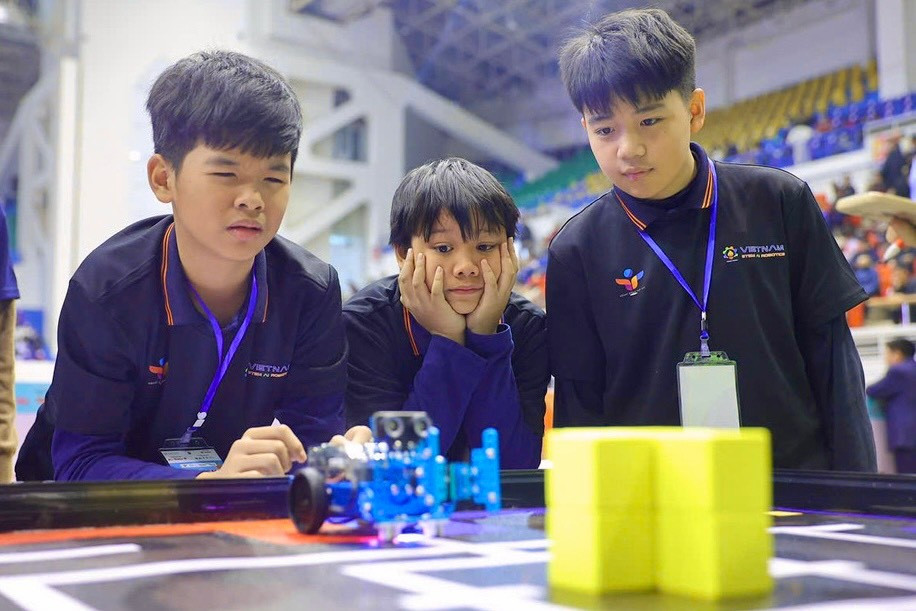
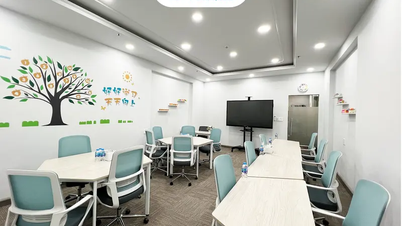
And the urgent condition now is to urgently equip STEM classrooms, where students have the conditions to practice and touch modern technology so as not to be overwhelmed when competing with other countries. In fact, Vietnamese students have created products and projects that surprised students in other countries and won big in many international competitions.
One of the concerns of this expert when promoting STEM in big cities is that urban students lack practical experience to approach STEM. On the contrary, rural students have many advantages.
He said, “the greatest teacher” is nature with countless situations, phenomena, and materials for STEM education to take place naturally. Besides, difficulties are also a “teacher” of innovation because the more difficulties there are, the more learners are forced to be creative, to find ways to solve problems with materials in daily life. Rural children have a direct working environment, something that urban students rarely have the opportunity to experience. Integrated interdisciplinary lessons originating from rural life have become survival instincts, while urban students lack that. Therefore, increasing practical lessons so that students can practice is very meaningful.
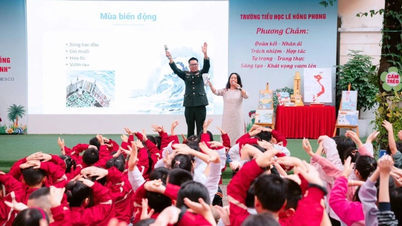
Teacher Nguyen Thi Nhan, Head of the Natural Science Group, Cau Giay Secondary School, said that STEM has been introduced into schools for a long time, but having modern equipment is a turning point, a big push for both teachers and students to innovate teaching methods. Students experience the STEM room to approach the programming process and receive direct training from experts; assemble robots and compete in regional and international competitions.
In addition to projects and topics, the school organized a “no-books experience week”. Students were free to be creative, from small things like logo design to robots, so they were very excited about this playground, helping teaching and learning to be more effective.
Mr. Son said that promoting STEM education, science and technology, digital transformation and innovation in a country is a long-term process, requiring the synchronous implementation of many contents, from infrastructure construction, expert training, human resource development, system connection to building culture, science and technology in society. This is an area where we still lack experience, there is still much to do.
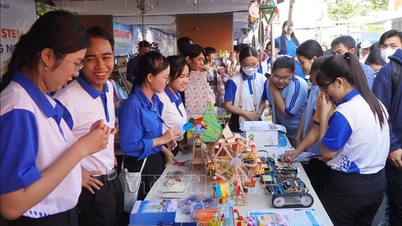
In practice, models such as virtual robots have created conditions for students to learn anytime, anywhere, in a personalized way. Teachers in this context not only teach, but also organize, guide, test, and evaluate in a digital environment. STEM festivals, STEM teacher communities, and hands-on experiential activities provide knowledge and experience, while also training students' qualities and abilities.
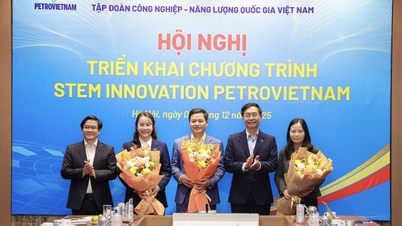
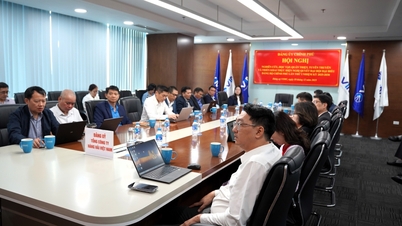
The Ministry of Education and Training said that in the near future, 100 STEM rooms will be surveyed and installed in schools in provinces and cities. The Ministry of Education and Training and Petrovietnam will develop a roadmap for implementation, train teachers, and ensure the STEM rooms operate effectively.
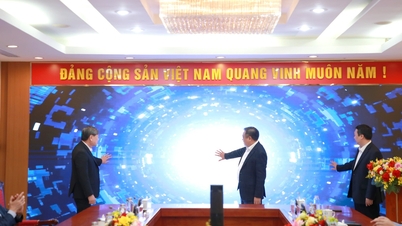
Tien Phong Newspaper in collaboration with the Central Council of Young Pioneers, the National Innovation Center, and Hanoi University of Science and Technology launched the National STEM, AI and Robotics Championship for the 2025-2026 school year. The competition has the theme "Energy for the future", taking place from November 2025 to April 2026, for high school students nationwide.
Participating in the competition, students will assemble wind power plant robots, solar panels, simulate water rockets and program AI. The competition contributes to promoting innovation in STEM education methods, fostering digital thinking, creative skills and collaboration capacity, preparing high-quality human resources for the country's future.
Source: https://tienphong.vn/day-hoc-stem-thach-thuc-khi-thay-ngai-doi-moi-tro-ne-cac-mon-khoa-hoc-tu-nhien-post1802597.tpo
![[Photo] The captivating scenery of the fragrant maple forest in Quang Tri](/_next/image?url=https%3A%2F%2Fvphoto.vietnam.vn%2Fthumb%2F1200x675%2Fvietnam%2Fresource%2FIMAGE%2F2025%2F12%2F10%2F1765353233198_lan09046-jpg.webp&w=3840&q=75)


![[Photo] Explore the US Navy's USS Robert Smalls warship](/_next/image?url=https%3A%2F%2Fvphoto.vietnam.vn%2Fthumb%2F1200x675%2Fvietnam%2Fresource%2FIMAGE%2F2025%2F12%2F10%2F1765341533272_11212121-8303-jpg.webp&w=3840&q=75)





















![[Video] The craft of making Dong Ho folk paintings has been inscribed by UNESCO on the List of Crafts in Need of Urgent Safeguarding.](https://vphoto.vietnam.vn/thumb/402x226/vietnam/resource/IMAGE/2025/12/10/1765350246533_tranh-dong-ho-734-jpg.webp)


















































Comment (0)