

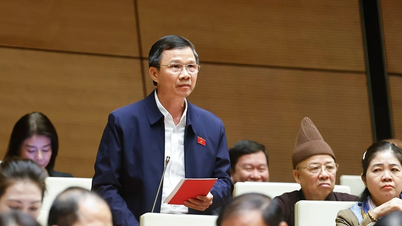
Sharing about the application of STEM teaching (integrated education ) in recent times, teacher, National Assembly Delegate Ha Anh Phuong (Phu Tho delegation), said that many mountainous localities still face difficulties in terms of facilities, teachers and especially machinery.
During the implementation process, teachers and students here always have to find creative ways and adapt to suit the reality. Therefore, many lessons become truly meaningful and unforgettable memories.

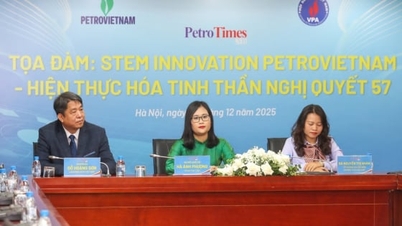
National Assembly delegate Ha Anh Phuong, Phu Tho delegation (Photo: M. Ha).
Among the many memories of teaching STEM, Ms. Phuong remembers the straw research project of ethnic minority students in Phu Tho the most. The students had almost no means or experimental equipment to perform basic steps such as separating hydrogen and oxygen during the interdisciplinary physics-chemistry learning process.
So, the students and teachers came up with a very creative way: Go to bakeries to ask for help borrowing tools and suitable heat sources for the experiment.
When they needed to make a straw cutter, but could not afford to buy the equipment, they collected scrap components, assembled them themselves, and finally created a working cutter.
“I always remember the image of children who had no money, no machines, but “necessity is the mother of invention”, persevering step by step to complete the project.
That experience not only made the students grow up a lot, but the success of this project also opened up opportunities for them to connect with countries around the world , to learn and share with international STEM experts," Delegate Ha Anh Phuong recalled.
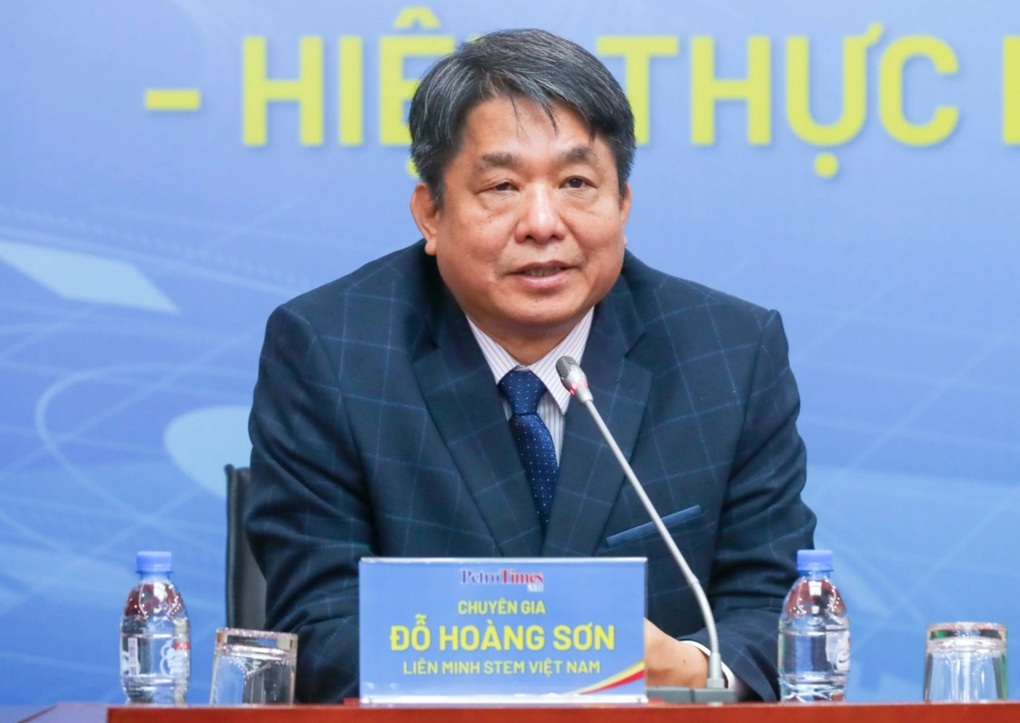
Engineer Do Hoang Son, member of Vietnam STEM Alliance (Photo: M. Ha).
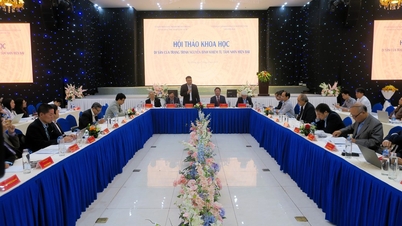
Not only Ms. Nhan, many experts attending the Seminar on STEM in Education also said that bringing STEM education into schools in mountainous areas has achieved many meaningful results.
“In practice, many localities such as Cao Bang and Lang Son have achieved impressive results when students won high prizes at regional and international robotics and drone programming competitions.
This shows that, with organizational and connecting capacity, STEM education can be deployed on a national scale, creating a strong ripple effect," said engineer Hoang Son, a member of the Vietnam STEM Alliance.
According to Mr. Son, after Resolution 71 on innovation in education, STEM education has been promoted. Therefore, in addition to improving facilities, STEM teacher training will be systematically implemented by the Ministry of Education and Training in the coming time.

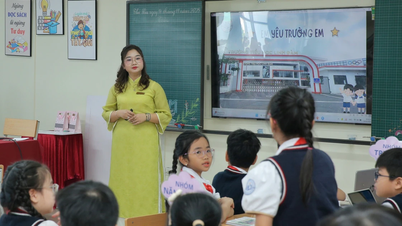
Ms. Nguyen Thi Nhan, Head of Professional Group, Cau Giay Secondary School - Hanoi (Photo: M. Ha).
Sharing more about the above content, Ms. Nguyen Thi Nhan, Head of Professional Group, Cau Giay Secondary School, Hanoi, said that last May, the school was honored to receive a modern STEM classroom from General Secretary To Lam.
To prevent this classroom from being “shelved”, the school has planned to operate, train core students (about 40 students initially) and train teachers. From the fragmented teaching in the past, STEM education now has a systematic and methodical roadmap.
In addition, the school also implemented a week without textbooks. Accordingly, students learned from experience and practical application. Teachers integrated STEM into their lessons.
“We let students learn with virtual robots before teaching with real robots. Students design many machines and objects themselves, such as designing a Formula One racing car from recycled materials or designing logos to make gifts,” Ms. Nhan further affirmed the meaning of learning STEM.
Source: https://dantri.com.vn/giao-duc/thieu-thiet-bi-hoc-stem-hoc-sinh-den-lo-banh-mi-cau-cuu-20251207161558489.htm



























































Comment (0)