

Farmers, businesses, and cooperatives must cooperate closely and reorganize production to ensure transparency throughout the value chain. In particular, cooperatives and businesses need to focus on financial transparency, environmental improvement, and governance. These factors are "plus points" in loan applications...

Mr. Le Duc Thinh, Director of the Department of Cooperative Economics and Rural Development ( Ministry of Agriculture and Rural Development of Vietnam), stated this in an interview with a reporter from Nong Thon Ngay Nay/Dan Viet newspaper.
Could you please tell us about the current demand for green credit in the agricultural and rural sectors?
- It must be affirmed that the demand for green credit capital from farmers, cooperatives, and businesses is very large. The project to cultivate 1 million hectares of high-quality, low-emission rice linked to green growth from now until 2030 alone is expected to require approximately 2.7 billion USD. In addition, the pilot project to build standardized agricultural and forestry raw material areas for domestic consumption and export in the 2022-2025 period requires a total budget of approximately 2,500 billion VND.
In addition, the Ministry of Agriculture and Rural Development is also implementing Decision 3444/QD-BNN-KH on the plan to implement the national strategy on green growth for the period 2021-2030 and the Project to enhance the capacity of agricultural cooperatives in the Mekong Delta to adapt to climate change for the period 2021-2025, along with many other related projects and programs...
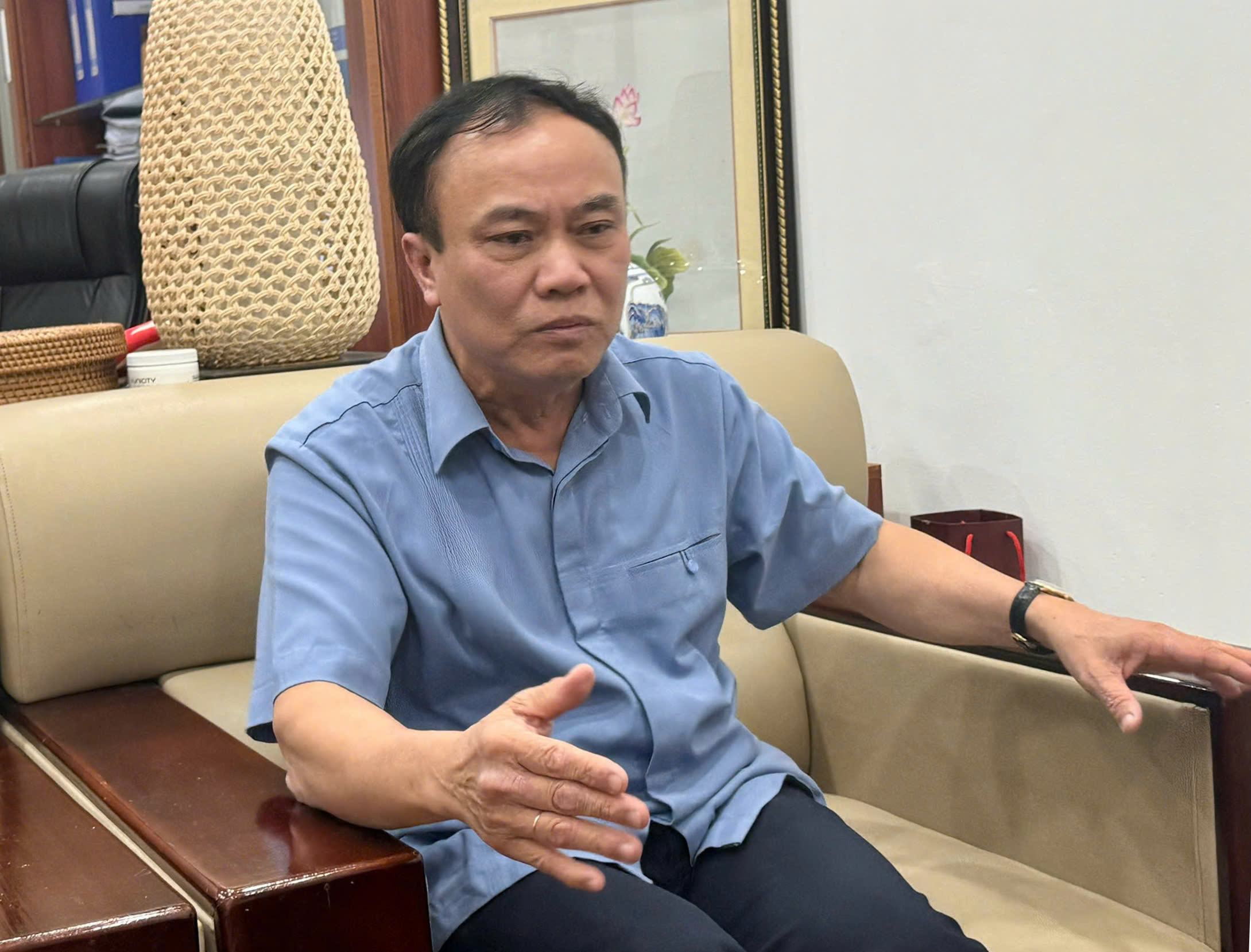
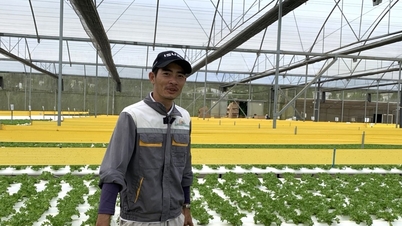
Mr. Le Duc Thinh, Director of the Department of Cooperative Economics and Rural Development (Ministry of Agriculture and Rural Development), affirmed that the demand for green credit capital from farmers, cooperatives, and businesses is very large. Photo: K. Nguyen
In fact, agriculture is not only the main economic sector of Vietnam but also the source of livelihood for the majority of the population; therefore, the overall capital needs for production are very large. However, agriculture is the second largest source of greenhouse gas emissions in Vietnam, after industry (according to research by the United Nations Food and Agriculture Organization and the World Bank).
Therefore, the aforementioned projects all aim to transform production towards green and sustainable development, with the main goals of reducing production costs, reducing environmental pollution, protecting natural resources, and increasing farmers' income.
In an export-oriented economy like Vietnam, the green transformation of businesses, cooperatives, and farmers is considered essential and vital. In this context, green credit is a crucial financial tool, helping stakeholders in the production chain access preferential capital to invest in sustainable agriculture, organic farming, circular agriculture, and other agricultural projects.
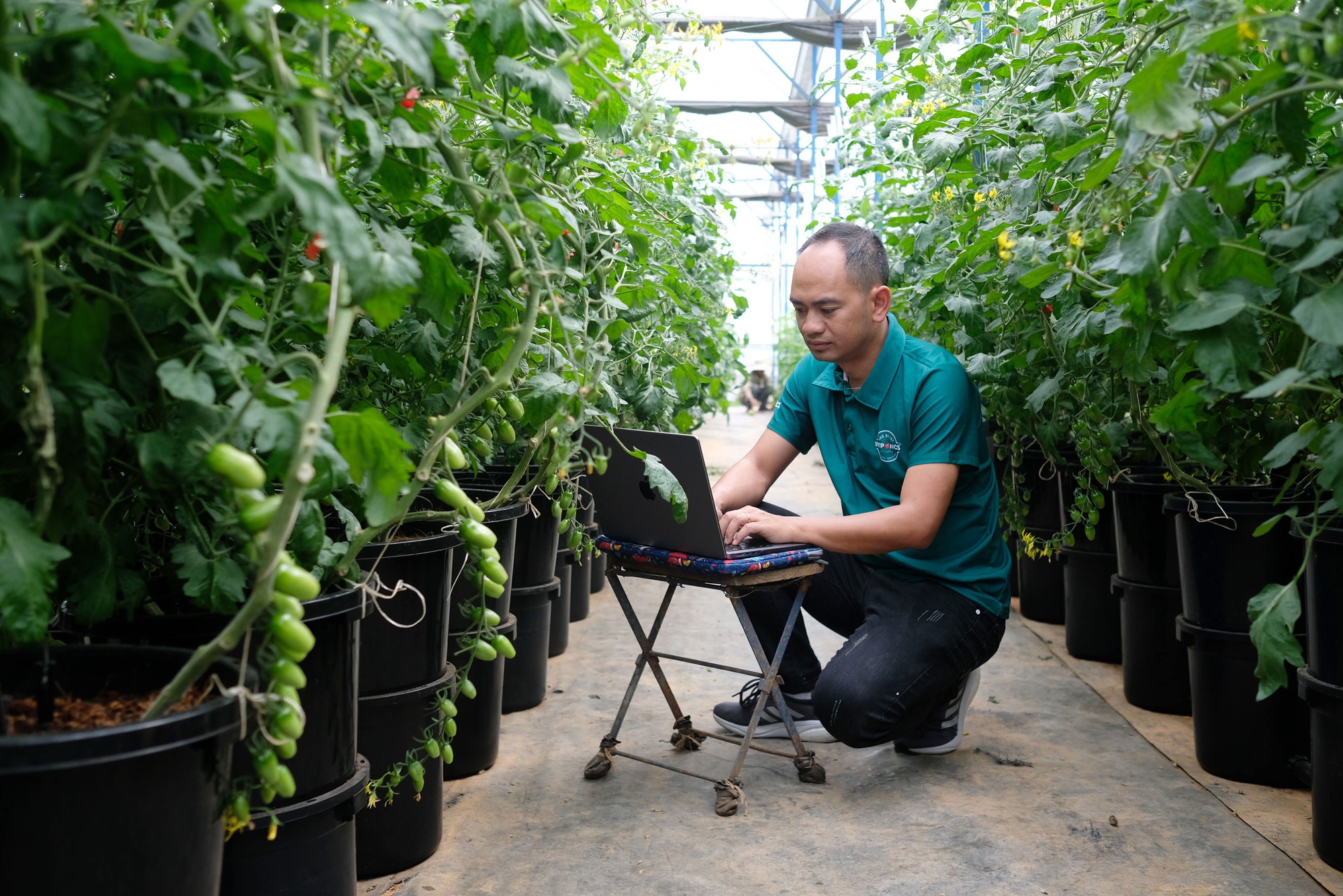
Mr. Nguyen Duc Huy (Da Lat City, Lam Dong Province) stands beside his tomato garden, which utilizes his self-developed cultivation technology, controlled via smartphone and computer. Photo: Van Long.
However, not every individual, business, or project can easily access green funding.
- That's right, accessing this green credit is still very difficult and fraught with obstacles. Every bank, like Vietinbank or Agribank, lends quite a lot to farmers and cooperatives, but there are two groups of problems that have yet to be overcome: supply chain linkages and green credit to support the transformation of production systems towards a green and sustainable direction.
First, regarding loan conditions. Typically, when borrowing for production linkages, the actors in the chain (cooperatives, businesses, groups of households, farms) must meet two conditions: having collateral; and having a clear loan project. However, both of these conditions are difficult for the chains due to limited capacity, expertise, and resources.
Secondly, regarding lending conditions, basically all credit systems lend with collateral. Decree 55 on credit stipulates lending based on cash flow and unsecured lending (for example, cooperatives can borrow 1 billion VND; farmers and farms can borrow 500 million VND without collateral), but regulations are one thing, and implementation is another.
As of the end of September 2024, credit to the rice industry in the Mekong Delta reached approximately VND 124,000 billion, an increase of 18% compared to the end of 2023, accounting for about 53% of the total outstanding rice credit nationwide.
Although it's called an unsecured loan, the bank still requires assets to be deposited with the bank for management, even if those assets aren't collateral. But if the farmer has already deposited those assets elsewhere, how can they use them for an unsecured loan?
Furthermore, some projects in the value chain involve people borrowing money not for production investment but for revolving capital, purchasing raw materials, and providing advances to farmers to establish linkage contracts. In some countries, for loans in this category, they do not rely on creditworthiness but rather on agricultural product purchase and sale contracts and the frequency of agricultural product transactions.
However, in Vietnam, credit institutions do not lend in this direction because the agricultural value chains in our country are not transparent enough and lack sufficient data for them to trust that these are genuine transactions.
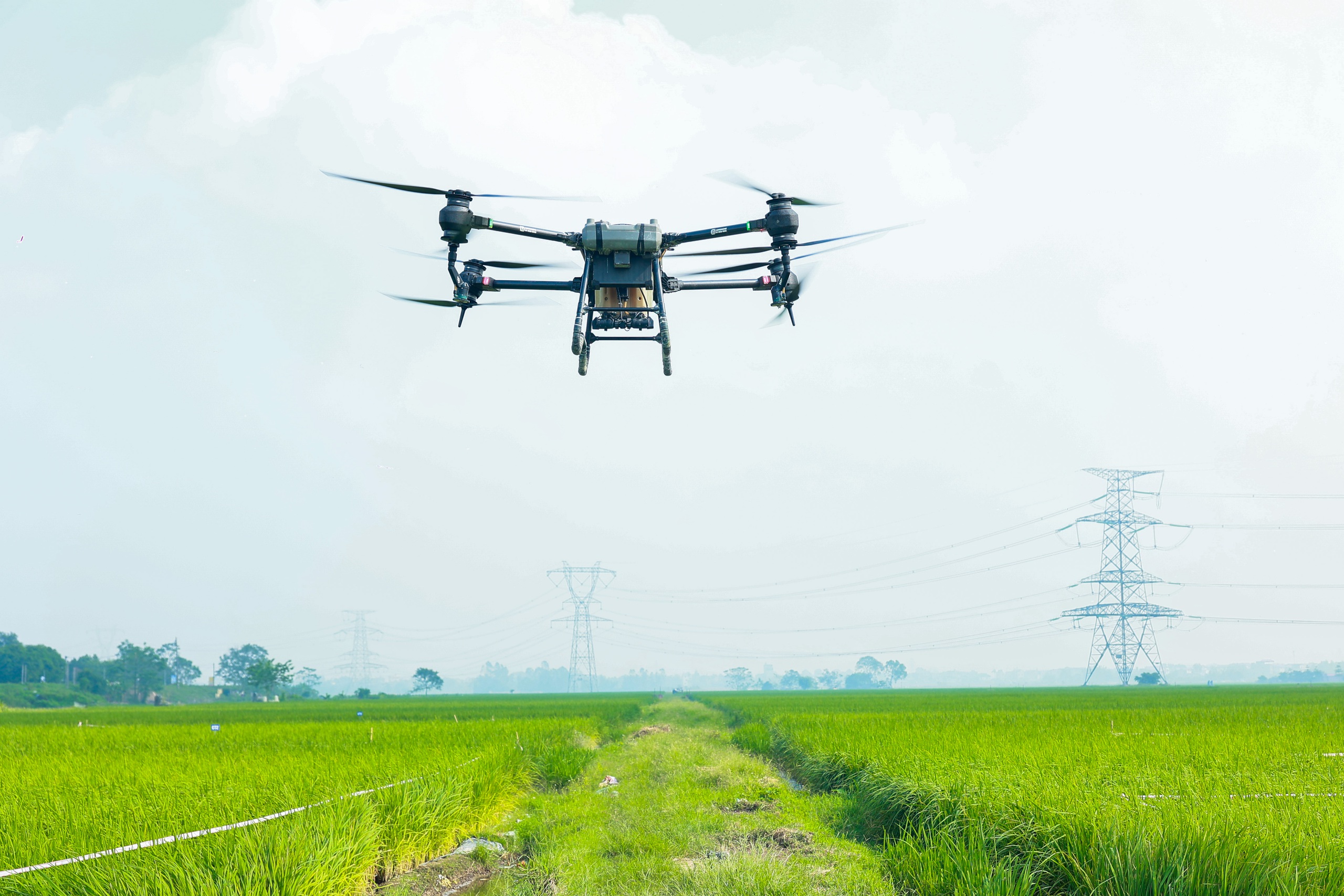
The project to cultivate 1 million hectares of high-quality, low-emission rice linked to green growth in the Mekong Delta provinces alone, from now until 2030, is expected to require approximately US$2.7 billion in funding. (Photo: Provided)
It's clear that what you just said isn't a new issue, but why haven't these problems been resolved yet, sir?
- This is not the fault of credit institutions for creating difficulties, nor is it due to farmers or businesses being too weak in capacity, but rather because we currently lack a clear legal framework and regulations, and technical standards for green production processes... In short, there is nothing to guarantee against risks for lending institutions, leading to difficulties for banks in making investment decisions. Lenders and borrowers cannot connect with each other.
I'm not defending banks or credit institutions, but state and local authorities should promptly announce regulations and technical standards defining what constitutes green production and green products, and should quickly issue certifications for such green production chains.
This issue could have been resolved if the specialized parties—credit institutions—and the implementing parties—farmers, businesses, and cooperatives—had worked closely together to address the obstacles. Accordingly, the banks should have proposed that the management agency request the Department of Science and Technology and the Department of Finance to publish technical standards for advancements in green production, which essentially involve reducing production costs, increasing efficiency, and minimizing environmental impact. For example, what are the costs, requirements, and estimated benefits for 1 hectare of green production?
On the part of farmers, cooperatives, and businesses, they must reorganize production to ensure transparency throughout the entire value chain. If they continue to operate in the current buy-and-sell manner, sustainable production will never be achieved, let alone securing unsecured green credit.
Looking at the long term, banks also need to provide guidance and training on green credit for businesses and cooperatives, and conduct training sessions to help people understand the conditions for borrowing under the green production chain. However, currently, credit institutions have not really paid attention to this issue.
To facilitate a more favorable supply-demand relationship for green credit, especially to make green financing more accessible to farmers, what suggestions or recommendations do you have?
- First and foremost, the Farmers' Association needs to work with the Ministry of Agriculture and Rural Development to participate in farmers' organizations, build cooperatives and collaborative groups to "get the problem across," that is the most important requirement.
Secondly, it is necessary to participate in propaganda and training to ensure that farmers understand and practice green production techniques effectively.
Thirdly, strengthen the capacity of farmers, including capacity in implementing technical procedures; capacity to participate in supply chains; and capacity to participate in monitoring and providing feedback.
We, as well as the Ministry of Agriculture and Rural Development, hope that the Vietnam Farmers' Association will strengthen its participation and coordination in implementing these tasks, with the ultimate goal of fundamentally changing production processes, reducing costs, and improving the quality of agricultural products, thereby increasing farmers' income.
Thank you, sir!
Participation in the supply chain is a mandatory requirement.
On November 7th, the State Bank of Vietnam, in coordination with the Ministry of Agriculture and Rural Development and the People's Committee of Dong Thap province, organized a conference to launch the preferential credit program for the project of cultivating 1 million hectares of high-quality, low-emission rice in the Mekong Delta. Accordingly, the State Bank of Vietnam approved a minimum 1% reduction in preferential loan interest rates compared to the rates currently offered to participants in the project.
In addition, loan limits will be expanded based on the nature of the linkage and the scale of production. The loan term will be tailored to the turnover and progress of production and business cycles, including rice cultivation, procurement, processing, and temporary storage.
Specifically, a mandatory condition for entities (including businesses, cooperatives, and farmers) to benefit from preferential policies under the preferential credit program is that they must participate in the supply chain.
Banks may no longer require collateral as they did before. This is a very favorable and advantageous condition for the 1 million hectare high-quality rice project, and it encourages the participation of stakeholders in building a sustainable supply chain.
At the conference, the State Bank of Vietnam also requested the Ministry of Agriculture and Rural Development and the People's Committees of the provinces to accelerate the implementation of technical aspects related to the agricultural sector in order to organize the program's deployment. In particular, they requested the identification and announcement of specialized farming areas; participating entities in the linkage; economic and technical norms and actual costs for rice production in the rice linkage program under the 1 million hectare high-quality rice project, so that Agribank and other credit institutions can access and consider lending.

Source: https://danviet.vn/de-cung-cau-von-tin-dung-xanh-gap-nhau-nong-dan-doanh-nghiep-htx-can-minh-bach-chuoi-san-xuat-20241113165259694.htm









![Looking back at the peak month of combating IUU: [Part 3] Synchronizing fisheries infrastructure](https://vphoto.vietnam.vn/thumb/402x226/vietnam/resource/IMAGE/2025/12/13/1765608279533_2109-b32-133759_237.jpeg)
































































Comment (0)