

The meeting between General Secretary and President To Lam and businesspeople from the Vietnam Association of Small and Medium Enterprises on the afternoon of August 22nd clearly conveyed many positive messages.
As the head of the Party and State, he chose to meet with small and medium-sized enterprises (SMEs) instead of state-owned enterprises, FDI companies, or large private corporations. Moreover, there has never been such a meeting between a General Secretary and representatives of the private business sector. This economic sector has become the largest pillar of the economy, as evidenced by the figures: accounting for 50% of GDP, 35% of total budget revenue, and providing employment for 50% of the total workforce in our country, surpassing the corresponding percentages of both state-owned and FDI enterprises. 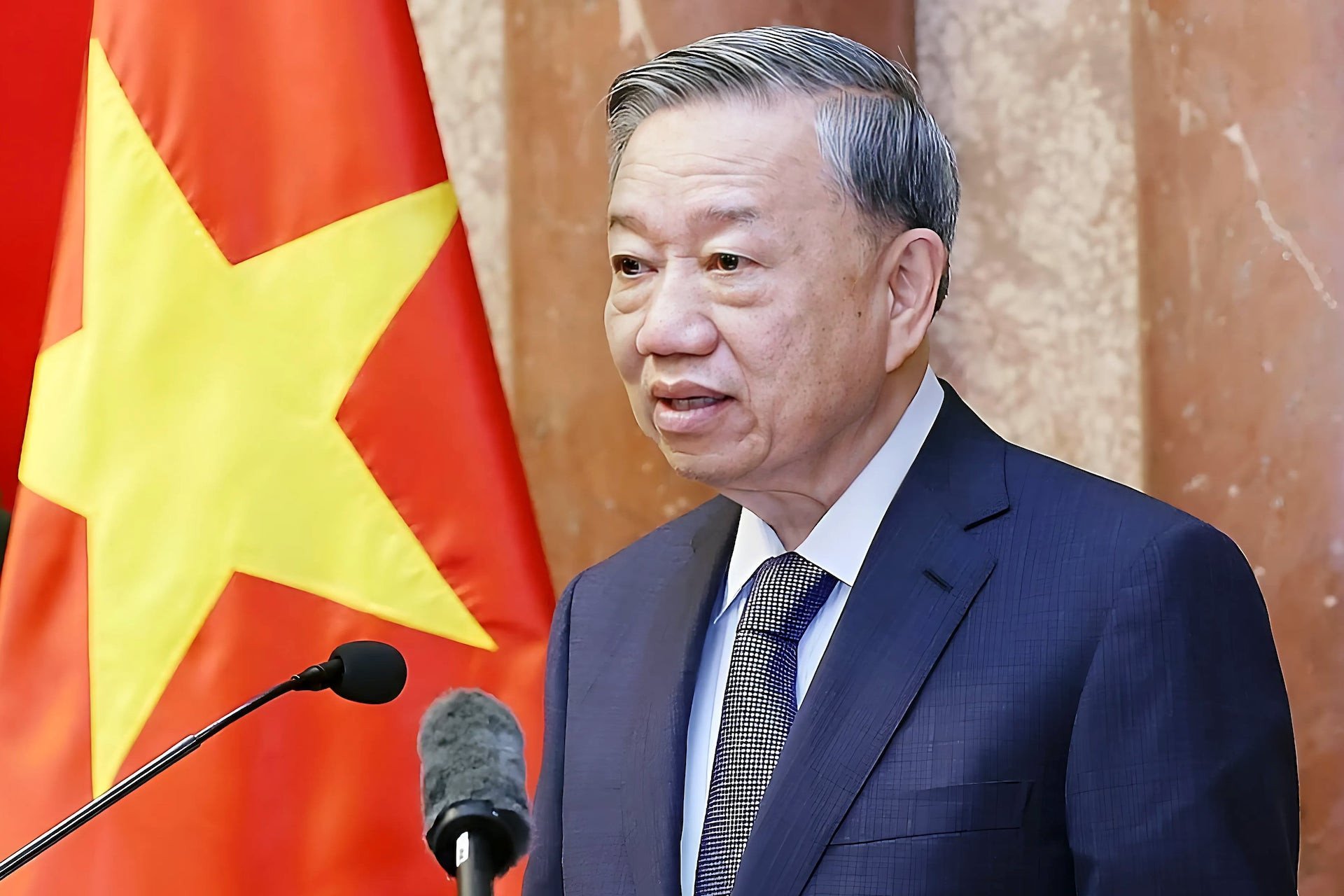
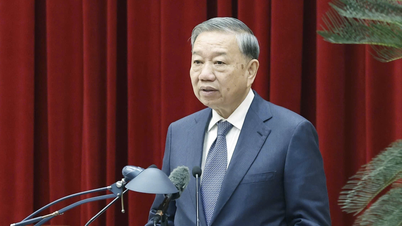
General Secretary and President To Lam speaks at a meeting with entrepreneurs from the Association of Small and Medium Enterprises on August 22. Photo: VNA
At the meeting, he reiterated the spirit of the Resolutions that businesses are the driving force of economic development and emphasized that the Party and State always pay special attention and create the best conditions for the Vietnamese business community to operate and develop . He shared that many businesses are still struggling with difficulties in a fiercely competitive environment and urged the Vietnamese business community to continue to strive strongly. The meeting itself and the encouragement from the head of the Party and State are hoped to bring a breath of fresh air to the business sector, which is currently going through its most turbulent period due to many events, both domestic and international, as mentioned in the two previous articles ( The "Central Point" in the first article by General Secretary To Lam and Understanding the New Era of the Nation ) . In an effort to embrace that spirit, we posed a question to many economic experts and policymakers: What is the key to creating a breakthrough and unleashing society's resources to escape the current situation? The common answer is that now, we need to rekindle the desire for free enterprise in the private sector and the desire to work in the public sector that society once had, creating momentum for rapid development. Economic expert Nguyen Dinh Cung observed: " There was a time when society had a burning spirit for business, but now it's different. The state system is stagnant because it has to focus on reviews, inspections, and audits; no one dares to do anything ." He affirmed that the role of the state remains particularly important in socio-economic development, therefore, it is necessary to quickly resolve the stagnation in the state sector. Mr. Cung further asserted that the private sector is also very stagnant, and business confidence is very low. This is clearly reflected in the VCCI report, which shows that business optimism is at its lowest level compared to previous years. Specifically, only 27% of businesses plan to expand production and business in 2024 and 2025, a significant decrease from 35% in 2022. This 27% figure is also lower than the previous low point in 2012-2013 when the Vietnamese economy faced the dual impact of the global financial crisis and domestic macroeconomic instability. Mr. Cung said: “Leaders are eloquent speakers, constantly giving speeches to encourage the entrepreneurial spirit, thereby creating change. In addition, reducing inspections and audits and issuing some directives such as lifting the ban on tax-owing businesspeople leaving the country, and resolving some insignificant cases related to businesspeople .” “ Such small actions have a very large impact on social psychology ,” he added. The ban on tax-owing businesspeople leaving the country is stipulated in Clause 1, Article 21 of Decree 126/2020/ND-CP, which details certain provisions of the Law on Tax Administration. Many localities have published long lists of tax-owing businesspeople who have left the country, and this list may grow longer in the future as the tax debt situation worsens and businesses face greater difficulties. The Ministry of Finance stated that the amount of outstanding tax debt was nearly 164 trillion VND by the end of 2023. Economist Tran Dinh Thien commented: “The penalty of prohibiting businesspeople from leaving the country due to tax debt is excessively harsh and causes more harm and disruption to the economy than it brings. If businesspeople are publicly identified and banned from leaving the country, what partners will dare to do business with them anymore? Without the right to leave, how can they find new partners and orders to restore production, expand markets, and generate revenue to pay off tax debts? They are essentially deprived of the opportunity to recover production and business .” “I believe this regulation does more harm than good, especially when the economy is in an extremely difficult period,” Mr. Thien added. “ The criminalization of civil relations is also worth discussing. Imprisoning a businessman can lead to the bankruptcy of their business, impacting the entire ecosystem and causing job losses. Therefore, policies need to be designed with heavy penalties to deter and prevent such actions. For example, when drafting the Securities Law, experts suggested that the crime of stock manipulation should be punished 1000 times the amount of profit gained. However, this suggestion was not accepted, and the law stipulates a fine of only 500 million VND. If stock manipulation results in a profit of 100 billion VND, a 500 million VND fine is insignificant. Economic violations need to be dealt with through economic measures to recover illegally misappropriated funds. The penalties need to be much heavier than the amount of money or property misappropriated to prevent future recurrence and serve as a warning. Severe economic penalties will deter those intending to commit fraud, even through legal means.” "With the same funds, they will no longer dare to commit fraud ." Of course, to "not criminalize civil economic relations," many other factors are needed, such as reforms to improve the efficiency, effectiveness, and trust in resolving contract disputes and business bankruptcy procedures; establishing inter-district and regional economic courts independent of administrative levels; establishing appropriate institutions, especially in the Criminal Code; and simultaneously improving the capacity, effectiveness, and efficiency of the enforcement apparatus and its operations.Vietnamnet.vn
Source: https://vietnamnet.vn/diem-chot-can-thao-go-tren-manh-dat-thuc-tien-viet-nam-2315687.html![[Photo] Prime Minister Pham Minh Chinh holds a phone call with the CEO of Russia's Rosatom Corporation.](/_next/image?url=https%3A%2F%2Fvphoto.vietnam.vn%2Fthumb%2F1200x675%2Fvietnam%2Fresource%2FIMAGE%2F2025%2F12%2F11%2F1765464552365_dsc-5295-jpg.webp&w=3840&q=75)


![[Photo] Closing Ceremony of the 10th Session of the 15th National Assembly](/_next/image?url=https%3A%2F%2Fvphoto.vietnam.vn%2Fthumb%2F1200x675%2Fvietnam%2Fresource%2FIMAGE%2F2025%2F12%2F11%2F1765448959967_image-1437-jpg.webp&w=3840&q=75)


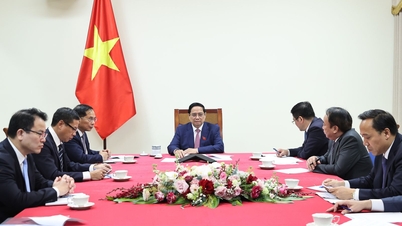
![[Photo] Prime Minister Pham Minh Chinh holds a phone call with the CEO of Russia's Rosatom Corporation.](https://vphoto.vietnam.vn/thumb/402x226/vietnam/resource/IMAGE/2025/12/11/1765464552365_dsc-5295-jpg.webp)








































![[OFFICIAL] MISA GROUP ANNOUNCES ITS PIONEERING BRAND POSITIONING IN BUILDING AGENTIC AI FOR BUSINESSES, HOUSEHOLDS, AND THE GOVERNMENT](https://vphoto.vietnam.vn/thumb/402x226/vietnam/resource/IMAGE/2025/12/11/1765444754256_agentic-ai_postfb-scaled.png)










































Comment (0)