

Overcoming difficulties in starting a business and achieving dreams
The story of Nguyen Van Chuong starting a business with 20 civets is becoming a bright spot in rural economic development in Dai Dong commune (Nghe An).
In 2023, realizing the huge market demand for civets, Mr. Nguyen Van Chuong (49 years old, residing in Dai Dong commune, Nghe An ) decided to invest in a system of cages and buy 20 breeding animals as initial capital. Knowing that they are wild animals, raising them requires the consent of the authorities, Mr. Chuong proactively registered to raise them with Thanh Chuong Forest Protection Department to ensure that the model fully complies with legal regulations.
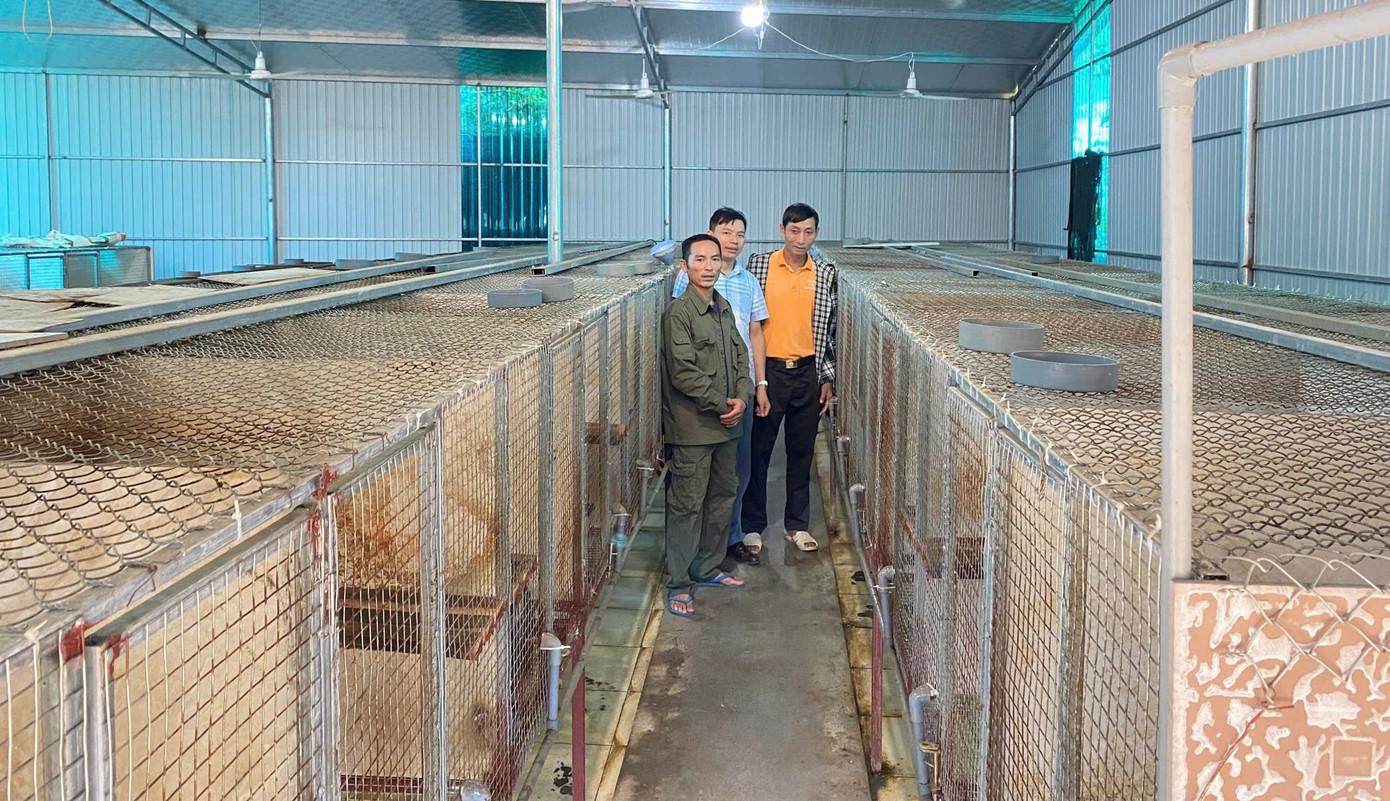
Mr. Chuong’s first days of approaching wild animals were not easy. Civets are sensitive and easily stressed, and the care and breeding techniques required meticulousness, making Mr. Chuong’s start-up process bumpy. “If you don’t understand their habits, just a loud noise can make the civet panic and stop eating,” Mr. Chuong recalls.
Despite the difficulties, Mr. Chuong did not give up and diligently read more technical documents and attended training courses organized by the Nghe An Agricultural Extension Center. Mr. Chuong also carefully visited successful mink farmers to learn and accumulate experience in raising mink.
Thanks to his perseverance and hard work, Mr. Chuong gradually learned the habits and how to take care of mink. Up to now, from the initial 20 mink breeders, Mr. Chuong's mink herd has increased to 110 mink, mainly breeding mink.
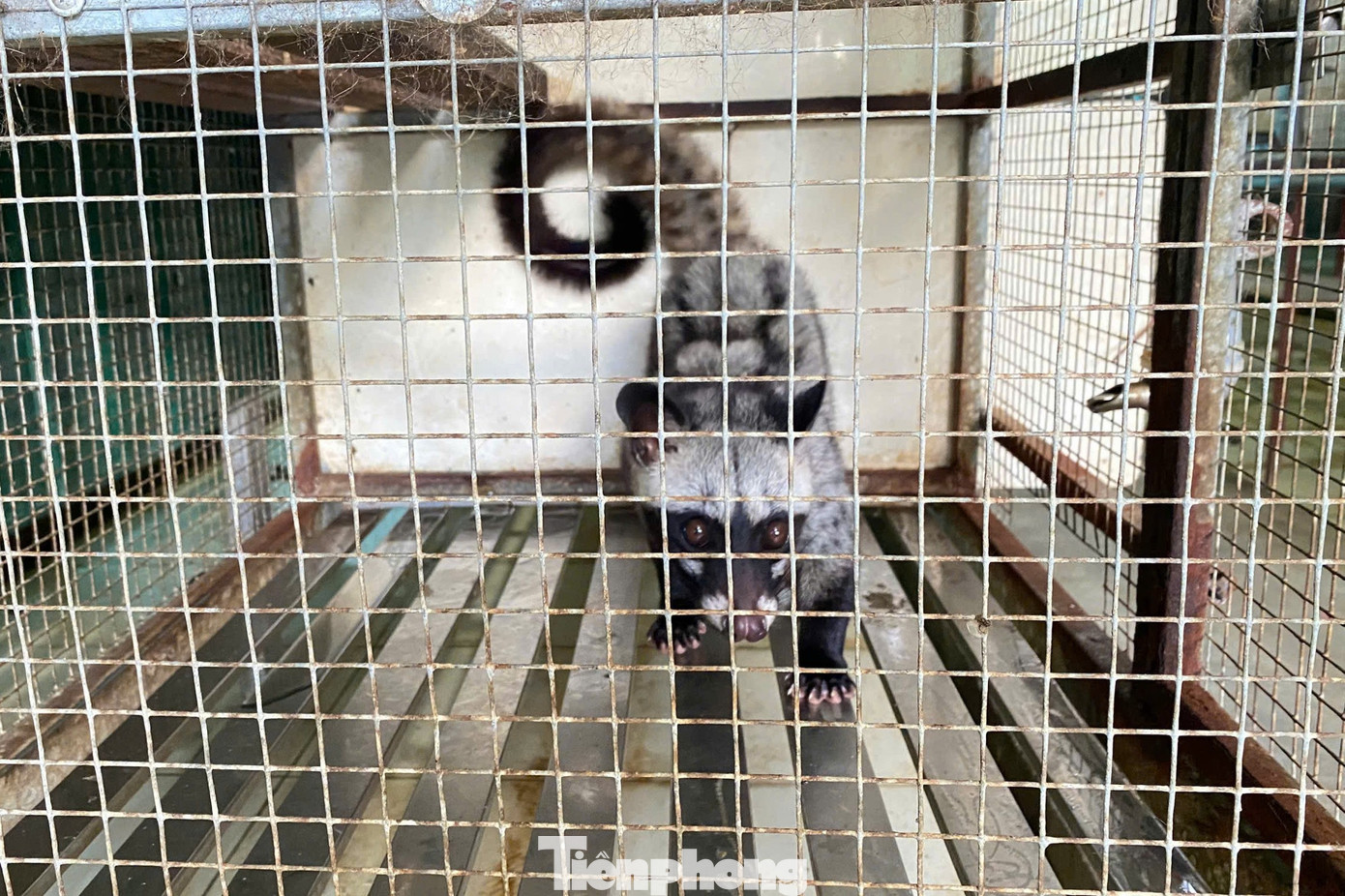
Sharing about the most effective breeding techniques, Mr. Chuong said that attention should be paid right from the cage building stage. The cage is designed to be closed, ensuring the following criteria: adequate light, stable temperature, quiet space. The cage is divided into separate cells, each cell is more than 1m2 wide, suitable for raising 1-2 adults. Each cell also needs to be designed with its own food tray, water pipe and scientifically arranged in two rows for easy cleaning and care.
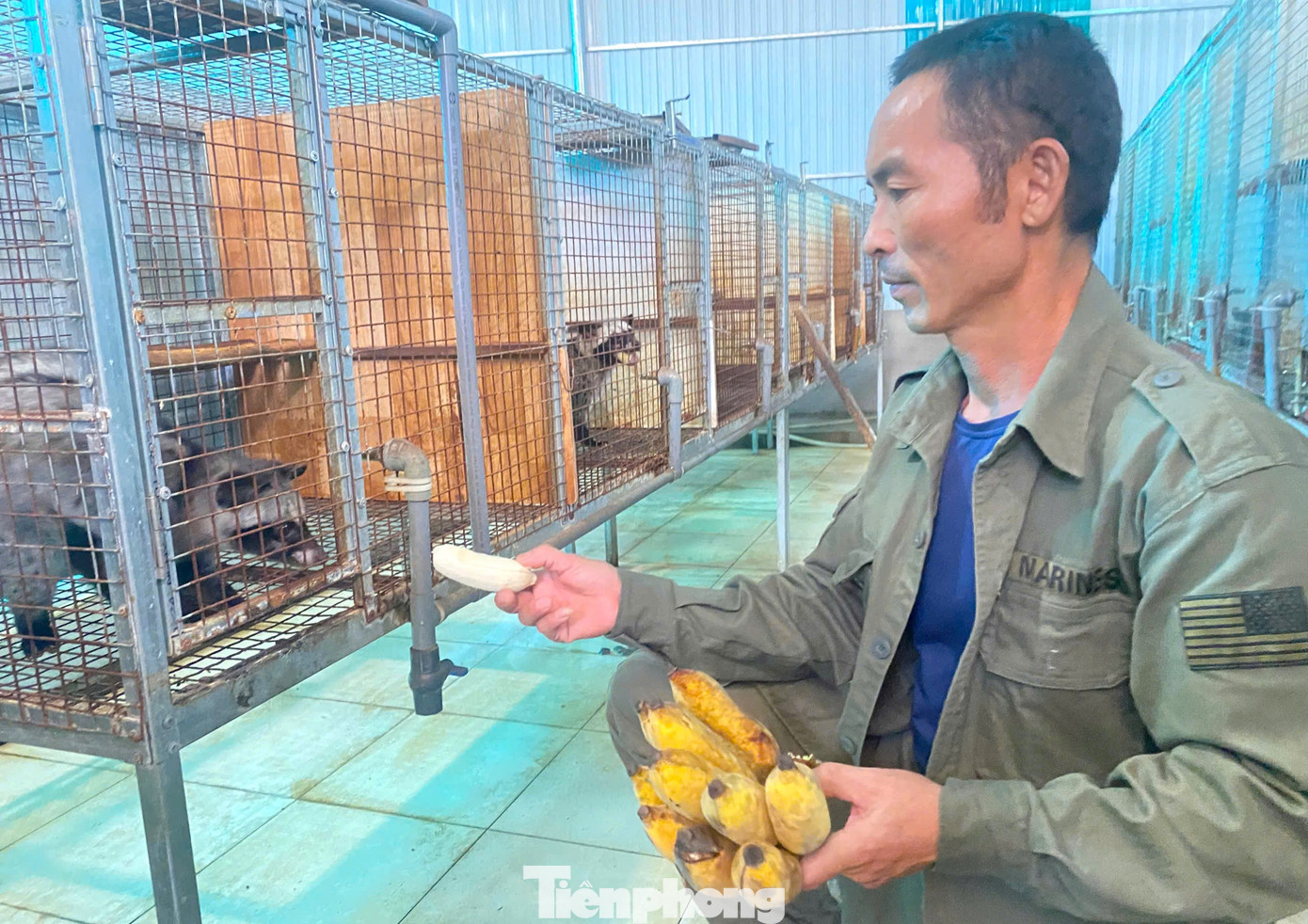
According to Mr. Chuong, the food source for minks is quite simple, making the most of local agricultural products such as ripe bananas, corn, sweet potatoes, chicken eggs, small fish... Each mink eats an average of 250 - 300g per day. In addition, to increase resistance, the minks are also supplemented with vitamins and minerals periodically. Thanks to strict adherence to hygiene procedures, the barn is always dry, clean, and is periodically disinfected, his mink herd has almost no outbreaks of disease.
Being a species of high economic value, female mink give birth to 1-2 litters each year, each litter has 3-5 babies. After about 4 months of raising, the baby mink reaches 0.8-1.2 kg, and can be sold for 10-13 million VND/pair.
Thanks to low investment costs and mainly locally sourced food, Mr. Chuong's model brings in profits that are far superior to many traditional livestock. Excluding costs for seeds, food and care, he earns about 400 million VND per year - a dream income for many mountainous farming households.
Expectations of sustainable development to help people escape poverty
According to Mr. Chuong, civets are very sensitive to noise, so the cage must be very quiet. When civets are in heat, pairing must be done at the right time. After mating, they must be separated immediately to avoid civets biting each other. “Female civets are pregnant for about 58-62 days. The environment after giving birth must be absolutely quiet. If the breeder does not understand this personality of civets, it will be very difficult to raise them successfully,” said Mr. Chuong.

Evaluating the model, Mr. Tuong Dang Hao - Vice Chairman of Dai Dong Commune People's Committee commented: "Mr. Chuong's civet breeding model is an effective direction, suitable for local conditions. Not only does it help his family increase their income, the model also opens up great prospects for many other households to refer to, learn from, and gradually develop their economy to escape poverty."
Dai Dong Commune is currently aiming to replicate effective economic models, apply new techniques and develop specialty livestock. The local government is committed to accompanying and supporting people in accessing preferential capital, technical training and support policies for sustainable development.
Source: https://tienphong.vn/diem-sang-ve-phat-trien-kinh-te-nong-thon-o-nghe-an-post1798873.tpo


![[Photo] 60th Anniversary of the Founding of the Vietnam Association of Photographic Artists](/_next/image?url=https%3A%2F%2Fvphoto.vietnam.vn%2Fthumb%2F1200x675%2Fvietnam%2Fresource%2FIMAGE%2F2025%2F12%2F05%2F1764935864512_a1-bnd-0841-9740-jpg.webp&w=3840&q=75)

![[Photo] Cat Ba - Green island paradise](/_next/image?url=https%3A%2F%2Fvphoto.vietnam.vn%2Fthumb%2F1200x675%2Fvietnam%2Fresource%2FIMAGE%2F2025%2F12%2F04%2F1764821844074_ndo_br_1-dcbthienduongxanh638-jpg.webp&w=3840&q=75)




































































Comment (0)