

Businesses are proactively digitizing and greening.
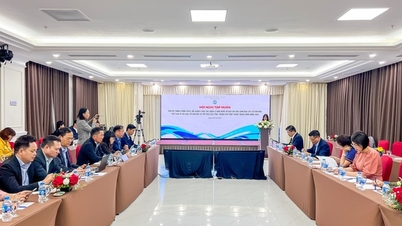
Mr. Truong Van Cam, Vice President and General Secretary of the Vietnam Textile and Garment Association, stated that the textile and garment industry employs a large workforce and exports 45-46 billion USD to 130 markets, primarily the US, EU, Japan, China, South Korea, and ASEAN. Over 90% of these major markets are demanding and have very strict requirements. Therefore, dual transformation is an inevitable path, not just a trend.
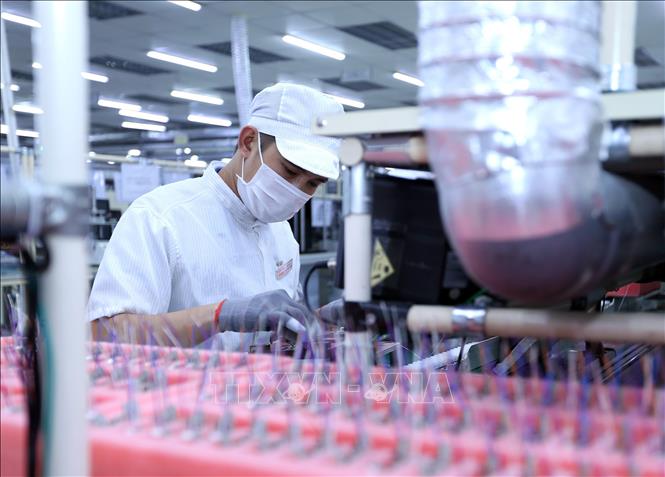
Mr. Cam gave an example: in the US market, goods in transit are subject to a retaliatory tax of over 40%, requiring businesses exporting to this market to undergo digital transformation and ensure traceability.
According to Mr. Cam, to support businesses in their dual transformation, it is first necessary to finalize standards for green transformation with specific criteria. Secondly, it is essential to change the mindset of businesses, especially small and medium-sized enterprises. Thirdly, businesses have limited resources for digital and green transformation, therefore, training digital human resources for this ecosystem is necessary.
“We propose that areas such as textile dyeing technology engineering, which schools are currently unable to train, require government support. Fourth, the government needs to provide support regarding procedures, especially investment licensing procedures, environmental impact assessments, and fire safety… In addition, issues affecting business resources such as VAT refunds need to be processed quickly,” Mr. Truong Van Cam suggested.
Mr. Mac Quoc Anh, Vice Chairman of the Hanoi Small and Medium-sized Enterprise Association, believes that businesses always recognize that dual transformation is essential in their professional work and actions. Hanoi currently has more than 400,000 businesses, mainly small and medium-sized enterprises.
According to the Association's survey, approximately 36% of member businesses are using AI technology to improve their services. In addition, technological infrastructure has a positive impact on the demand for digital transformation. Regarding the demand for green transformation, with the support and cooperation of leaders from ministries and sectors, businesses have now basically upgraded to meet the requirements and guidelines of management agencies in order to better serve both the export and domestic markets.
According to Mr. Mac Quoc Anh, small and medium-sized enterprises (SMEs) expect to improve productivity, access new customers and markets through digitalization; and at the same time, "green" to ensure sustainable competitiveness, participate in international supply chains and meet the demands of domestic consumers, who are increasingly discerning about Vietnamese products.

Assessing the opportunities arising from the dual transformation, Mr. Mac Quoc Anh shared that 64% of businesses gained new customers and 62% innovated their products, contributing to increased supply. As Vietnam's digital market changes rapidly, businesses are taking advantage of the opportunities to grow and participate more deeply in the supply chain.
Green transformation helps businesses participate in international supply chains, access green financing, and increase product value as consumers prioritize environmentally friendly products. Simultaneously, reducing emissions and saving energy benefits businesses in the long term by reducing costs, enhancing brand reputation, and expanding market share both domestically and internationally.
However, dual transformation in small and medium-sized enterprises (SMEs) still faces challenges: in strategic awareness, corporate culture, especially from the top leadership. Without a culture of innovation, data-driven thinking, and effective measurement systems, businesses will find it difficult to assess the impact of investments in dual transformation.
The next challenge lies in financial resources, human resources, technology, and management. Small and medium-sized enterprises (SMEs) largely lack skilled digital personnel and technological capabilities; employees are not trained in digital transformation; and outdated regulations are still in place. Meanwhile, the market and international standards are becoming increasingly stringent regarding the environment, carbon, traceability, etc. Within the domestic market, awareness of green products remains uneven.
Therefore, Mr. Mac Quoc Anh suggested that the government and VCCI should develop a model digital-green roadmap for small and medium-sized enterprises, and that large enterprises that have successfully transformed should share their processes and experiences. A system for evaluating and certifying digital-green businesses is needed so that consumers can easily distinguish certified products.
Furthermore, VCCI serves as a focal point connecting small and medium-sized enterprises (SMEs) to participate in the dual transformation network, enhancing their access to information. The government needs to set strategic goals for 3-5 years, assigning specific tasks to provinces, cities, and departments to support businesses in implementing small-scale transformation steps, while simultaneously strengthening short-term training, consulting, and technology transfer from institutes and universities. It is necessary to implement low-cost digitalization solutions, provide fintech technology, and enhance communication to raise consumer awareness, thereby creating momentum for SMEs to undergo digital and green transformation.
Meanwhile, Lieutenant Colonel Nguyen Dinh Tuan, Deputy General Director of MobiFone Telecommunications Corporation, stated: MobiFone is currently deploying a fast 5G network with four times the number of base stations compared to the 4G network, which means higher energy consumption. Therefore, the company is promoting green transformation and seeking solutions to save electricity. With digital transformation, MobiFone aims to become a successful digital transformation enterprise by the end of 2025.
According to Mr. Nguyen Dinh Tuan, the government has set a double-digit growth target for the coming period, creating significant KPI pressure for 34 provinces and cities. Therefore, dual transformation is the solution to help localities and businesses achieve high growth targets. Many businesses have implemented digital transformation associated with green transformation, using renewable energy and saving energy, in which AI has become a powerful tool.
"Currently, AI transformation is gradually replacing digital transformation. When businesses apply AI synchronously, labor productivity will increase, while also creating valuable national data and resources," Mr. Tuan emphasized.
From the perspective of a manufacturing unit, Mr. Nguyen Doan Ket, Vice Chairman of the Board of Directors and Deputy General Director of Rang Dong Light Bulb and Thermos Flask Joint Stock Company, noted that in recent years, the company has accelerated digital transformation and green initiatives in its business model, operations, and growth, thereby creating significant economic benefits and enhancing competitiveness.

According to Mr. Ket, sustainable development can only be achieved when businesses simultaneously implement two transformations, but there is no single template. Each business needs to build a roadmap and solutions tailored to its scale, resources, and industry specifics. For small and medium-sized enterprises, this process requires guidance and support from research institutes, universities, and science and technology organizations, combined with a grassroots-level creative labor movement to create effective models.
“We aspire to create a dynamic innovation environment where scientists, experts, and businesses participate together, especially by building a technology exchange platform to make it easier for small and medium-sized enterprises (SMEs) to access new technologies at reasonable costs,” Mr. Ket said. He also suggested promoting access to green capital, helping businesses implement environmentally friendly projects and produce green products that meet US and EU standards. At the same time, the State needs to create a favorable environment for businesses – especially SMEs – to access digital technology and AI human resources, key factors for green, smart, and sustainable growth.
完善 policies, create momentum for double transformation
Ms. Dinh Thi Thuy, Vice President of MISA Joint Stock Company, stated that the dual transformation is contributing to economic growth. From a state management perspective, Politburo Resolutions 57 and 68 have created a strong impetus for businesses to apply science and technology, innovate, and undergo digital transformation.

Currently, the biggest concern for businesses is policy implementation. Decrees and circulars that institutionalize major policies from the "Strategic Quad" contribute to unlocking resources and creating a favorable environment for businesses to innovate.
According to Ms. Thuy, businesses need to change their perceptions, leadership mindset, and internal culture. Digital transformation requires financial transparency and legal compliance, while green transformation requires long-term investment.
Mr. Nguyen Dinh Thang, Vice Chairman of the Vietnam Private Entrepreneurs Association, believes that if we want to improve competitiveness, training is a key factor. In the process of digitalization and greening, it is necessary to build clear measurement standards and promote the application of high technology, especially AI, in management, marketing, planning, and operations.
Mr. Pham Hong Quat, Director of the Department of Startups and Technology Enterprises (Ministry of Science and Technology), believes that dual transformation requires four elements to go hand in hand: mechanisms, human resources, solutions, and finance.
The government has issued the Green Transformation Strategy and the National Digital Transformation Program; however, there is no specific policy mechanism for dual transformation. Mr. Quat emphasized that dual transformation is essentially a transformation of business models, not just the application of technology. In particular, the current trend is the transformation of AI, a foundational technology creating new ecosystem business models. In this process, the human element is key; technology is merely a tool. Therefore, before discussing dual transformation in businesses, it is necessary to transform the mindset and awareness of entrepreneurs.
Mr. Nguyen Hong Hien, Director of the Department of Science and Technology, Innovation, and Digital Transformation, Central Economic Committee, stated that from the State's perspective, there are three prominent issues: Standards, infrastructure, and financial policies need to be improved to support businesses in digital and green transformation; Innovation and the linkage of the three stakeholders (State - Scientists - Businesses) are core elements; Training digital human resources is an urgent requirement that needs to be implemented soon so that workers know how to apply technology and AI in production and management.
Source: https://baotintuc.vn/kinh-te/doanh-nghiep-viet-trien-khai-chuyen-doi-kep-de-nang-tam-canh-tranh-20251103232622100.htm
![[Image] First UAV flight test in medical transport](/_next/image?url=https%3A%2F%2Fvphoto.vietnam.vn%2Fthumb%2F1200x675%2Fvietnam%2Fresource%2FIMAGE%2F2025%2F12%2F24%2F1766560655977_thunghiembay-3551-jpg.webp&w=3840&q=75)


![[Image] First Congress of the Vietnam Science and Technology Trade Union](/_next/image?url=https%3A%2F%2Fvphoto.vietnam.vn%2Fthumb%2F1200x675%2Fvietnam%2Fresource%2FIMAGE%2F2025%2F12%2F24%2F1766552551054_ndo_tr_img-1801-jpg.webp&w=3840&q=75)













































































Comment (0)