

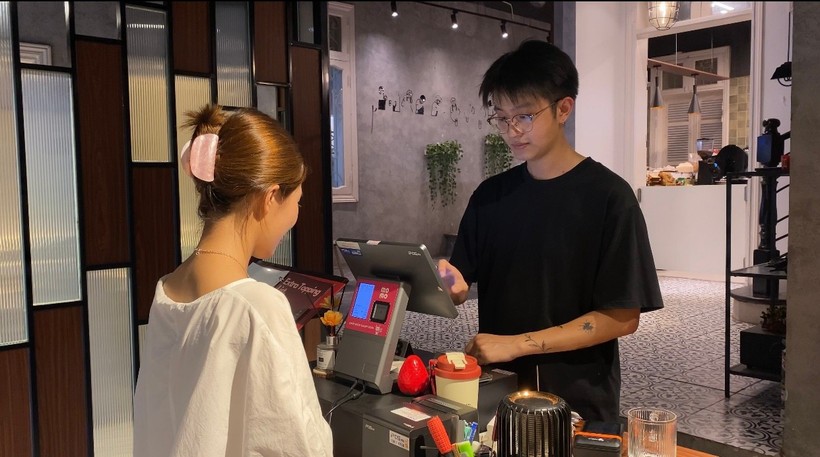
With rising rents and living expenses exceeding family support, many students are struggling to make ends meet. In this context, a relatively new model – "Work for Accommodation" – where students work without pay in exchange for free housing, is emerging as a viable solution.
Landlords and tenants work together to find solutions.
According to reports, many owners of small cafes, restaurants, even homestays and nail salons, have proactively proposed a "accommodation-for-work" model with students. Mr. PNĐ.K, the owner of a cafe in Dong Da district, said that his cafe often lacks staff during evening shifts and weekends, while the cost of hiring additional staff is expensive. He came up with the idea of letting students stay in his cafe's spare rooms, while they can pay for their accommodation by working overtime.
Mr. K. stated that, assuming a room costs 3.5 million VND, students have to work an average of 80-100 hours per month to afford accommodation. If converted to the common part-time wage (~20,000 VND/hour), the effort expended is equivalent to 2 million VND. This means students are paying less than the actual value of the room.
“A friend of mine who owns a small eatery has also adopted this model. I found it reasonable and helpful for students, so I followed suit. It's a win-win situation; I save on hiring night shift staff, and the students have accommodation, so they don't have to worry about rent. Every month, I still provide an additional 500,000 to 1,000,000 VND as encouragement,” Mr. K added.
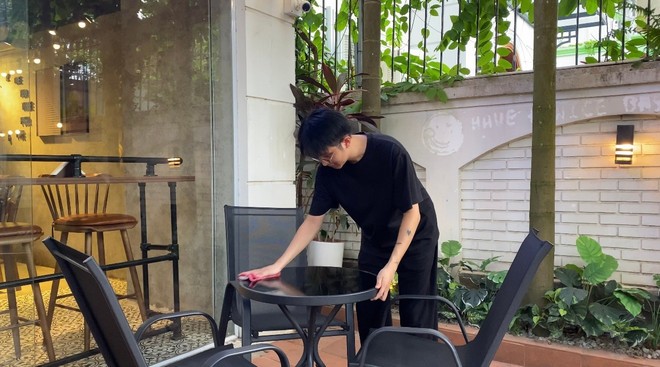
Nam, a second-year English Language student at a university on Tay Son Street (Dong Da District, Hanoi), is one of those who accept "exchanging labor" for accommodation. After classes, every evening he busies himself clearing tables and serving customers at a coffee shop. In return, Nam gets free accommodation on the third floor of the shop, with air conditioning, Wi-Fi, and hot water.
"Rent is so expensive now, I can't afford it alone. Sharing a room is cramped and inconvenient. Working at the restaurant and staying here saves me time and reduces the worry about rent," Nam confided.
Similarly, working as a waiter on the evening shift at a barbecue restaurant has been Thế Anh's job for the past two months – a third-year student at Hanoi University. "The work is quite hard; some days I have to work until late. But in return, I save nearly 4 million VND on rent, which I use for food and books. Otherwise, I would probably have to work multiple jobs at once just to make ends meet," Thế Anh shared.
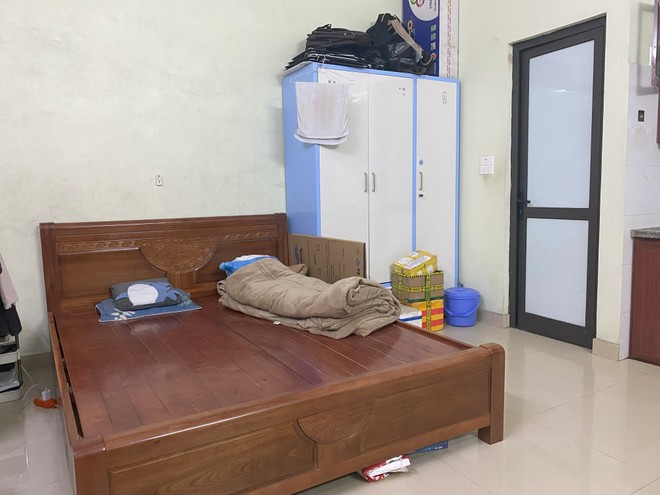
However, this model also carries many risks, as most employment is based on verbal agreements, without labor contracts, job descriptions, standardized break times, or occupational safety and health regulations. When disputes arise, students are often at a disadvantage.
Anh Thu worked part-time at a nail salon, initially agreeing to work 5 days a week in shared accommodation upstairs. After two months, the owner, citing "high customer volume," demanded overtime on weekends and stay until 11:30 PM. When she refused due to conflicting morning classes, she was told, "If you can't do it, move somewhere else." "I was forced to leave in the middle of peak season to find a place to live and bear all the resulting expenses," Thu said sadly.
The soaring rent prices weigh heavily on students.
It's not just the students mentioned above; thousands of students in Hanoi and Ho Chi Minh City are facing a difficult financial challenge. A mid-2025 report from Batdongsan.com.vn shows that the rental prices for affordable rooms near universities have increased by 18-25% compared to the same period in 2024.
According to surveys, as of early September in Hanoi, a 15 m² room in the Dong Da district costs 3.5 - 4.2 million VND/month; a 20 m² self-contained room in Cau Giay and Thanh Xuan districts ranges from 4 - 5 million VND; and in Hai Ba Trung district, the price has jumped to 5 million VND - the highest in the past 4 years. Furthermore, this is only the rent, not including electricity, water, and other services.
Meanwhile, most students only receive 3-4 million VND per month from their families, which is almost half of the minimum cost.
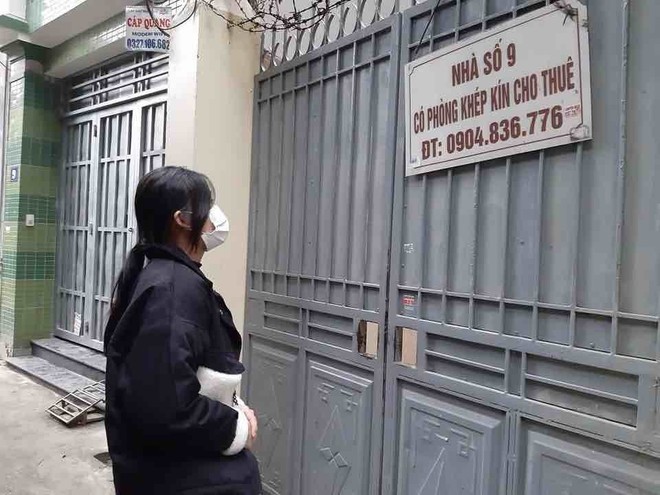
According to Tuan Tu, a real estate agent at a rental company, many landlords started raising prices in August, and prices are expected to increase even more sharply in early September as new students enroll. Rooms near the university with full furnishings are often preferred by parents, so prices fluctuate constantly. After October, when demand stabilizes, prices will cool down and the market will offer more choices.
When rent prices are no longer affordable, seemingly spontaneous solutions like "exchanging labor for accommodation" become practical choices. This demonstrates both the resilience and resourcefulness of young people amidst soaring prices.
This model helps both sides: the owner saves on staffing, and the students reduce financial pressure. However, most agreements are verbal, without labor contracts. When disputes arise, students are often at a disadvantage, and even risk exploitation if the workload increases without their rights being protected. This is also why many young people are still hesitant, considering it only a temporary solution.
For this model to be truly sustainable, it requires collaboration from universities, student organizations, and local authorities. Piloting a community-based dormitory model linked to businesses – where work shifts, class hours, and living conditions are standardized – will help reduce reliance on verbal agreements. A mechanism for receiving anonymous feedback, along with a commitment to prompt action in case of abuse, will provide a solid foundation for students to feel secure in participating.
Ultimately, housing shouldn't be such a high price that students have to pay in terms of effort, risk, and uncertainty. With minimal safeguards in place, the "work for accommodation" model truly becomes a temporary lifeline, not a binding constraint that forces young people to choose between housing and their educational future.
Source: https://baolaocai.vn/doi-cong-lay-cho-o-cach-muu-sinh-moi-cua-sinh-vien-giua-con-bao-gia-nha-tro-post881597.html



























































































Comment (0)