


Developing the marine economy requires adhering to ecological limits and respecting the carrying capacity of marine ecosystems - Illustration.
Developing a marine database and mechanisms for renewable energy.
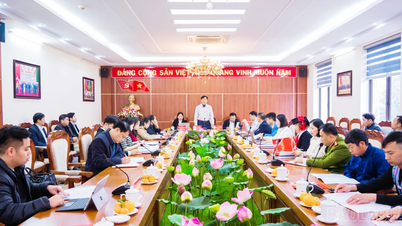
Today, December 12th, the Ministry of Agriculture and Environment is organizing the Vietnam Marine Economy Sustainable Development Forum 2025.
Professor Tran Thanh Hai, Rector of the University of Mining and Geology, believes that all strategies for exploiting, protecting, and planning marine space must be based on reliable data. However, Vietnam has only surveyed about 38% of its sea area, mostly at a rudimentary level. Quantitative data on deep-sea mineral resources is almost non-existent.
Professor Tran Thanh Hai suggested that the State should invest systematically in basic research, combining resources from universities, research institutes, businesses, and international cooperation. This is not only a matter of resource management but also a condition for attracting private and international investment into marine projects.
From a business perspective, representatives from PetroVietnam noted that Vietnam's sea and seabed area is three times larger than its land area, representing a vast space for economic development if exploited effectively. Lessons from the oil and gas industry show that long-term investment, sound strategies, and mastery of technology can create remarkable advancements in the marine sector.
Regarding other marine economic sectors such as deep-sea minerals, renewable energy, or aquaculture, Professor Hai emphasized the need for appropriate technological orientation and a specific exploitation roadmap, avoiding following trends while still ensuring ecosystem sustainability.
During the discussion on renewable energy, Dr. Mark Hutchinson, Chairman of the Southeast Asia Working Group of the Global Wind Energy Council, praised Vietnam's issuance of new resolutions to create a legal framework for the development of offshore wind power. With a potential of over 600 GW, Vietnam is considered one of the most promising countries in Asia.
However, experts believe that to attract international investment, Vietnam needs to quickly establish a risk-sharing mechanism, engage in direct dialogue with the industry and financial institutions, and design solutions that are appropriate to domestic conditions. Cooperation between the Government, the Ministry of Industry and Trade , EVN, banks, and international businesses is key to unlocking large-scale projects.
Professor Mai Trong Nhuan proposed five core principles for developing coastal economic centers into green growth poles: Adhering to ecological limits and respecting the carrying capacity of marine and coastal ecosystems; Ensuring natural, social, and human sustainability, preserving cultural values and livelihoods; Integrating multiple sectors, linking regions, connecting the sea with the mainland and between localities; Developing green, circular, and low-carbon economies, proactively responding to climate change; and Using science, technology, and innovation as driving forces, building digital replicas for coastal areas.
Professor Mai Trong Nhuan proposed that Vietnam implement five policy testing mechanisms corresponding to the five principles above to test new models before scaling them up.
A key highlight of the forum was the proposal to develop marine aquaculture industrial clusters, which Associate Professor Dr. Nguyen Huu Dung assessed as the "key" to helping Vietnam's marine aquaculture move away from small-scale operations.
According to Associate Professor Dr. Nguyen Huu Dung, by exploiting just 0.1% of its sea area, Vietnam could produce up to 10 million tons of marine fish annually. However, achieving this requires a completely new production organization model. A marine aquaculture industrial cluster is a concentrated production area with modern infrastructure, from cages and rafts, anchoring systems, and seabed monitoring to logistics services, fishing ports, processing plants, cold storage, and seafood auction floors.
This model helps reduce risks for fishermen, standardize production processes, attract large investments, and create a foundation for integration with marine tourism and offshore wind power.
In his keynote address at the forum, Deputy Prime Minister Tran Hong Ha emphasized that Vietnam is at a crucial juncture in shaping its maritime economic development mindset for the new phase. The two trends of green transformation and digital transformation must become the "common thread" guiding the national maritime strategy.
The Deputy Prime Minister proposed accelerating the improvement of laws and mechanisms to encourage conservation linked with development; piloting offshore wind power projects and high-tech aquaculture; developing marine carbon credits with a transparent monitoring mechanism; applying the sustainability assessment criteria and evidence-based analytical tools proposed by UNDP; and strengthening international cooperation on marine technology transfer.
Do Huong
Source: https://baochinhphu.vn/doi-moi-cach-nghi-de-phat-trien-kinh-te-bien-xanh-102251212180116626.htm


























































Comment (0)