

In recent years, Vietnam has made efforts to perfect its institutional system with a series of new policies being issued, many old mechanisms being amended and supplemented, contributing significantly to socio-economic development, strengthening national defense and security and improving the effectiveness of state management. However, facing new challenges of deep integration, digital economy and sustainable development, the current institutional system still reveals bottlenecks that need to be removed to more strongly liberate resources.
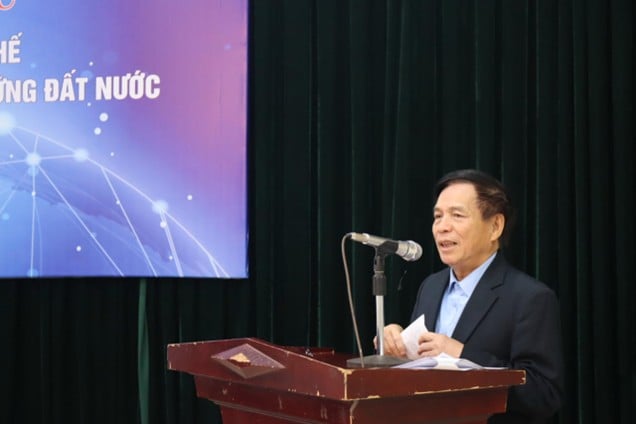
In order to meet that urgent need, the Ministry of Science and Technology (MOST) has approved the National Social Sciences and Humanities Program code KX.05/21-30 under Decision No. 1030/QD-BKHCN dated June 20, 2022. The program focuses on the goal of building a theoretical and practical foundation for perfecting the institutional system, ensuring democracy, synchronization, modernity and feasibility; thereby creating momentum for the country's rapid and sustainable development in the 2021-2030 period, with a vision to 2045.
Scientific foundation for institutional innovation
Prof. Dr. Hoang The Lien, Head of Program KX.05/21-30, said that the program aims to conduct in-depth research on basic theoretical issues on institutions, structures and types of institutions, as well as the interactive relationship between types of institutions and between institutions and development. This is an important scientific basis for creating an institutional system suitable for the new context, meeting the requirements of long-term national development.
A major focus of the program is to identify new factors that are strongly impacting the institutional system such as digital transformation, knowledge economy, deep international integration, changes in social governance models, demands for democratization and promotion of innovation. These factors both create opportunities and pose challenges to traditional institutional models, requiring new thinking and new solutions in policy making.
Along with that, the program conducts a comprehensive review and assessment of the current institutional system, identifying advantages, shortcomings and especially "bottlenecks" in policy design and implementation. On that basis, the program proposes a system of viewpoints, directions and solutions for institutional innovation in the direction of development creation, aiming to liberate all potentials and social resources.
Clarifying the mechanism of "Party leadership - State management - People mastery"
One of the key contents emphasized by experts is the requirement to innovate and perfect the mechanism of "Party leadership, State management, People mastery", a consistent principle in the Vietnamese political system.
According to Prof. Dr. Vo Khanh Vinh, former Vice President of the Vietnam Academy of Social Sciences, it is necessary to fully, comprehensively and systematically assess the bottlenecks and limitations in this mechanism. From there, determine the system of viewpoints, goals, directions, tasks and innovative solutions, in order to promote the highest leadership role of the Party, improve the effectiveness of State management and ensure the people's mastery. This is an important basis to create a strong driving force for development in the context of the country facing the requirements of deep integration and fierce competition in many fields.
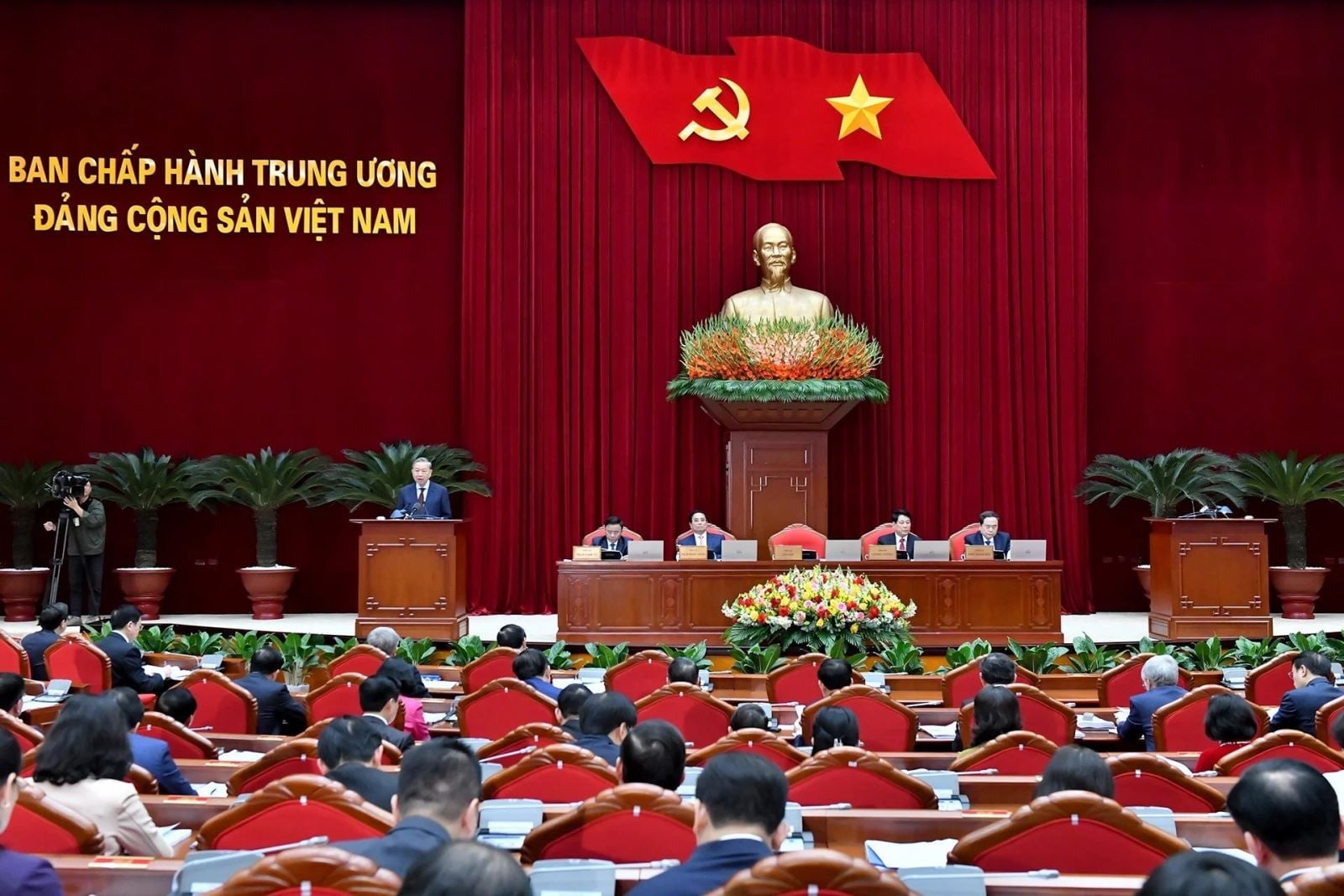
Dr. Ha Quang Truong, Institute of State Organizational Sciences, stated that in the new conditions, the driving force for national development is determined by many factors: Great national unity, socialist democracy, social justice, human factor development, education, science and technology, innovation and digital transformation. For these pillars to be effective, innovation in political institutions is a key requirement; in which improving the leadership and governing capacity of the Party plays a decisive role. At the same time, building a modern socialist rule-of-law state is considered the foundation for ensuring strict and consistent law enforcement.
In the economic field, the need to perfect institutions is identified as an urgent task, focusing on the model of State-market-society relations based on the principles: strong State, efficient market, dynamic and creative society. This model aims at the resonance between the three subjects, taking advantage of the role of each component and minimizing risks and market distortions.
The program also focuses on perfecting the social development institution. Accordingly, it is necessary to build and supplement policy mechanisms to promote the role of the Fatherland Front, socio-political organizations, socio-professional organizations and residential communities in participating in Party and State building and autonomous and self-governing activities according to the law.
An important research direction is to assess the effectiveness, seriousness and consistency of law enforcement. Experts emphasize the need to deeply analyze issues related to legal dissemination and education; inspection and examination activities; handling of administrative violations; litigation activities; and enforcement of civil and criminal judgments. On that basis, the program will study international experiences, compare and propose appropriate lessons for Vietnam.
The results of the KX.05/21-30 Program provide important scientific arguments for the formulation of guidelines and policies of the Party and the State; contributing to the building of a synchronous, modern, transparent and development-creating institutional system. With a vision to 2045, the program is expected to contribute to the building of a modern and effective national governance, creating a driving force for rapid and sustainable growth and enhancing Vietnam's position in the international arena.
Source: https://baotintuc.vn/xa-hoi/dong-luc-thuc-day-quoc-gia-phat-trien-nhanh-va-ben-vung-trong-ky-nguyen-moi-20251209110419837.htm


![[Photo] The captivating scenery of the fragrant maple forest in Quang Tri](/_next/image?url=https%3A%2F%2Fvphoto.vietnam.vn%2Fthumb%2F1200x675%2Fvietnam%2Fresource%2FIMAGE%2F2025%2F12%2F10%2F1765353233198_lan09046-jpg.webp&w=3840&q=75)
![[Photo] Explore the US Navy's USS Robert Smalls warship](/_next/image?url=https%3A%2F%2Fvphoto.vietnam.vn%2Fthumb%2F1200x675%2Fvietnam%2Fresource%2FIMAGE%2F2025%2F12%2F10%2F1765341533272_11212121-8303-jpg.webp&w=3840&q=75)
















![[Video] The craft of making Dong Ho folk paintings has been inscribed by UNESCO on the List of Crafts in Need of Urgent Safeguarding.](https://vphoto.vietnam.vn/thumb/402x226/vietnam/resource/IMAGE/2025/12/10/1765350246533_tranh-dong-ho-734-jpg.webp)




















































Comment (0)